
Last updated: September 20, 2026
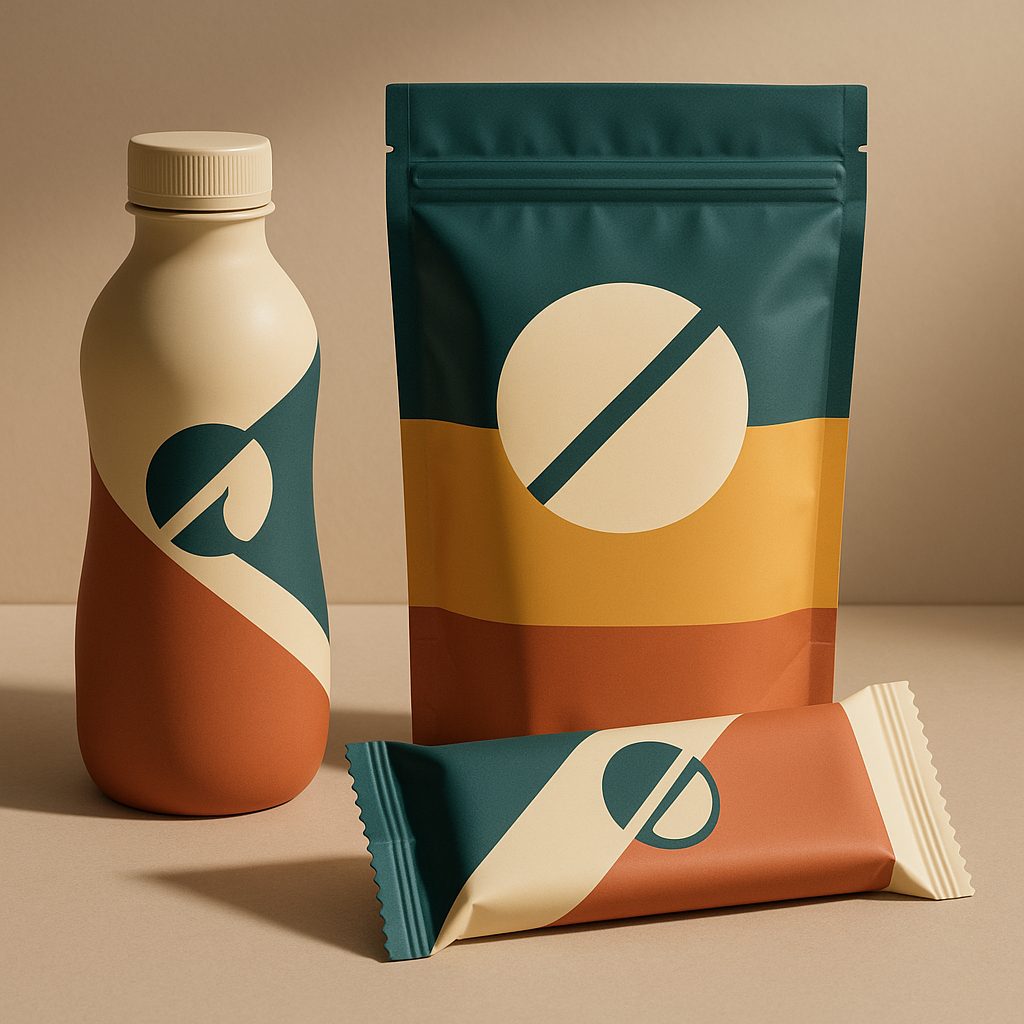
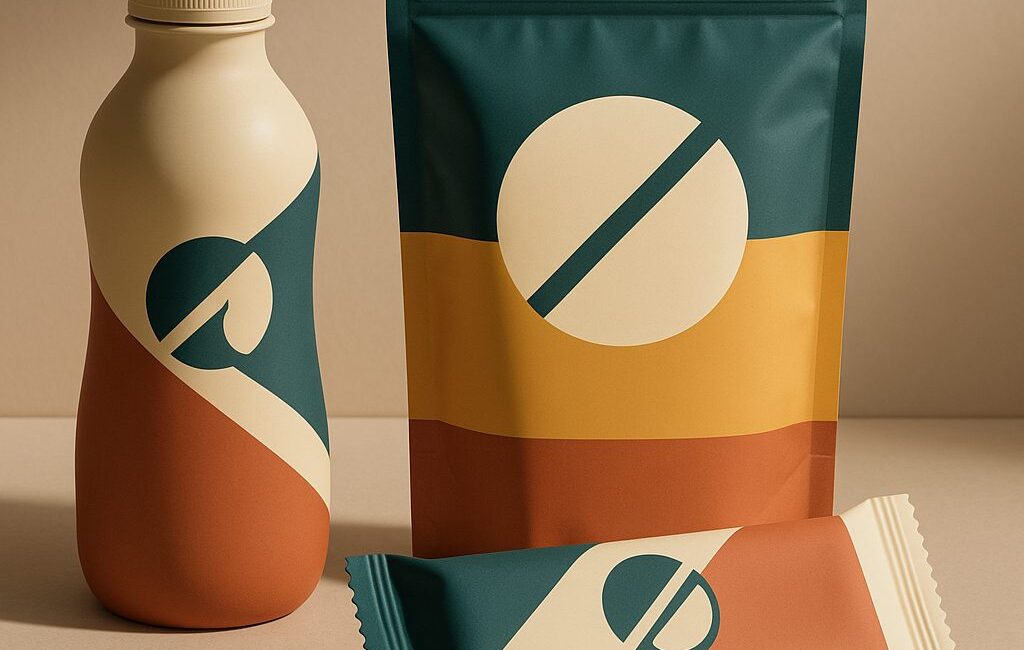
Flexible packaging is the part of the category most brands use without ever naming. The bag the coffee comes in, the film hugging a contoured bottle, the pillow wrapper around a snack bar: all three are film rather than board, and all three behave differently from a carton in ways that decide budgets, timelines and what the artwork can do. Of the six formats on the retail packaging menu, three are flexible, and choosing between them is a more useful conversation than choosing between vendors.
This is the overview: what flexible packaging actually is, what each of the three formats is for, how the choice against rigid packaging really gets made, and what changes when the film is printed digitally rather than conventionally.
Table of Contents
- What flexible packaging is
- The three formats, and the question each one answers
- Flexible or rigid: how the choice gets made
- What changes when the film is printed digitally
- The artwork problem is different in each format
- Where the film has to meet a machine
- The sustainability question, answered honestly
- Choosing between the three
- FAQ
What flexible packaging is
Flexible packaging is any package whose structure is film rather than rigid board, glass, metal or plastic. It arrives as rollstock or as a formed bag, it takes its final shape from the product inside or from the machine that seals it, and the printed surface is the package itself rather than a label applied to something else.
That last point is the one with consequences. On a carton or a jar, the package exists first and the graphics are added to it. In flexible packaging the graphics and the structure are the same object, which means the print decision and the material decision cannot be made separately. The film has to protect the product and carry the brand at the same time, and those two jobs occasionally disagree.
The other structural fact worth knowing early is that flexible packaging is usually a laminate: several thin layers bonded together, each doing a different job. One layer seals, one provides the barrier against oxygen or moisture, one carries the print. That construction is why flexible packaging can hold a long shelf life at a fraction of the weight of a rigid container, and it is also why the recycling story is complicated. Both of those come up below.
The three formats, and the question each one answers
Shrink sleeves: decorating a shape
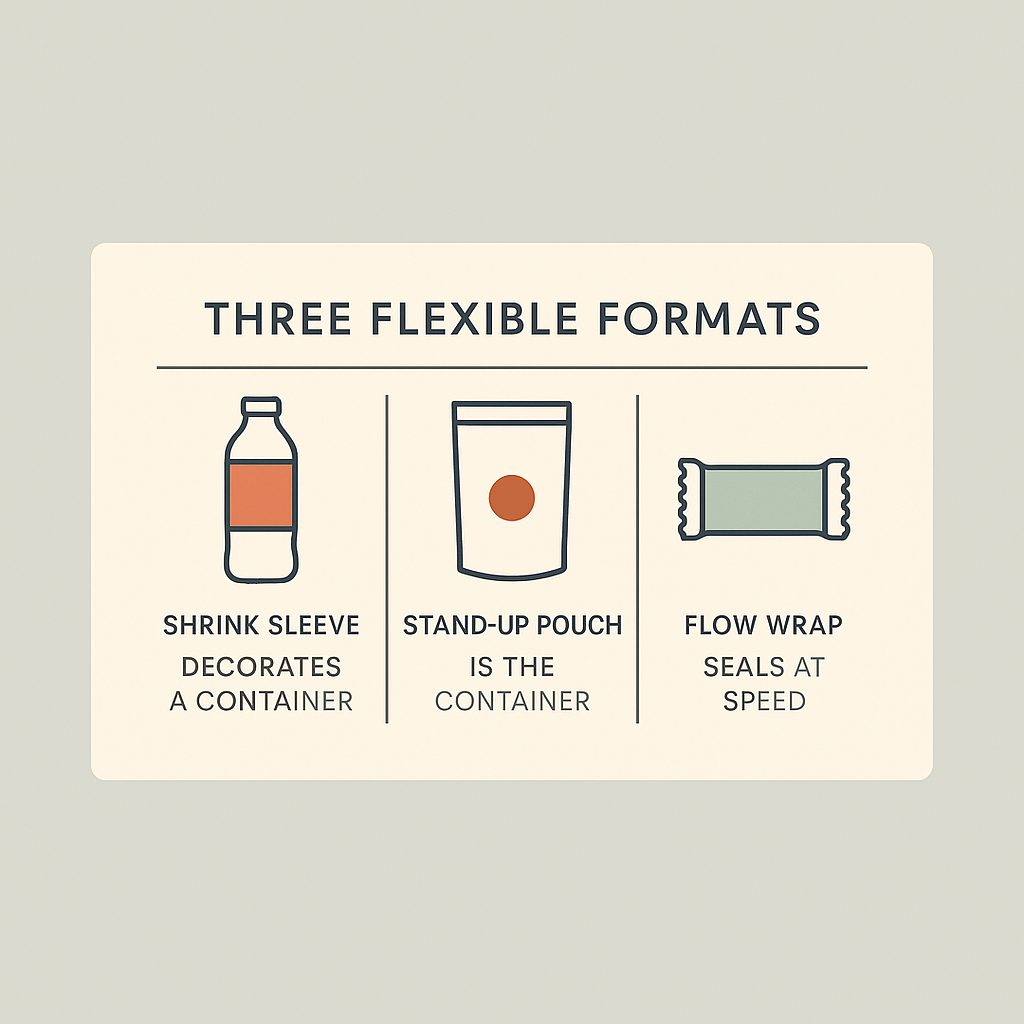
A shrink sleeve is printed film slipped over a container and passed through a heat tunnel, where it contracts to the exact contour. It answers the question “how do I get artwork onto a shape a flat label cannot follow?” Coverage is a full 360 degrees, including curves and tapers, which is why contoured bottles, tubs and cups end up on it.
The sleeve is the only one of the three that decorates something else. The container still exists independently; the film is its skin. That also makes it the format where one stock container can carry an entire product family, because the decoration is a printed file rather than a tooling change. The comparison against shrink wrap and pressure-sensitive labels sorts out when it is the right call.
Stand-up pouches: becoming the container
A stand-up pouch is a formed bag with a bottom gusset that lets it stand on a shelf. It answers “how do I package a loose product without a rigid container?” Coffee, granola, pet treats, spices and dry goods all live here, and the pouch carries print across the front, the back, both gussets and the bottom.
Unlike the sleeve, the pouch is the package. There is nothing underneath it. That means every functional requirement, from barrier to reclosure to how it survives a drop, is the film’s responsibility. Features get added to the spec rather than to a container: zippers, tear notches, hang holes, valve provisions. What that costs, and how few you can order, is covered in custom pouches without a five-figure minimum.
Flow wrap: sealing at speed
Flow wrap is rollstock film that a horizontal wrapper forms around each product, seals lengthwise with a crimped fin seal down the back, then crimps and cuts at both ends. The result is the familiar pillow pack around a snack bar or a bar of soap. It answers “how do I wrap a very large number of small units, quickly and cheaply per unit?”
Machine makers call the process horizontal form-fill-seal. The important distinction for a buyer is that the film is supplied as rolls and the wrapping happens on the brand’s own equipment or a co-packer’s, so the job is making sure the roll registers cleanly on that specific line. Printed flow wrap film wins wherever unit count is high and each unit is small: multipack components, single-serve portions, sampling programs.
Flexible or rigid: how the choice gets made
The decision is usually settled by three things, in this order: what the product needs to survive, how it has to look on a shelf, and what it costs to ship. Barrier and shelf life come first, because a package that fails the product has no other virtues.
Shelf presence is where the argument actually happens. A folding carton gives you flat faces, crisp edges, a structure that stacks predictably and a premium feel in the hand. A pouch gives you a shape that reads as modern and artisanal in some categories and cheap in others, and it cannot be stacked the same way. The honest answer depends on the category’s conventions, and the fastest way to settle it is to hold both.
Logistics usually favors flexible, and by a wide margin. Film weighs a fraction of board or glass for the same product volume, takes far less space when empty, and costs less to ship both ways. For a direct-to-consumer brand paying shipping on every unit, that difference is not a rounding error.
The cases where rigid still wins cleanly are worth naming: products that need to be protected from crushing, products where the container is part of the experience, products that get used from the container over a long period, and anything that has to stand up to being stacked hard in a warehouse. A folding carton or a corrugated box is not a legacy choice, it is a different tool.
What changes when the film is printed digitally
Conventional flexible printing requires a physical image carrier for every color in the design, plus setup and waste while the press reaches register. That fixed cost is why flexible packaging has a reputation for enormous minimums: the number quoted is the volume at which setup stops dominating the unit price.
Digital production removes that step rather than discounting it. With no plates to make, the fixed cost at the front of the job largely disappears, and three things follow. Short runs become viable, so a few hundred pieces is a real quantity rather than an insult. Multiple versions become cheap, because there is nothing to remake between designs, so a family of flavors can often run together. And revisions stop being expensive, which changes how willing a brand is to fix a design that is not quite right.
The strategic consequence is that flexible packaging stops being a format you graduate into. A brand can put a genuinely printed pouch in front of a retail buyer before it has the volume that used to be required to get one made, which is the same argument behind short-run packaging in every other format.
The artwork problem is different in each format
All three formats print on film, and all three have a completely different file problem. Designers who have only worked on cartons and labels are routinely surprised by this, and it is the most common source of delay on a first flexible project.
A sleeve file has to be built distorted. The film shrinks unevenly across a contoured container, so straight artwork on a flat file comes out bent. The compensation comes from a printed grid sleeve run on the real container, which maps how far the film moves at each height. The artwork is then designed on that measured template rather than on a rectangle.
A pouch file has to respect the seals. The panels are generous, but ink in a seal zone can interfere with the bond, and the valve and zipper positions are fixed before design begins. Keep-clear areas are defined first and are not negotiable later.
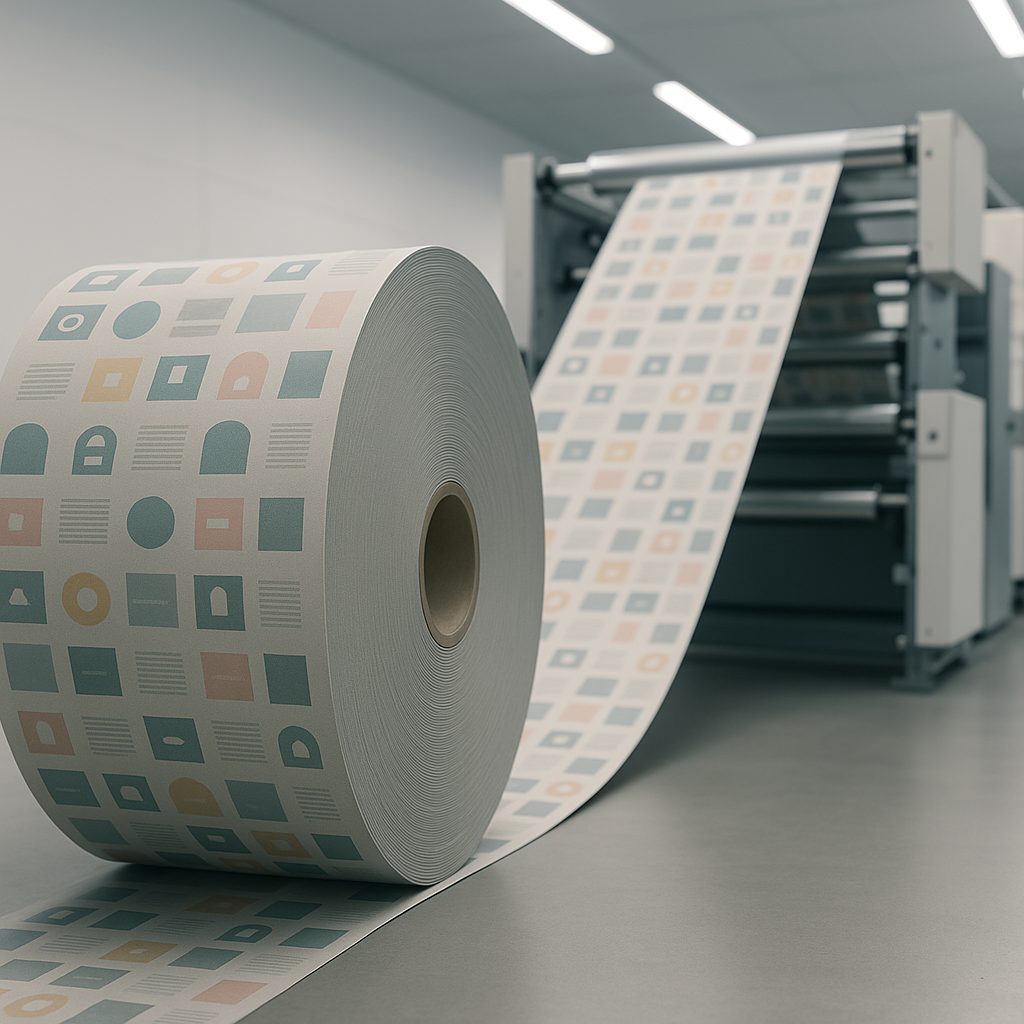
A flow wrap file is not a package at all. It is one repeat unit that tiles seamlessly down the web: a single rectangle at the exact repeat length and web width, laid out so it registers correctly when the wrapper cuts each unit. Prepress confirms unwind direction, core size, roll diameter and the tolerances the line holds, then proofs the layout against those numbers.
White ink is the other shared surprise. Film is not white, so anything that needs to look opaque needs a white layer printed underneath it. A full flood of white behind the artwork gives maximum color punch; a spot white lets you drop a window into the art so the product shows through, and it has to register tightly to the color above it or you get pale halos at every edge.
Where the film has to meet a machine
Every flexible format eventually has to run on equipment, and that is where projects go wrong. A sleeve has to feed and shrink on an applicator and through a tunnel. A pouch has to fill and seal on a line. Flow wrap film has to unwind, register and crimp on a specific wrapper.
The right time to have that conversation is before the film is specified, not after it is printed. A bag that is perfect on paper and wrong at the sealing jaws is scrap, and no amount of artwork quality recovers it. If a co-packer is involved, their spec sheet is a required input, not an optional one.
The other timing question is growth. If a brand expects to move from hand filling to automated filling inside a year, that belongs in the first spec. Building a package that survives the transition costs almost nothing at the start and a full redesign later.
The sustainability question, answered honestly
Flexible packaging has a genuinely strong material-efficiency case and a genuinely weak end-of-life case, and brands get into trouble by claiming only one of them.
The strong half is real. Film uses far less material per unit of product delivered than rigid packaging, weighs less in transport, and takes less space empty, which shows up in fuel and in warehouse footprint. The Flexible Packaging Association publishes the industry’s life-cycle case, and the EPA’s containers and packaging data is the neutral reference for how the category behaves in the waste stream.
The weak half is the laminate. Multi-layer structures are effective precisely because different materials do different jobs, and that is the same reason they are difficult to recycle through curbside streams. Mono-material constructions exist and are improving, and they usually involve a trade against barrier performance that has to be made deliberately.
What follows for a brand is a claims discipline rather than a material rule. Say what is true about the specific structure you are using, check it against How2Recycle labeling rules and the FTC Green Guides before it goes on a package, and do not let a legitimate weight advantage get rewritten as a recyclability claim. Sustainable packaging claims covers how that line gets crossed.
Choosing between the three
| Shrink sleeve | Stand-up pouch | Flow wrap | |
|---|---|---|---|
| The film is | Decoration on a container | The container itself | A wrapper formed per unit |
| Best for | Contoured bottles, jars, tubs | Loose product, dry goods | High counts of small units |
| Supplied as | Printed sleeves | Formed bags | Rollstock |
| Artwork built as | A distorted template | Panels with seal keep-clears | One tiling repeat unit |
| Runs on | Applicator and heat tunnel | Fill and seal line | Horizontal wrapper |
If the product already has a container and the problem is decorating it, the answer is a sleeve. If the product is loose and needs a package, the answer is a pouch. If there are very many small units and speed per unit is the constraint, the answer is flow wrap. Genuine ambiguity is rarer than it looks, and where it exists, the fastest resolution is a physical sample rather than another meeting.
FAQ
What is flexible packaging?
Packaging whose structure is film rather than rigid board, glass or metal. It includes stand-up pouches, shrink sleeves and flow wrap film. The printed surface is the package itself rather than a label applied to a separate container, so the material and print decisions are made together.
Is flexible packaging cheaper than rigid packaging?
Usually per unit, and almost always in shipping, because film weighs a fraction of board or glass and takes less space empty. Whether it is cheaper overall depends on barrier requirements and on features like zippers and valves, which add cost that a plain carton does not carry.
Can you get flexible packaging in small quantities?
Yes, when it is printed digitally. Conventional flexible printing requires plates, and their setup cost is what creates large minimums. Digital production removes that step, so runs in the hundreds are workable and additional design versions cost very little.
Is flexible packaging recyclable?
It depends entirely on the structure. Multi-layer laminates deliver barrier performance by combining different materials, which is exactly what makes them hard to recycle curbside. Mono-material options exist and usually trade some barrier performance. Any claim on the package should be checked against How2Recycle rules and the FTC Green Guides first.
How do I choose between a pouch, a sleeve and flow wrap?
By what the film has to do. A sleeve decorates a container that already exists. A pouch is the container. Flow wrap seals many small units at speed on a wrapper. The product and the equipment usually make the choice before shelf appearance enters the conversation.
Start with a sample, not a spec sheet
Most flexible packaging decisions get settled faster by holding the thing than by comparing descriptions of it. Request a quote from White Graphics with the product, the volume and how it gets filled, or spin all six formats on the retail packaging page. Format detail lives on the shrink sleeve, stand-up pouch and flow wrap pages, and everything printed here runs against one color standard, which is what G7 is for.
About the publisher
White Graphics is a G7 Master qualified custom label and packaging company managed out of Naperville, Illinois, serving food, beverage, supplement, cosmetic, and household-product brands across North America since 1972. Learn more about the company or see the full range of capabilities.
