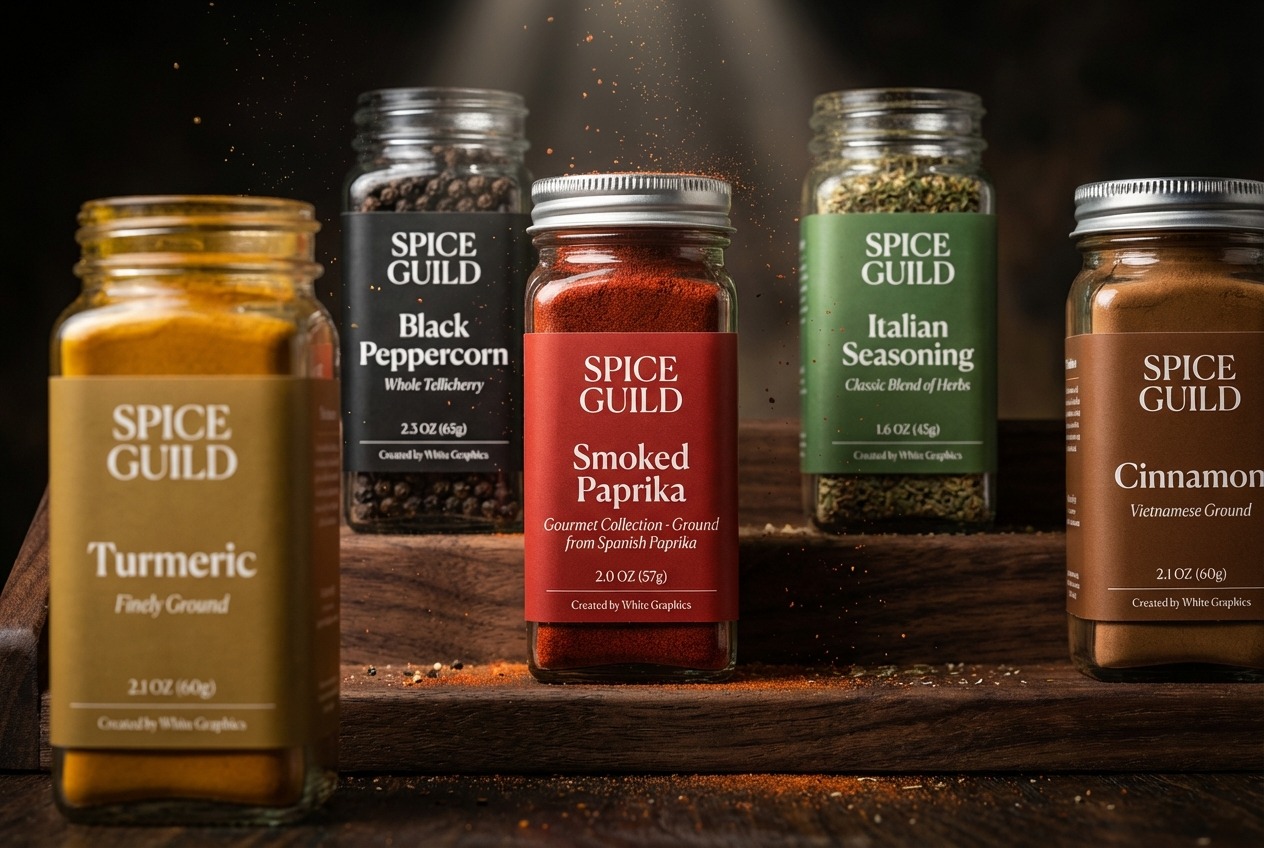
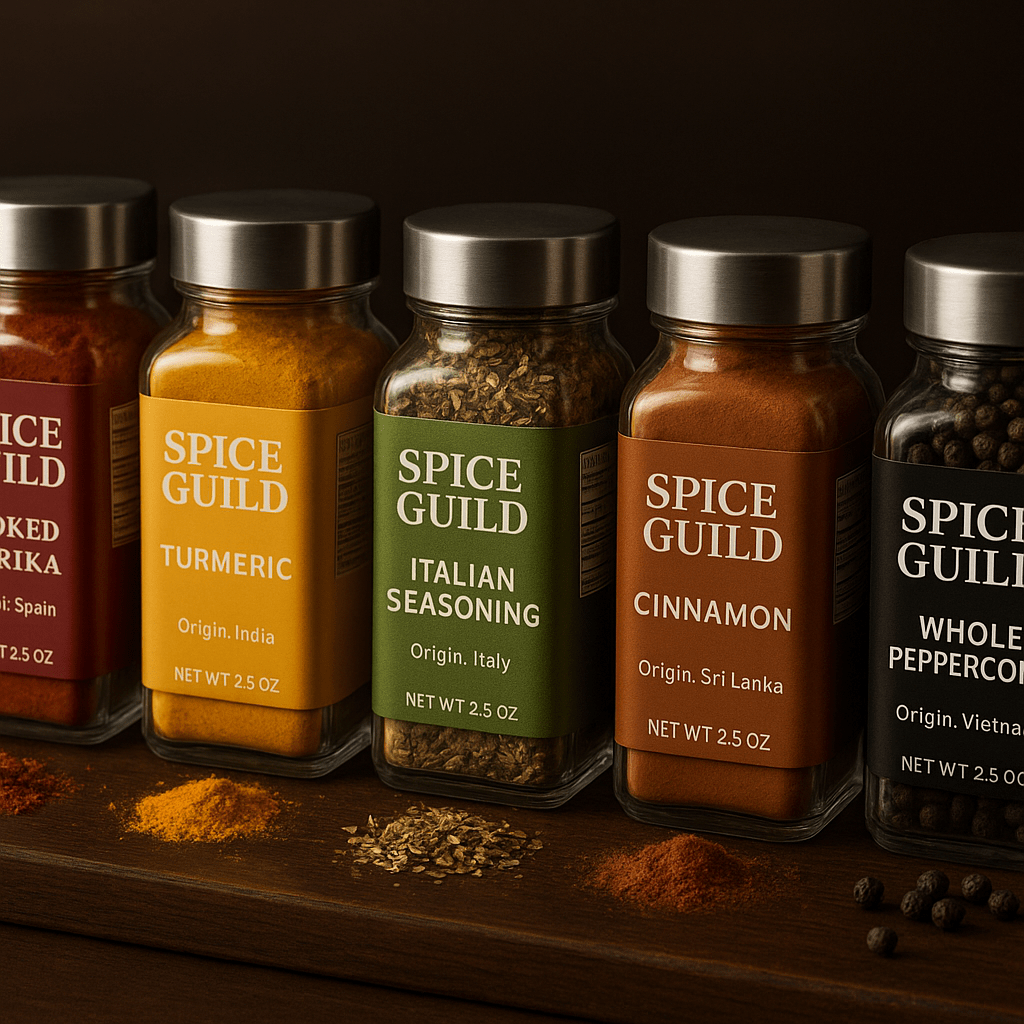
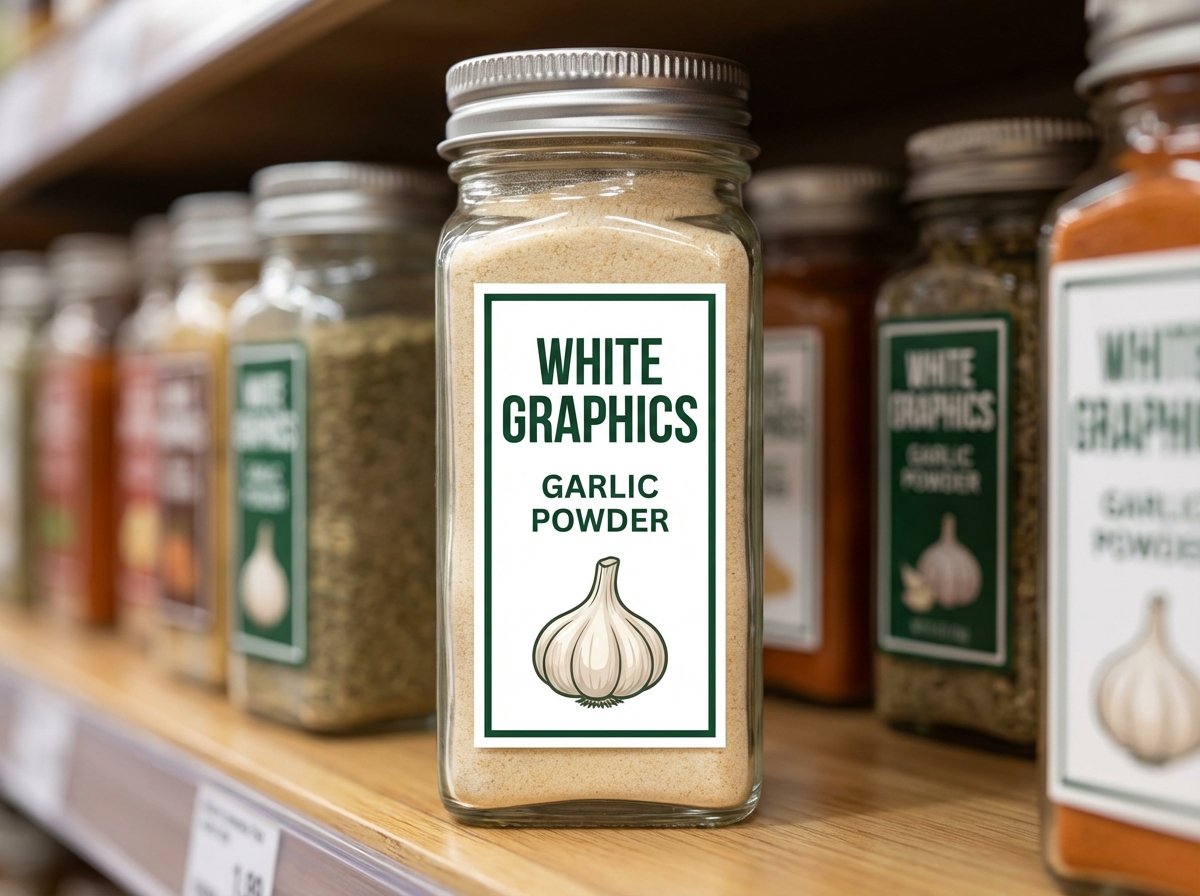
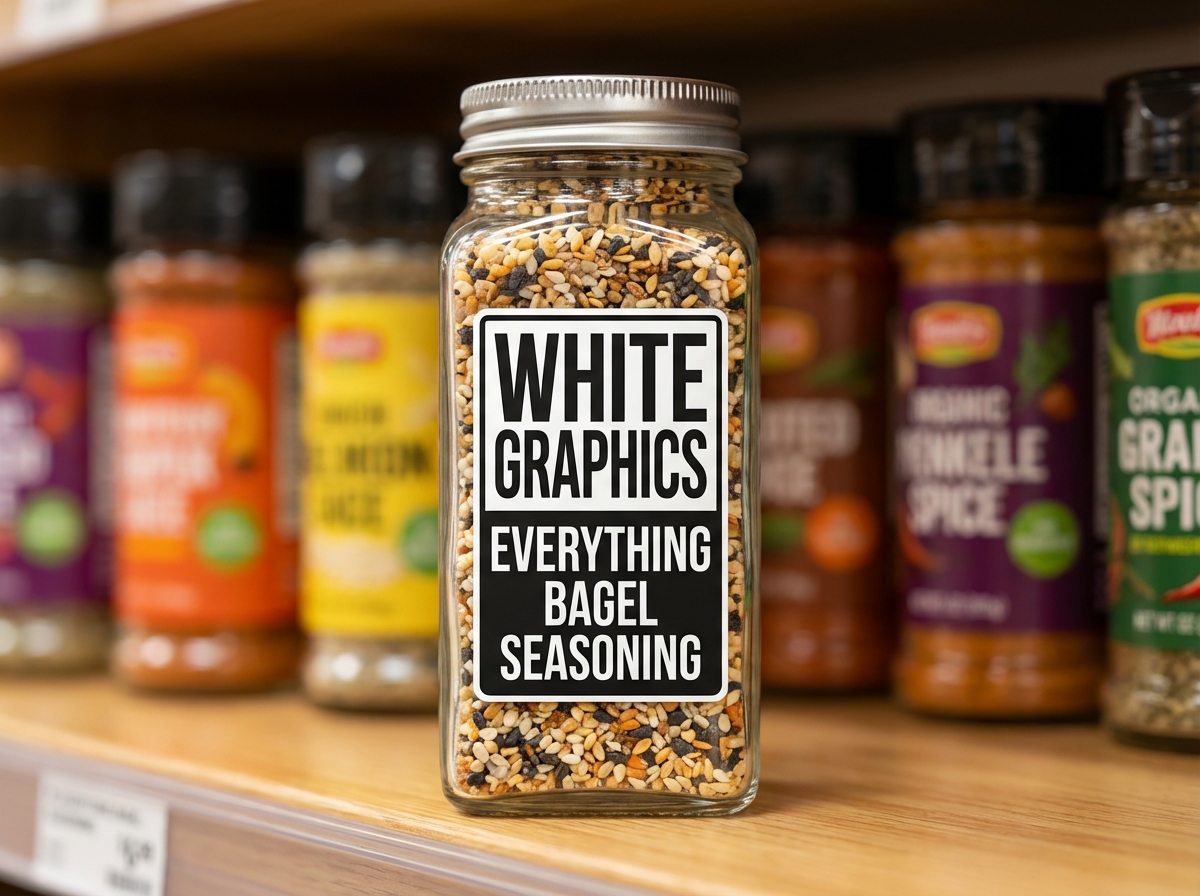
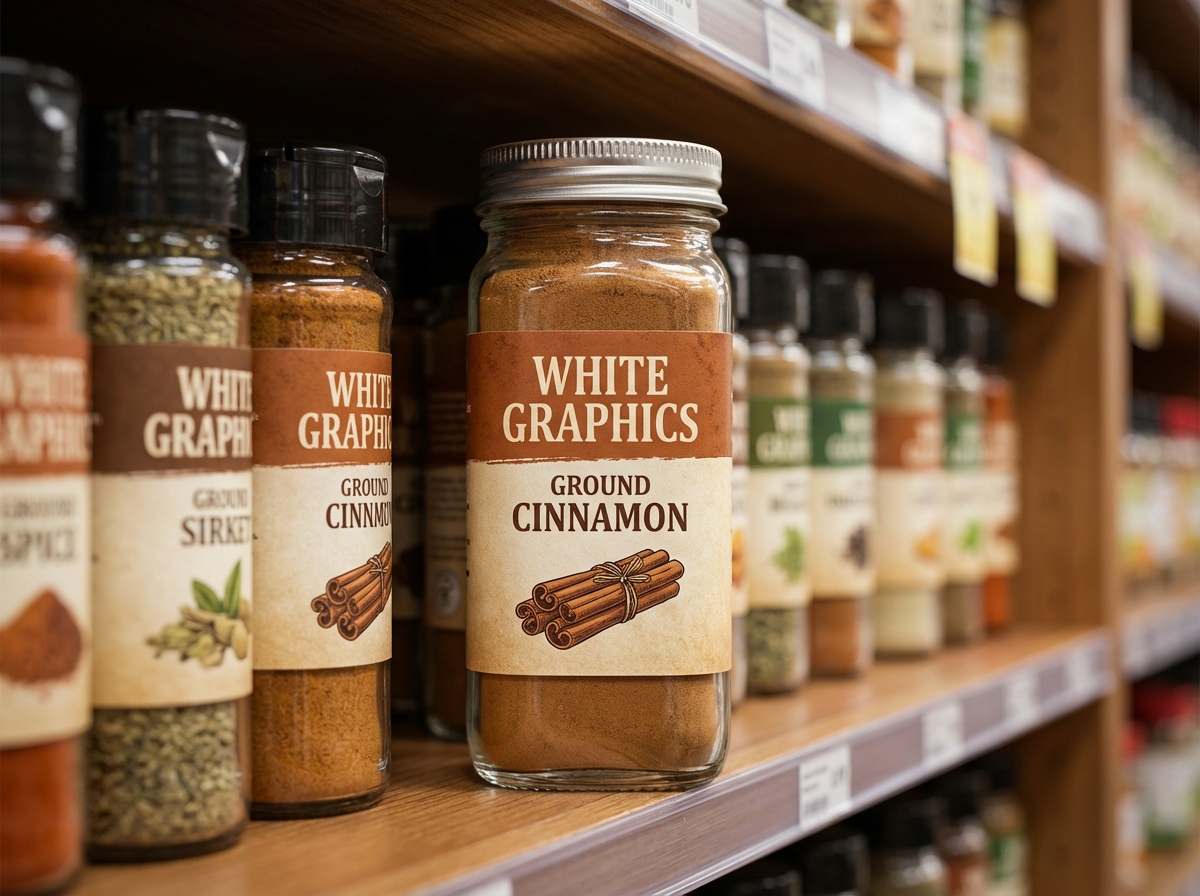
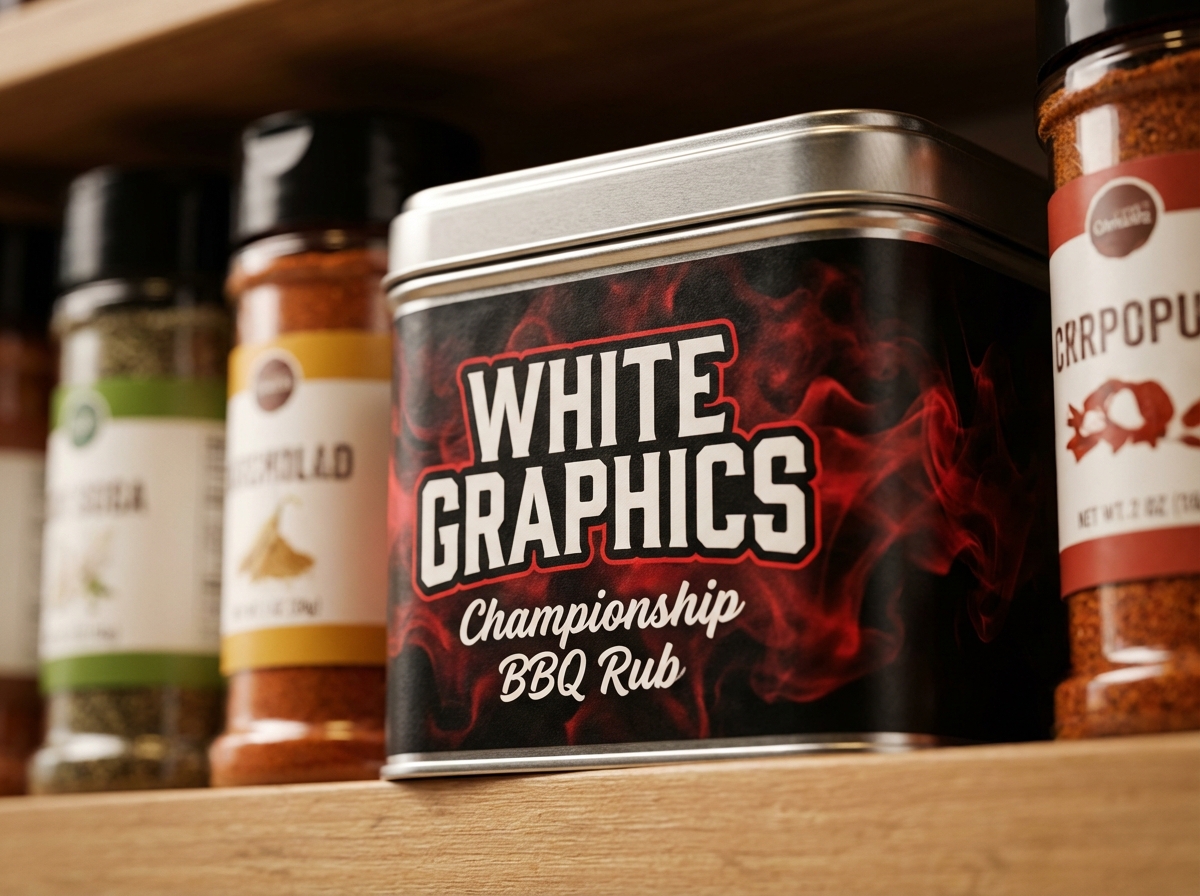
Spice labels for jars, tins, and pouches – kitchen-proof laminates, spices-and-salt declarations done right, and one color standard across the rack.
Contact us for pricing, minimum quantities, custom specs, and turnaround times.

Color Accuracy Guaranteed
A glass jar that fits in your palm, a shaker cap, sometimes a rub tin: spice containers give a label very little room and a surprising amount of law. Salt is never just “spices,” sesame changed the allergen game, and the flavor claims run big even where the panels run small. We print custom spice labels for blend makers, rub brands, and spice-line startups, fitting compliant copy onto those small panels and speccing materials for steamy kitchens and greasy fingertips. A forty-jar rack holds to one color standard too, because our spice label printing runs G7® Master Certified in Naperville, Illinois.
Spice label sizes for jars, tins, and pouches
Every spice format gets a die measured to it. We print wraps and front panels for 2–8 oz glass jars, lid circles for shaker tops, tin labels for rub cans, and pouch labels for refill bags.
Shapes
Wraps, rectangles, lid circles sized to shaker caps, and custom die-cuts for signature blends.
Materials
Durable white films for kitchen service; laminated kraft and textured papers for small-batch character.
Finishes
Matte laminates that read artisanal and wipe clean; gloss where the rack wants shine.
Formats
Singles or rolls, jar and lid labels together.
Send your jar and cap spec. Lid circles that match the shaker cap are half the shelf look.
Built for the shelf next to the stove
Spice jars live in the splash zone: steam from the pot below, oily fingers mid-recipe, dust from the blend settling into every surface. Uncoated labels fuzz and stain there within a season. Our spice builds pair film or sealed paper with wipe-clean laminates, so the rack keeps looking like merchandising instead of pantry archaeology.
Forty blends that read as one rack
Spice brands win as a wall: dozens of blends, one system, told apart by name and accent color. Digital printing runs the whole rack on shared dies with each blend in its own quantity, while G7® press calibration holds the system exact across every jar and every restock.
Spice declarations, done the way the rules read
Spice labeling looks simple until the ingredient list, where the category’s quirks live. What goes where, by the book:
- The “spices” convention: true spices may be declared collectively as “spices,” a shortcut with limits we respect.
- Salt stands alone: salt is not a spice and must be declared by name, in its rightful descending-order position; seasoning blends heavy on salt can’t hide it.
- Sesame changed things: sesame is a major allergen under the FASTER Act; blends that include it declare it plainly.
- Identity and net weight: blend name plus an honest weight declaration, dual units, on small front panels.
- Nutrition Facts: small spice containers often qualify for simplified or small-package formats; we set the right one for your jar.
- Onion, garlic, and paprika: onion and garlic are vegetables, not spices, and paprika used for color carries its own declaration rule; none of the three hide inside a collective “spices” line.
The source text is the FDA’s labeling guidance for food; we set the jar to spec while your regulatory advisor confirms the calls.
Rubs, blends, and single origins
We print pressure-sensitive spice labels for BBQ rubs, signature blends, single-origin spices, salt lines, and gift flights. Pantry neighbors: everyday food labels, BBQ & hot sauce labels, and cooking oil labels. Or browse the entire label catalog.
Rack artwork that scales to forty SKUs
We treat a spice rack’s artwork as one system: shared elements locked, per-blend panels swapped, dies drawn to your jars, everything held as print-ready vector (PDF, AI, or EPS) in CMYK at 300 dpi. Blend forty-one drops in without redesigning the rack.
Rack production that scales by the blend
A spice rack runs as one production job: shared jar dies, lid circles cut to your shaker caps, one GMG proof for the rack’s palette, and G7®-controlled passes that add blends without adding setups. Wipe-clean lamination goes over film or kraft, and everything ships organized by blend so filling day stays sane. Common jar wraps run near 4″ × 2″; yours run to your glass.
Spice label FAQs
Can my ingredient list just say “spices”?
True spices can be declared collectively, but salt must be named, vegetable powders follow their own conventions, and allergens like sesame are always declared. We apply the shortcut only where it legally fits.
Do I need a Nutrition Facts panel on a 2 oz jar?
Usually yes for retail, though small packages may qualify for simplified or compact formats, and some small businesses for exemptions. We set the right format; your advisor confirms status.
Will labels survive next to the stove?
They will. Wipe-clean laminates over film or sealed paper shrug off steam, grease, and spice dust without fuzzing or staining.
Can you do lid labels for shaker caps?
We do: lid circles sized to the cap itself, run together with the jar wraps so rack view and shelf view match.
How do forty blends run without forty setups?
One shared die system, digital printing, each blend in its own quantity, and identical brand color across the entire rack.
Do you print refill-pouch labels too?
Yes. Pouch labels come matched to the jar system, so the refill program reads as part of the brand.
What file format works for spice label artwork?
One vector system (PDF, AI, or EPS, CMYK, 300 dpi, bleed) with dies for your jars, built so new blends drop in. Prepress maintains it.
Quote your spice labels
Send the jar spec and blend list; forty blends on one shared die still come back as one clean number.
Request a QuoteRelated products
-
Honey Jar Labels
Honey jar labels that stay clean on sticky jars - drip-resistant films, FDA-aware...
-
Juice & Beverage Labels
Juice and beverage labels built for the cooler case - condensation-proof films, percent-juice...