Custom bottle labels engineered to fit – tapered die lines, full wraps, waterproof and squeeze-ready films, and G7-accurate color on any bottle.
Contact us for pricing, minimum quantities, custom specs, and turnaround times.

Color Accuracy Guaranteed
Substrates
Finishes
Applications
Fit decides whether a bottle label works, and it’s the part most printers skip. Curved surfaces, tapered sidewalls, squeeze bottles, condensation: every one changes what the right label is. Our custom bottle labels start with the container itself. We measure it, draw the die line to it, spec a material that stays flat on the curve, and print with G7® Master Certified color. One team in Naperville, Illinois preps, prints, and finishes every bottle label, from a first short run to automated-line production volume.
Bottle label sizes, shapes, and materials
Every die starts at your container, not a size menu. We handle everything from small 2 oz sampler labels to full wraps for 16.9 oz water bottles, growlers, and half-gallon jugs, with the die line drawn to the bottle’s actual straight-panel area so artwork never rides up onto the shoulder.
Shapes
Rectangle, square, rounded-corner, oval, circle, tapered die-cuts for conical bottles, and custom shapes matched to your container.
Materials
Durable white films for wet and refrigerated service, conformable films for squeeze bottles, bright white papers for dry goods, and 100% recycled kraft.
Finishes
The laminate menu runs gloss, matte, and soft-touch, with spot-gloss where the design wants pop, each specified for moisture, handling, and shelf impact.
Formats
Pressure-sensitive singles, front-and-back sets, full wraps, and roll labels wound to your applicator’s unwind spec.
Send the bottle (or just its make and model) with your quote and we’ll draw the die line to it.
Why bottle labels fail — and how we spec against it
Most bottle-label problems are fit problems. A label taller than the bottle’s straight panel bridges the shoulder curve and wrinkles. A stiff stock on a tight-radius bottle lifts at the edges (converters call it flagging), and a dry-goods paper on a refrigerated bottle bubbles the first time condensation forms. A rigid film on a squeeze bottle creases within the week. We solve these before press: measure circumference and taper, size the label to the flat panel, pick a conformable film where the bottle flexes, and pair the adhesive to the surface energy of glass, PET, or HDPE, each of which grips differently.
Hand-applied today, machine-applied next year
Startups label by hand; growing brands buy an applicator. We set bottle labels up so that transition is painless: roll labels wound to the unwind direction and core size your applicator needs, with consistent registration so every bottle comes off the line looking identical. And with G7® Master Certified color control, your ten-thousandth machine-applied bottle matches the fifty you labeled by hand at the farmers market.
Getting the fit right: what we check on every bottle
Nearly every bottle-label failure traces back to fit: shoulder bridging, edge flagging, wrap-seam drift, adhesive mismatch, or squeeze creasing. Before a bottle label goes to press, our prepress team checks the container itself against each of those risks:
- Straight-panel measurement: the label lives on the flat vertical band of the bottle; we size height to it so edges never bridge the shoulder or heel curve.
- Circumference and overlap: full wraps get a deliberate overlap seam placed on the back, sized so the seam stays clean and the artwork registers.
- Taper check: conical bottles and buckets need a curved die line; a straight label on a tapered wall always wrinkles at one edge.
- Flex and squeeze: bottles that get squeezed need conformable film that flexes with the sidewall without creasing.
- Environment and surface: refrigeration, condensation, bathroom humidity, and outdoor service each drive the film-laminate-adhesive combination, matched to glass, PET, or HDPE.
- Application method: hand-applied labels get positioning cues in the die; machine-applied rolls get the correct unwind direction and core.
None of this shows up in the artwork file, which is why a bottle label bought on size alone so often disappoints. Send us the bottle and the label will fit it.
Every bottle on the shelf
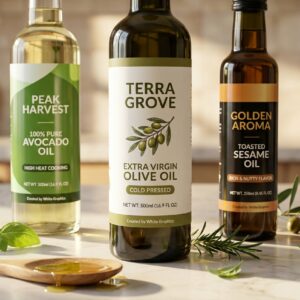
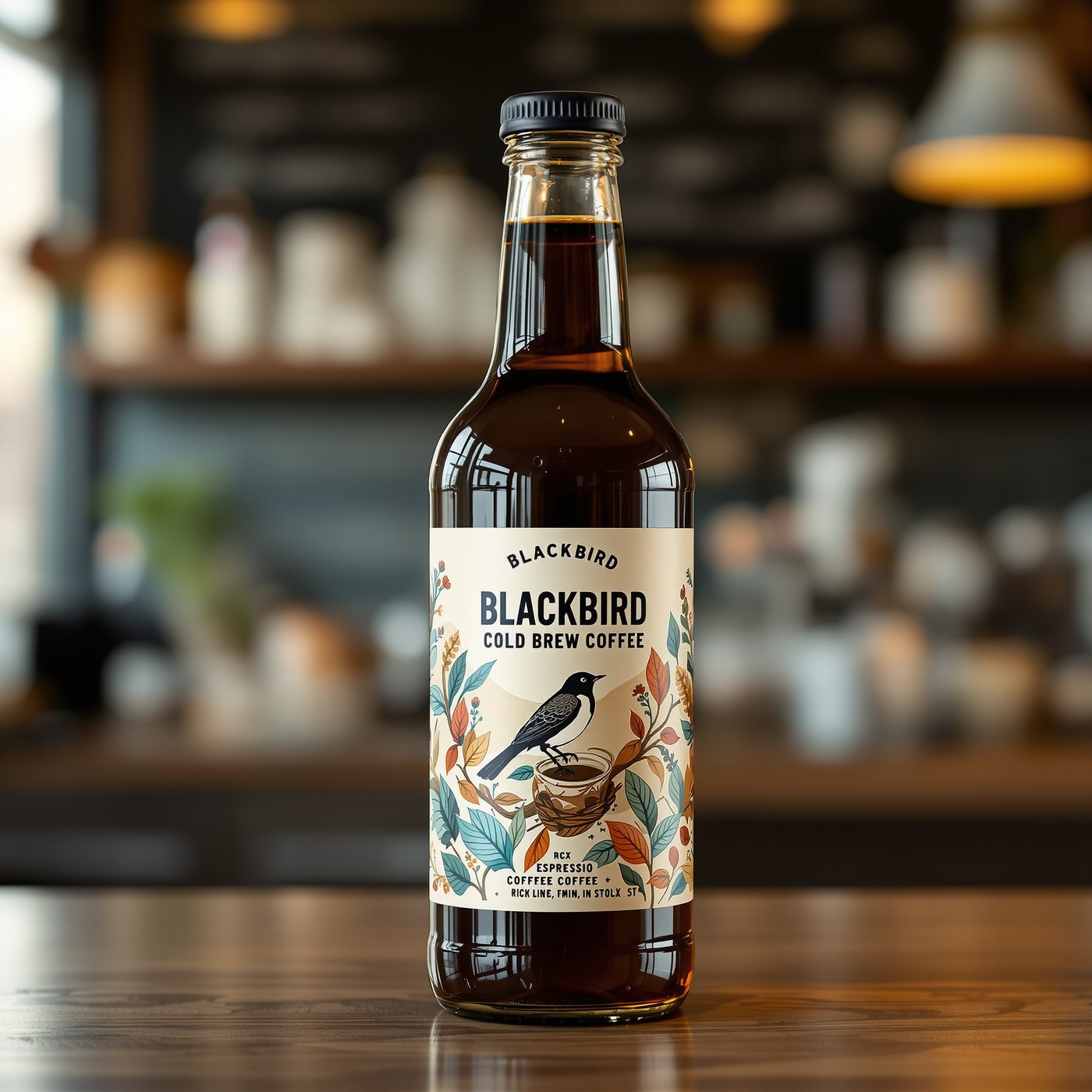
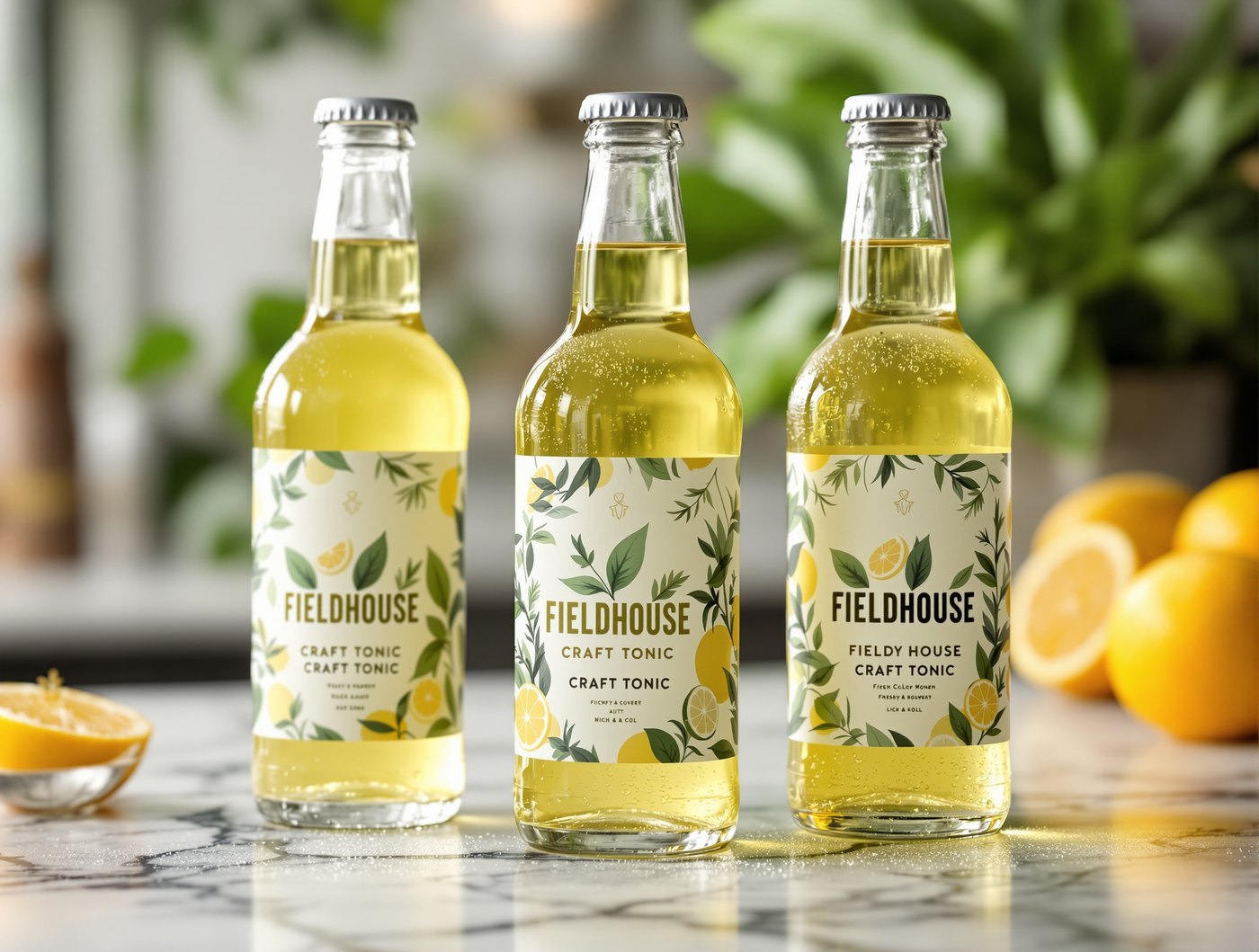
We print pressure-sensitive bottle labels for water and beverage bottles, sauce and dressing bottles, oil bottles, personal-care and lotion bottles, home and cleaning products, and industrial containers, in glass, PET, and HDPE. Browse every label type we print, or jump to the neighbors: juice & beverage labels, BBQ & hot sauce labels, and cooking oil labels. Beverage producers can head for wine bottle labels and beer bottle labels.
Bottle label file setup: die lines and wrap seams
Every bottle label file answers three questions: where does the die line fall on the real container, what stays inside the safe zone and out of the wrap seam, and is the art true vector (PDF, AI, or EPS) at 300 dpi in CMYK with bleed? If your file already answers all three, it goes straight to proof. If not, our prepress team measures the bottle, draws the die, and walks you through bleed, safe zone, and material choice.
What happens between quote and finished roll
After the quote, prepress fits your art to a die drawn from the bottle’s actual measurements and issues a GMG color proof for approval. The run prints on our G7® Master Certified digital press (conformable white film for squeeze and curve, semi-gloss paper where the bottle allows), then laminates, die-cuts, and winds to your applicator’s unwind direction and core.
Bottle label FAQs
How do I know what size label fits my bottle?
Measure the straight vertical panel (label height must not exceed it) and the circumference (diameter × 3.14 for round bottles). Or skip the math: send us the bottle or its make and model and our prepress team will draw the die line to it.
Are the labels waterproof?
They can be. For refrigerated, iced, or bathroom service we spec durable white films with moisture-tolerant adhesives and laminates, so the label stays flat, adhered, and legible through condensation and handling.
Can you label a tapered or squeeze bottle?
Yes. Tapered bottles get a curved die line matched to the cone; squeeze bottles get conformable film that flexes with the sidewall without creasing or lifting.
Full wrap or front-and-back — which should I choose?
Full wraps maximize artwork space and hide the seam on the back; front-and-back sets cost less in material and suit bottles where the sides stay visible. We’ll recommend one based on your bottle and shelf goals.
Do your roll labels work with automatic applicators?
They do. We wind rolls to your applicator’s unwind direction and core size and confirm both before printing, so the rolls go straight onto your line.
Can you do short runs first?
Yes. Launch-scale and test-market quantities are routine, and the same die and color setup scales to automated-line volumes with consistent quality.
What file format do you need for bottle label printing?
PDF, AI, or EPS vector, CMYK color, 300 dpi, bleed included, die line measured from the container itself. Missing pieces are normal; prepress measures and fills them in.
Price labels for any bottle you fill
Send bottle details and artwork, and we’ll match material, adhesive, and die before we talk numbers.
Request a QuoteRelated products
-
Food Labels
Custom food labels built to FDA compliance - Nutrition Facts panels, allergen callouts,...
-
Syrup & Condiment Labels
Syrup and condiment labels that wipe clean on sticky jugs - pure-maple naming...