
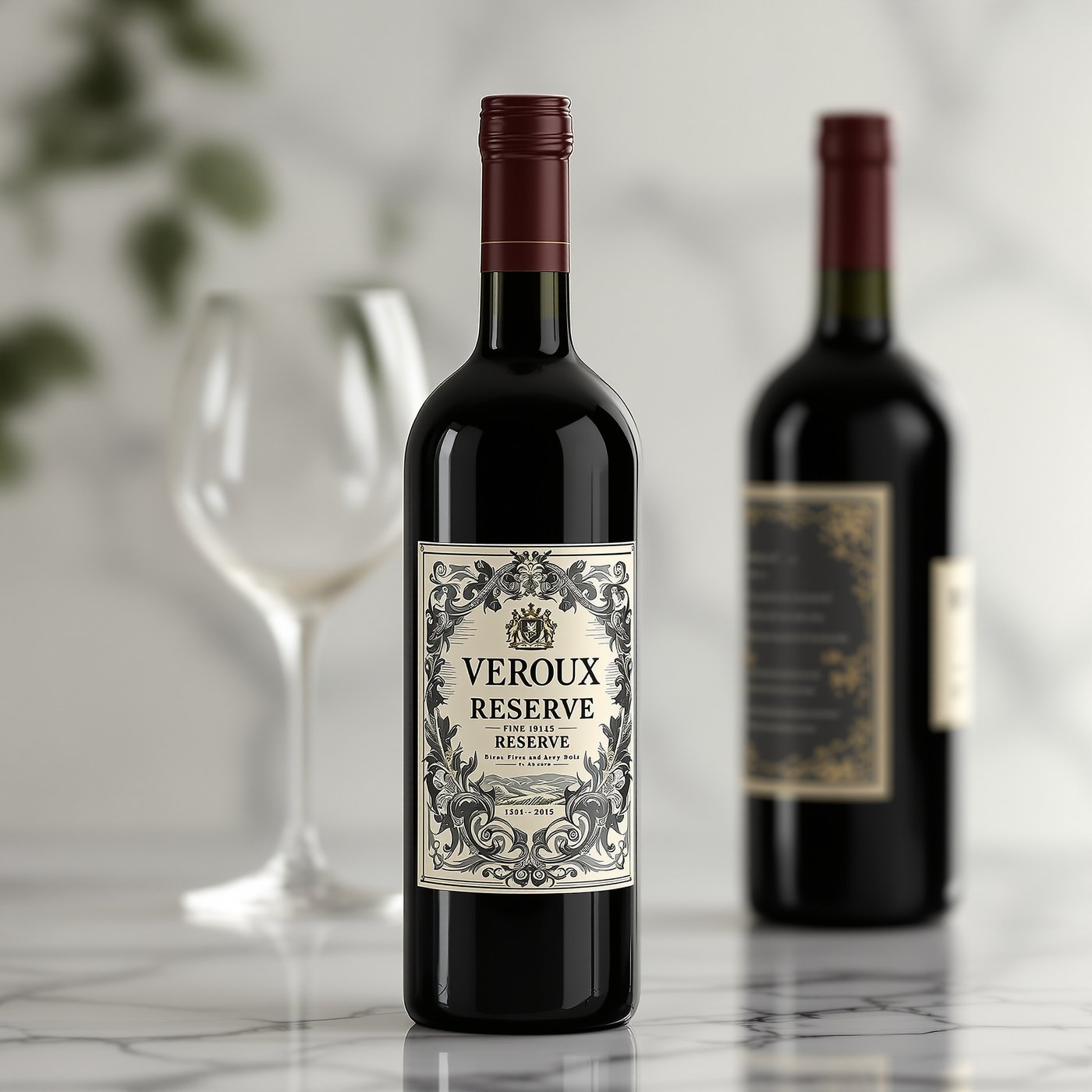
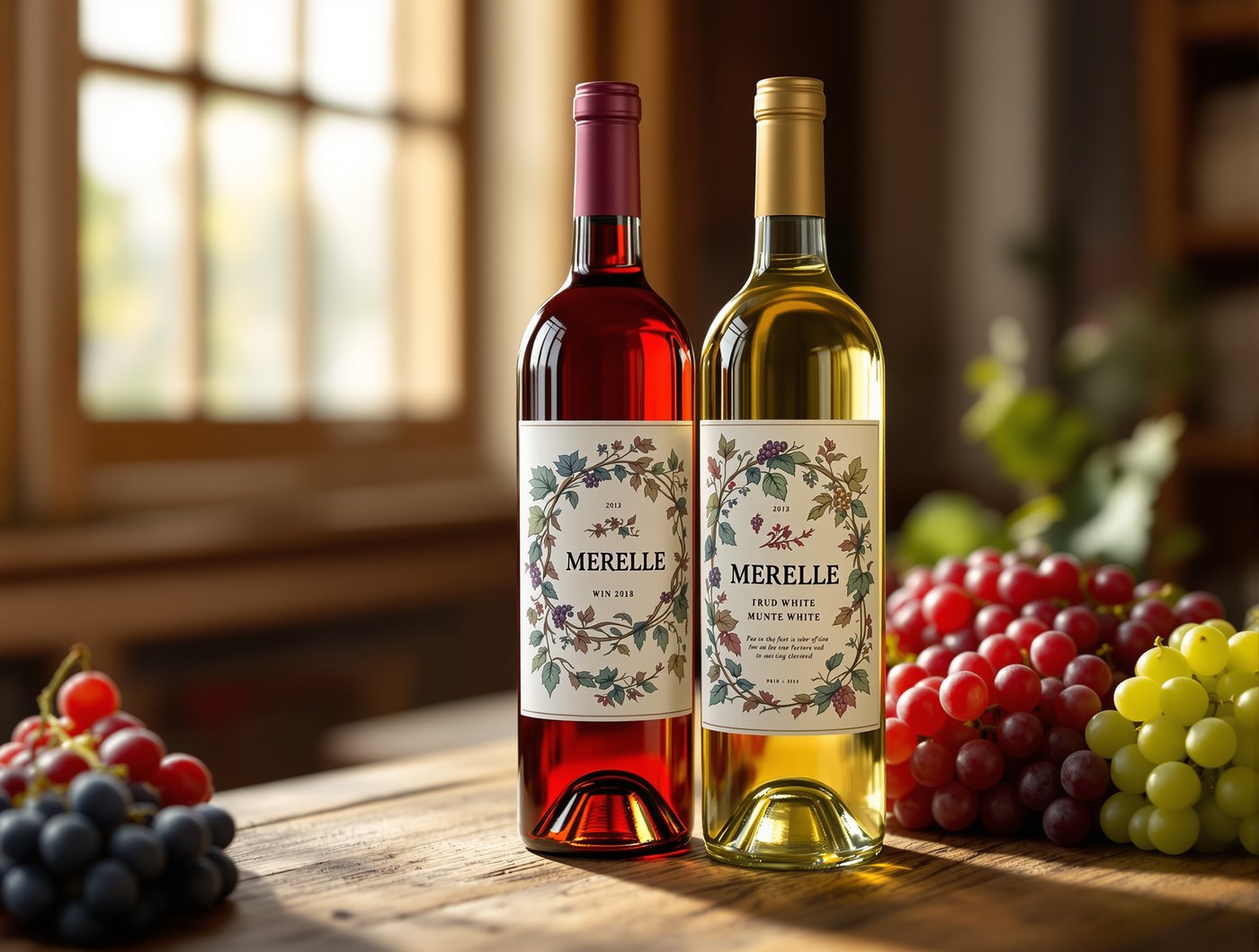
Custom wine labels on estate papers and durable films – TTB-ready layouts, ice-bucket-proof materials, and G7-accurate color vintage to vintage.
Contact us for pricing, minimum quantities, custom specs, and turnaround times.

Color Accuracy Guaranteed
Substrates
Finishes
Applications
Wineries, cideries, meaderies, and private-label producers bring us everything from a single small-lot vintage to full production runs, and our custom wine labels cover that whole spread. Every label is laid out with the TTB-mandated statements in place, printed on estate-grade papers or durable films that survive the ice bucket, and color-managed so this vintage matches the last one. In Naperville, Illinois, one G7® Master Certified crew carries each wine label printing run from prepress through finishing, and knows your brand on sight.
Wine label sizes, shapes, and materials
The bottle is the brief: wine dies are drawn from your glass, not a size list. We offer classic front-and-back sets for 750 mL bottles, tall single-panel designs, split labels, half-bottle and magnum formats, and full wraps for canned wine, plus any custom size your packaging calls for.
Shapes
Rectangle, square, arched, oval, circle, and custom die-cut shapes, including dies that echo your crest, monogram, or artwork.
Materials
Textured estate papers (felt, linen, laid, cotton blends), bright white and warm white uncoated stocks, 100% recycled kraft, and wet-strength white films for chilled service.
Finishes
Matte and soft-touch laminates, gloss accents, and spot-gloss highlights that lift artwork off a matte field, each chosen for cellar and ice-bucket durability.
Formats
Pressure-sensitive front-and-back sets, single panels, and roll labels ready for automated bottling-line application.
Not sure which stock suits your wine? Send your bottle and price point with your quote and we’ll recommend paper, finish, and adhesive.
Built for the ice bucket, not just the shelf
A wine label lives a harder life than most packaging: cellar humidity, refrigerator condensation, and (for whites, rosés, and sparkling) a full evening submerged in ice water at the table. Standard paper labels wrinkle, bubble, and slide in those conditions. We match the substrate to the service: wet-strength papers and film stocks with moisture-tolerant adhesives for chilled wines, and premium uncoated estate papers where a cellar-aged red will live dry. A customer who picks at a lifting corner remembers the label for the wrong reason. Ours stay flat, adhered, and legible.
Vintage-to-vintage color consistency
Your label is your shelf presence, and buyers find a favorite by color and mark before they read a word. Press calibration held to the G7® Master standard means the burgundy on this year’s release matches last year’s bottle sitting next to it on the rack, run after run, vintage after vintage. That consistency is what makes a small-lot producer look like an established house.
Laid out to TTB wine-labeling requirements
Before wine crosses state lines, its label generally needs a Certificate of Label Approval (COLA) from the TTB, and a missing or mis-sized statement is the kind of thing that gets an application sent back. The rules live in the TTB’s labeling requirements; White Graphics positions every mandatory statement where the TTB expects to find it, so the artwork shows up submission-ready:
- Brand name and class or type: the name your wine sells under, plus its designation (varietal, “red wine,” “sparkling wine,” and similar), with any required appellation of origin.
- Alcohol content: stated in the TTB-accepted format and placed where the rules allow.
- Net contents: the authorized standard of fill (750 mL, 375 mL, and the rest), positioned correctly.
- Name and address of the bottler: the “Bottled by” statement tied to your permit.
- Sulfite declaration: “Contains Sulfites” where the wine carries 10 ppm or more.
- Government warning: the required health warning, given its mandated bolding, separation, and container-scaled type size.
Minimum type sizes scale with container size, and the warning statement has its own formatting rules; our prepress team checks both before anything goes to press. One wrinkle worth knowing: wines under 7% alcohol fall under FDA food-labeling rules instead of the TTB scheme, and we build those panels too. Every mandatory line prints as your compliance advisor cleared it, and the filings themselves stay on their desk.
Every bottle format, every release
We print pressure-sensitive wine labels for standard 750 mL and half bottles, magnums and large formats, canned wine and spritzers, cider and mead, tasting-room exclusives, wine-club releases, and private-label programs for restaurants and retailers. Front-and-back sets, neck bands, and case labels can run together so the whole package matches. For full wraps on cans and unusual bottle shapes, see our fit-engineered bottle labels. Browse every custom label type we print, or see related categories such as beer labels, spirits labels, and juice & beverage labels.
Wine label file setup and die lines
A wine label file is measured against the bottle before it’s measured against anything else: die line on the true straight panel, mandatory statements positioned inside the safe zone, bleed past every trim edge, art built as vector (PDF, AI, or EPS) in CMYK at 300 dpi. Bring a finished file and we run it; bring a vintage and a vision and prepress handles the rest.
The path from proof to bottling line
Every wine label starts with a GMG color proof, so you sign off on the exact burgundy before the run. From there it prints G7®-controlled on estate papers or wet-strength film, laminates, die-cuts on dies drawn to your bottle’s panel (no downloaded template guesswork), and winds to your bottling line’s unwind spec. Common fronts run around 3.5″ × 4″ with matching backs; yours run whatever the glass calls for.
Wine label FAQs
What does the TTB require on a wine label?
Federal rules require the brand name, a class or type designation, alcohol content, net contents, the bottler’s name and address, a sulfite declaration where applicable, and the government health warning, each with its own placement and type-size rules. All of it gets positioned to spec during prepress.
Do you handle the COLA application?
We prepare the label artwork so every mandatory element is present, positioned, and sized for a Certificate of Label Approval submission. The filing itself goes through your TTB permit; most clients submit directly or through their compliance advisor, using our print-ready art.
Will the labels survive an ice bucket?
They can. For whites, rosés, and sparkling wines we spec wet-strength papers or film stocks with moisture-tolerant adhesives, so the label stays flat and adhered through refrigeration, condensation, and full submersion in ice water.
Can I get a textured, premium-feel paper?
Yes. We print on estate-style stocks (felts, linens, laid finishes, and cotton blends) plus warm white uncoated papers and recycled kraft. A matte or soft-touch lamination with a spot-gloss pass adds depth without losing the tactile feel.
Do you print small lots and wine-club runs?
We do. Limited releases, club exclusives, and tasting-room-only bottlings are the runs we like, and the same setup scales to full production volumes with consistent quality.
Can you match our label color from last vintage?
We can. Our presses are G7® Master Certified, so brand colors reproduce precisely and repeat from one vintage and one run to the next.
What file format works for wine label artwork?
Vector art (AI, EPS, or press PDF) at 300 dpi in CMYK with bleed and a die on the straight panel. Prepress positions the mandatories and finishes the file.
Price labels for your next vintage
Send bottle details and artwork; estate papers, films, and dies all live in one quote.
Request a QuoteRelated products
-
Beer Labels
Custom beer labels for bottles, cans, and growlers - condensation-ready materials, TTB-aware layouts,...
-
Spirits Labels
Custom liquor bottle labels for craft distillers - TTB-ready layouts, textured top-shelf stocks,...