
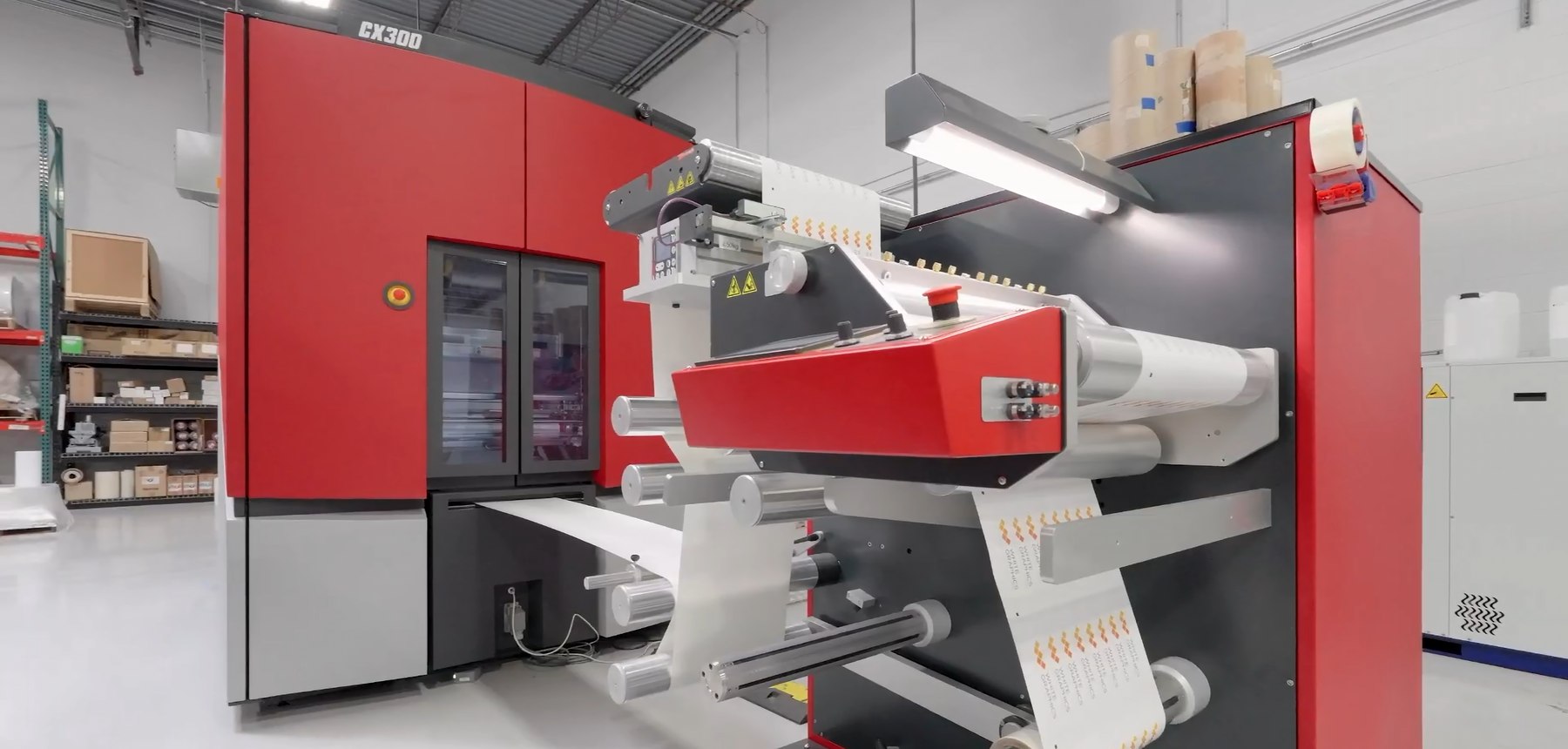
Custom stand-up pouches that hold color on film.
Full color on flexible film, short runs through full production. Printed, laminated, and finished with one team carrying your pouch from first prototype to the loading dock, coordinated by White Graphics in Naperville, Illinois.
Why brands move to custom stand-up pouches.
Saturday morning at a farmers market, a bag of small-batch granola stands upright at the front of a folding table. A shopper picks it up, turns it to read the back panel, runs a thumb across the zipper, and sets it back down facing out. The whole exchange takes about eight seconds, and the package did most of the talking. That moment is what a stand-up pouch is built for.
The practical case is just as strong. A pouch stands on its own gusset, so it holds shelf position without a carton around it. Flexible packaging pouches ship flat and fill light, which cuts freight against jars and rigid tubs. The zipper keeps product fresh through daily use, so the bag stays out on the counter where the printing keeps working. And print runs edge to edge across the film, the same discipline we bring to every custom retail packaging format we build.
Watch a stand-up pouch come together.
Read the video transcript
A stand-up pouch sells in the seconds a shopper holds it. White Graphics prints yours on flexible film: full color, with gussets, zippers, and tear notches built for your fill line. One team carries it from first prototype to the loading dock. White Graphics, Naperville. Since nineteen seventy-two.
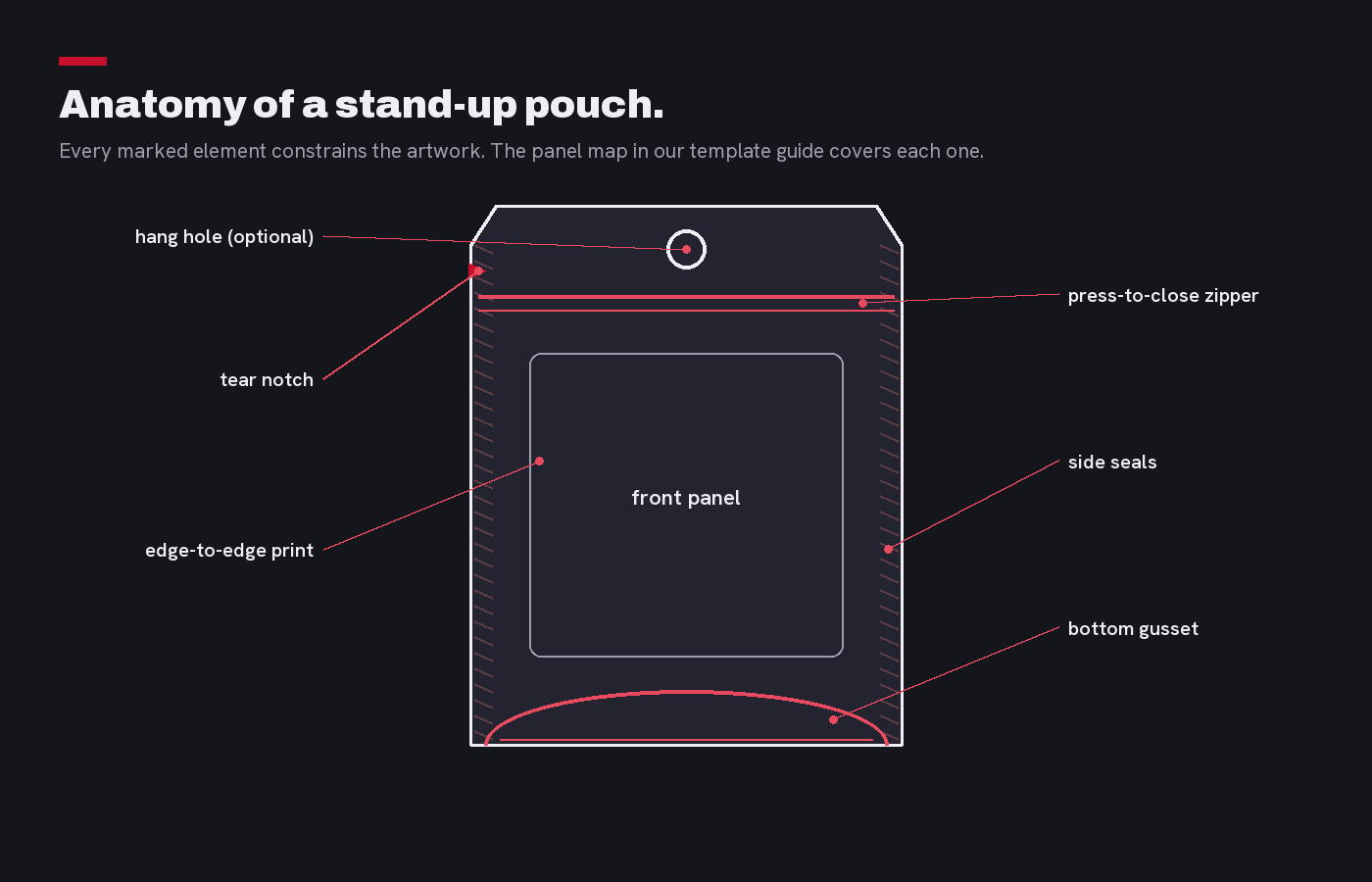
Pouch anatomy: six parts that decide where your art can go.
Start at the bottom. The gusset is a folded panel of film tucked between the front and back faces; fill the pouch and it opens into an oval base that carries the weight. That fold is the reason the format stands, and it is also the first artwork constraint. Color floods and patterns cross the gusset fine, but type or a logo placed low on the front panel will curl under and distort once the bag is full.
The front and back panels are the billboard, and the side seals are their frame. Seals run the full height of the pouch, and the film inside a seal gets pressed and textured, so artwork must bleed through the seal area while type stays safely inside it. Design a hairline border and any drift in the seal will make it read crooked; leave borders off and let color run past the edge instead.
Up top, three features share a few inches of film. The press-to-close zipper track sits below the top seal and bulges slightly, so fine type across it will break up. The tear notch needs clear space at both side seals so the opening tear starts clean. And if the pouch will hang on a peg, the hang hole reserves a keep-clear at top center. The anatomy diagram maps each zone; our dieline template marks all of them.
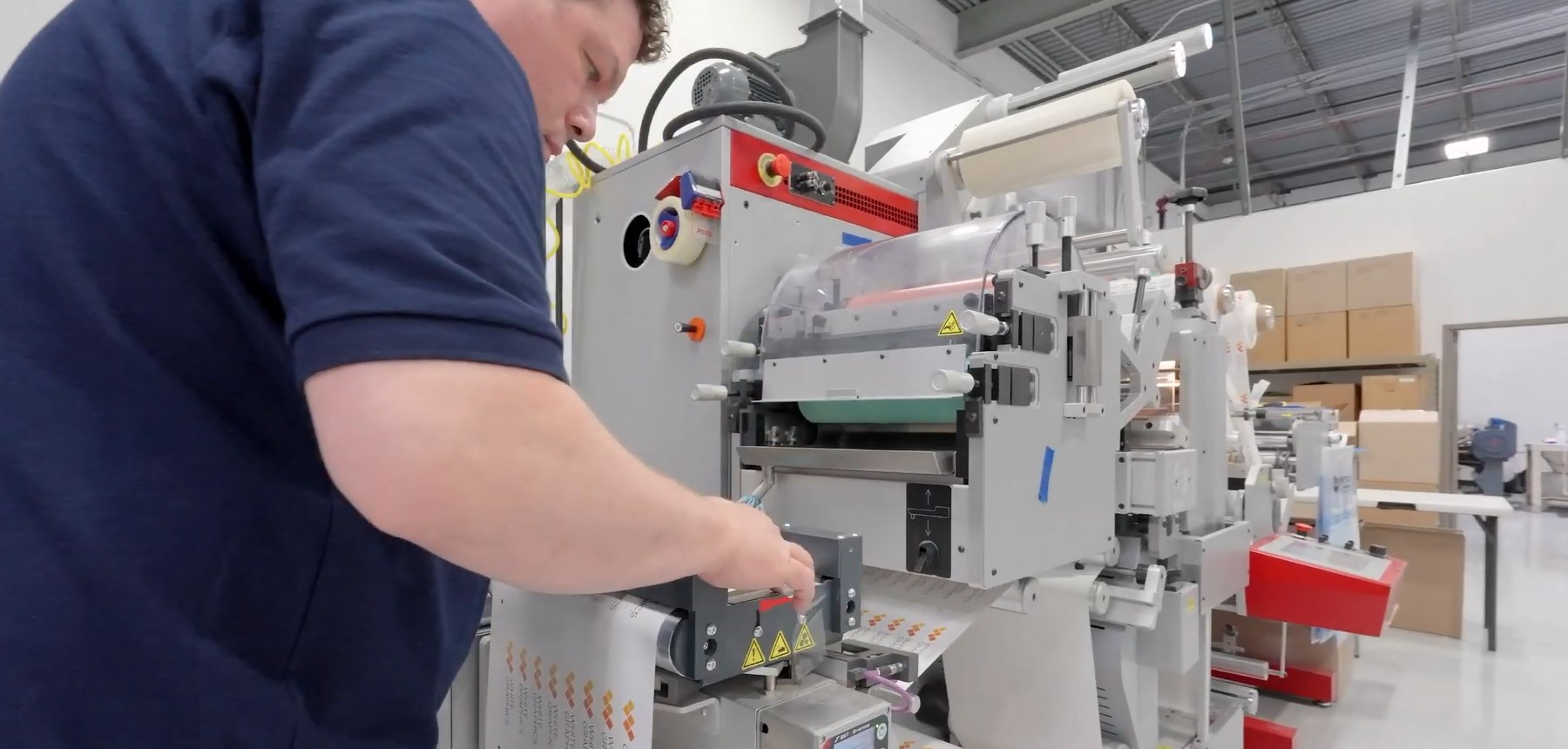
Stand-up pouch printing starts with a layer you never see.
Film is not paper. Process inks are translucent, and on a bare film web they turn thin and muddy, shifting with whatever sits behind them. Dark roast beans behind unbacked orange read brown. That is why serious stand-up pouch work carries an opaque white underlay behind the four-color image: the white becomes the paper, and brand color stays true no matter what fills the bag.
Managing that white layer is half the craft. A full flood behind everything gives maximum punch; a spot white lets you drop windows into the art so the product shows through, and it has to register tight to the color above it or you get pale halos at every edge. White Graphics runs pouch color through the same G7 calibration that runs our cartons and labels.
That matters most when the pouch is not the only thing on the shelf wearing your color: a pouch printed to the same measured targets as your carton and your label reads as one brand. Proof-to-press discipline closes the loop. You approve a proof before production, so what lands on the fill line matches what you signed.
Coffee, snack, pet, pantry: where the format earns its shelf space.
Most of the pouch work that crosses our dock falls into four categories, and coffee leads by a wide margin. Custom coffee bags carry two requirements the others skip: a one-way degassing valve so fresh-roasted beans can off-gas without bloating the bag, and a top seal spec that matches the roaster's fill line. We build both into the dieline and coordinate the details with your co-packer before film runs.
- Coffee: valve placement, matte or gloss film, and seal dimensions are set with your roaster or co-packer, so the bag that lands on their line runs without adjustment.
- Granola and snack: high-barrier laminate keeps the crunch, and a spot-white window can show the product without giving up printed real estate.
- Pet treats: heavier fill weights want a wider gusset and a zipper built for a bag that gets opened every single day.
- Pantry: spices, baking mixes, and dry goods move from jars to pouches for the freight savings alone, then stay for the shelf face.
- Starter path: if volumes are not there yet for custom film, a printed custom label on a stock pouch puts the brand on the table while it grows.
Artwork setup for a pouch that still has to run on a fill line.
A pouch dieline lays the whole bag flat: front panel, back panel, and the gusset opened out, with seal areas and fold lines marked. Build art across the full spread with an eighth inch of bleed past every trim edge, keep type and logos inside the safe zones, and give the gusset pattern work while the panels carry the message. Files set up this way survive the trip from screen to film without surprises.
The keep-clears come next: zipper track, tear notch, hang hole if the plan includes peg display, and the top seal area your filler will close. That last one is the spec most artwork skips. Pouches ship to the fill line open, and the equipment that closes them dictates seal height, valve position for coffee, and sometimes web orientation. We ask your co-packer for those numbers during prepress, while the file can still absorb them.
Before committing to a production run, hold the thing. A prototype pouch made from your file, on your film, shows how the gusset art folds, how the zipper zone reads, and whether the front panel still sells from four feet away. Catching a crowded panel at that stage is the cheapest revision you will ever make.
The Stand-Up Pouch Artwork Template Guide
The panel map with gussets, zipper and tear-notch keep-clears, bleed on film, fill-line specs and the prepress checklist, on two printable pages.
Compare the pouch against five other formats
The retail packaging page walks through all six formats we print, with a drag-to-rotate 3D sample table. If a pouch is the wrong call, that page shows what the right one is.
Custom Stand-Up Pouches: questions, answered.
What is the minimum order for custom printed pouches?
Lower than most brands expect. Because the work runs on digital presses with no plates to make, printed stand-up pouches make sense in the low hundreds, and several SKUs can share one run. That makes the format workable for a flavor test or a farmers-market season as readily as a national rollout. Send quantities through the quote form and we will scope it.
What drives the cost of a custom pouch order?
Five things, roughly in order: pouch size, the film structure and barrier level the product needs, run length, features like zippers, hang holes, and valve provisions, and how many SKU versions ride the run. Digital printing removes plate charges from the equation entirely, which is why short runs stay sensible. A dieline review pins the variables down before anyone quotes a number.
Do I need a degassing valve on custom coffee bags?
For whole bean or ground coffee packed fresh from the roaster, yes: beans keep releasing carbon dioxide for days after roasting, and a one-way valve vents that pressure without letting oxygen in. Valve application typically happens on or alongside your roaster's fill line, so we build the placement into the dieline and match specs with your co-packer. Your filler owns the final valve spec; we make sure the printed bag agrees with it.
What zipper options do pouches offer?
Press-to-close is the workhorse: a plastic track sealed below the tear notch that opens and closes hundreds of times without losing grip. It suits coffee, snacks, treats, and anything used a scoop at a time. Single-serve products often skip the zipper and rely on the tear notch alone, which frees up panel space. Whichever way you go, the zipper zone is a keep-clear, and our template marks it.
Should I choose matte or gloss film for a pouch?
Category and brand personality decide it. Matte scatters light, reads craft and premium, and photographs well at market tables; gloss maximizes color saturation and shelf shine under retail lighting. Both print identically, since the lamination goes on after the image. Coffee and pet brands lean matte, snack brands lean gloss, but there is no rule. We can run your art on both films as prototypes and let the shelf decide.
How do I set up a print file for a pouch with gussets?
Start from our dieline template. Pouch printing files are built flat: front, back, and gusset panels in one spread, with an eighth inch of bleed past trim, type inside the safe zones, and nothing critical crossing a fold. Flag any spot-white windows on their own named layer. The template marks the zipper, tear notch, and seal keep-clears, and the guide below walks through every callout.
When does a pouch beat flow wrap?
When the product is multi-serve and needs to live on a shelf or counter: a stand-up pouch stands, reseals, and carries print on every face, which suits coffee, granola, and treats sold by the bag. Flow wrap is the single-serve play, a high-speed horizontal wrap for bars and individually sold pieces. Plenty of brands run both, pouch for retail and flow wrap packaging for the piece inside it.
Part of the retail packaging family.
Every format here runs through the same prepress, color and finishing pipeline. Explore the rest:
Put real numbers on your project.
Send the product, target pouch size, and your co-packer's name if you have one, and a production person will come back with film options and real pricing. No configurator, a conversation.