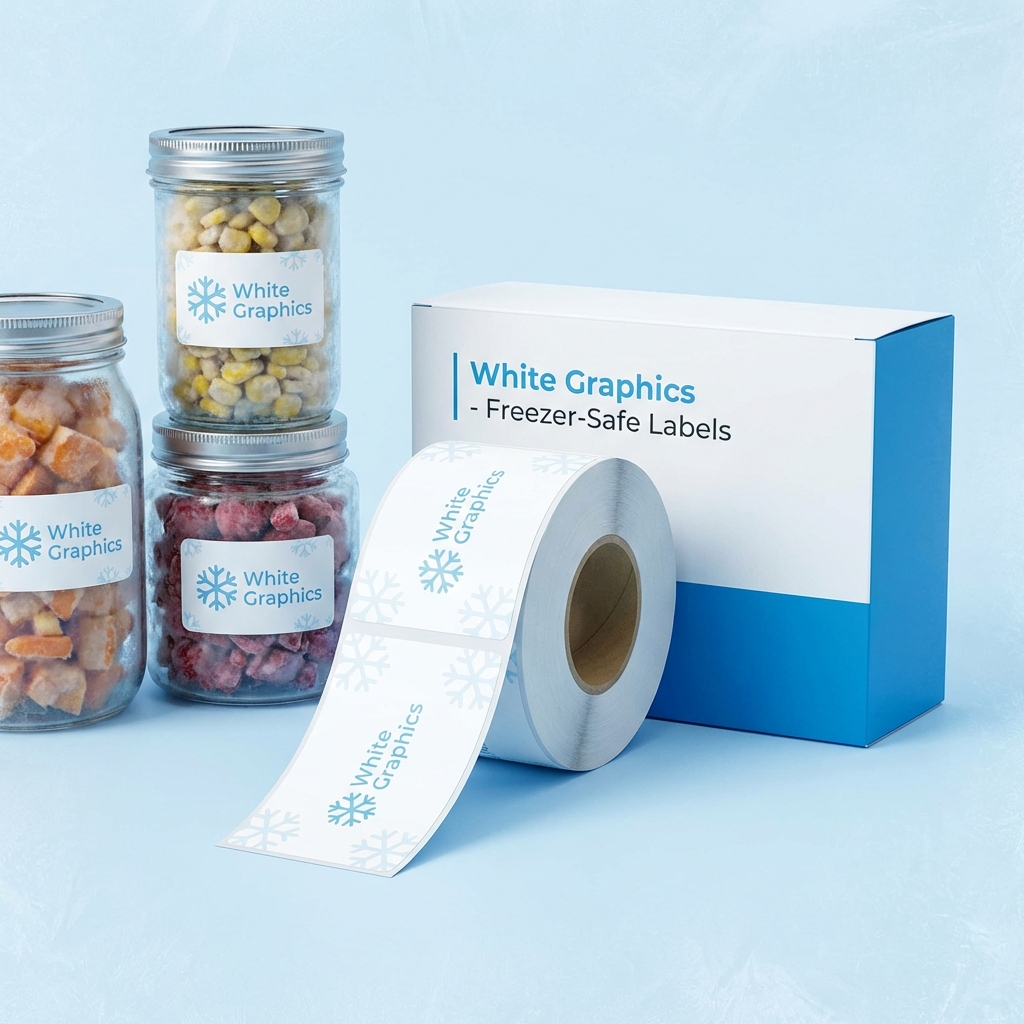
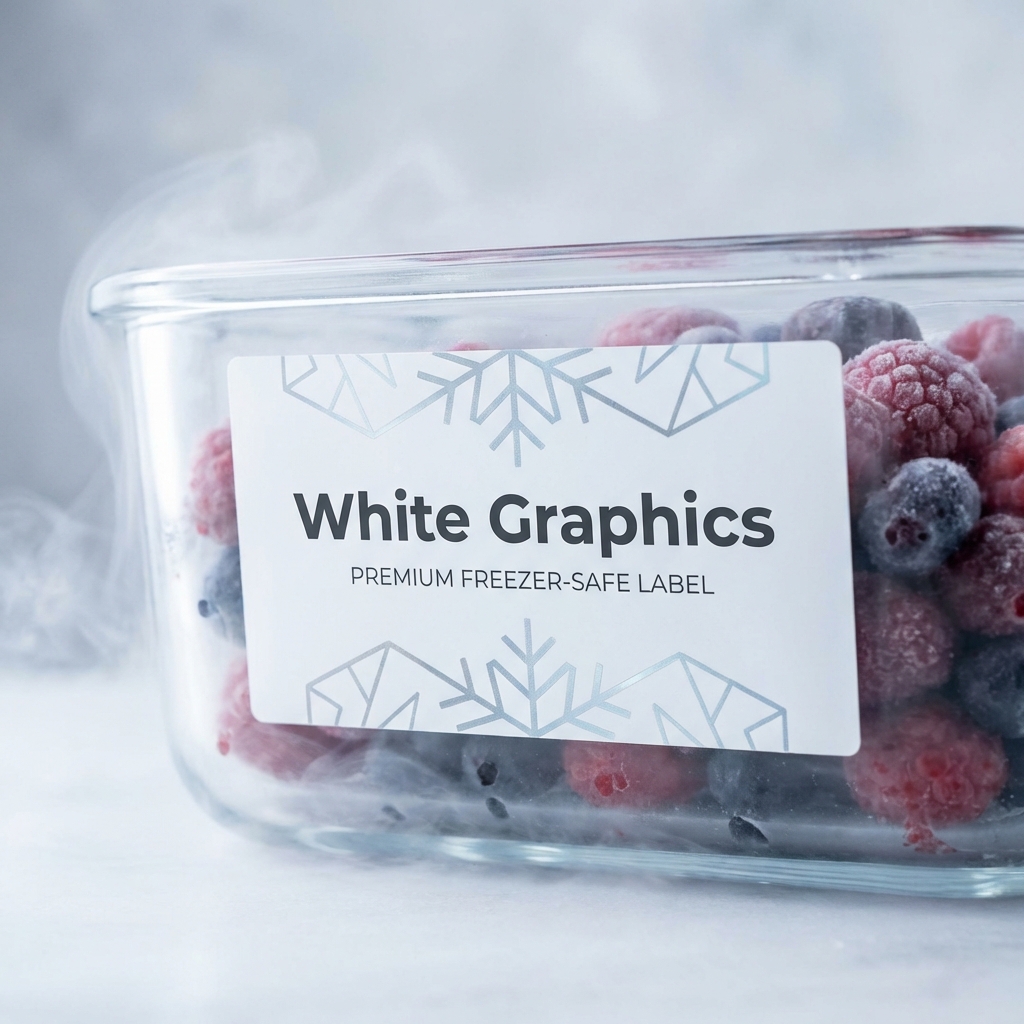
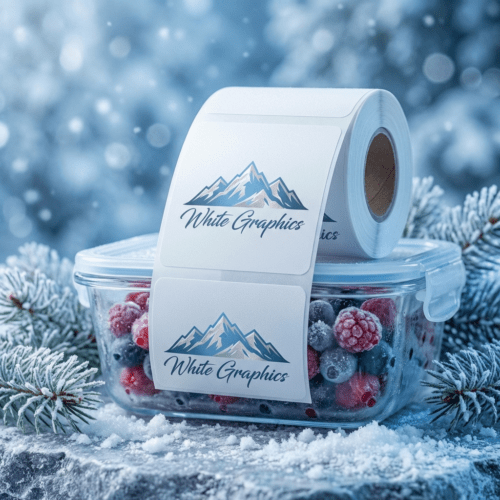
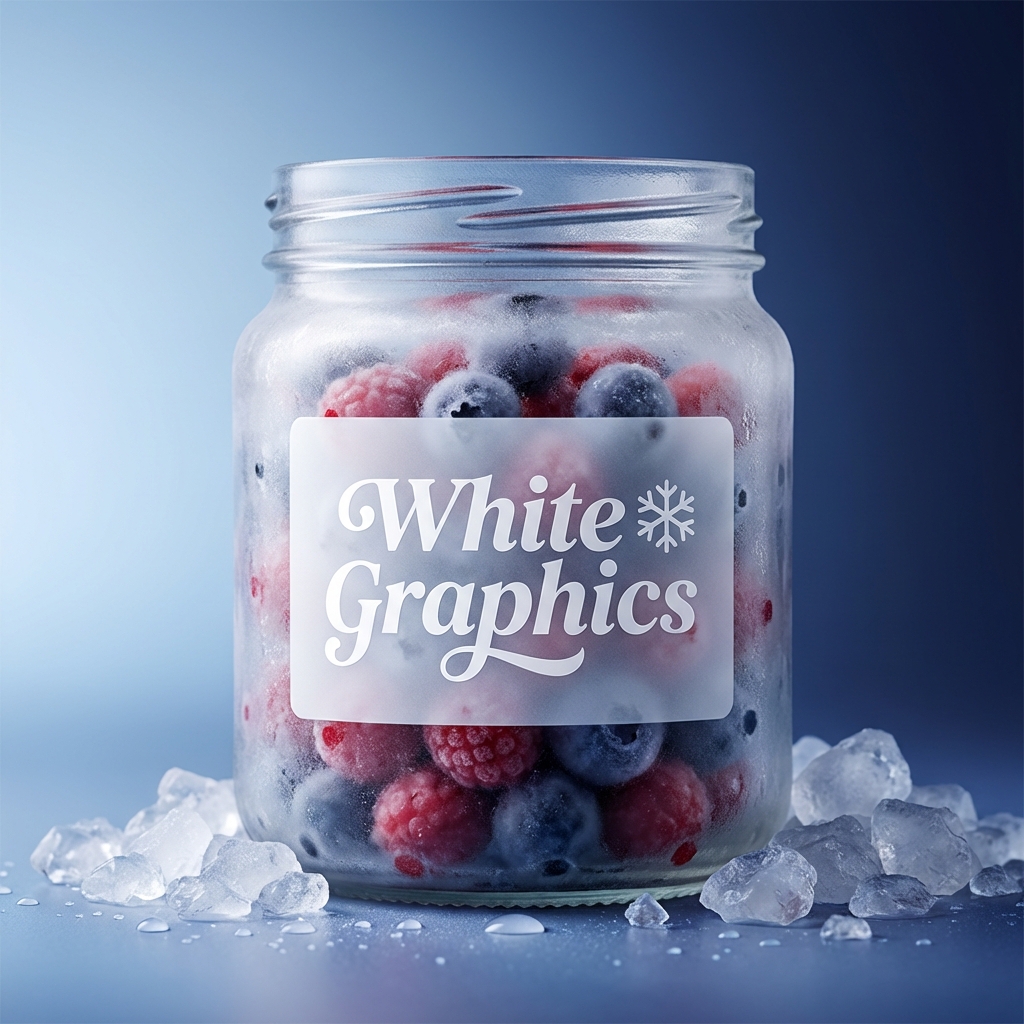
Freezer-safe labels engineered for both application and service temperature – cold-apply adhesives, frost-cycle laminates, every frozen format.
Contact us for pricing, minimum quantities, custom specs, and turnaround times.

Color Accuracy Guaranteed
Put a room-temperature adhesive on a frosty package and the label starts letting go before the case is even sealed. Deep-freeze storage takes the blame, but application temperature and service temperature are two different problems: most freezer-safe labels that fail were doomed at application, because an adhesive rated for months in deep freeze still has to bond to a chilled, damp surface first. Our freezer label printing specs both halves of that cold-chain equation, on G7® Master Certified equipment in Naperville, Illinois.
Freezer label sizes for bags, boxes, and tubs
Frozen packaging comes in too many shapes for a stock size list, so dies get drawn to the package. We build faces for frozen-entree boxes, panels for freezer bags and vacuum pouches, wraps and lids for pint and quart tubs, and case labels for frozen distribution.
Shapes
Rectangles, box faces, tub wraps and lid circles, and custom die-cuts for brand marks.
Materials
Freezer-grade films with cold-application adhesives, matched to film, board, and plastic surfaces.
Finishes
Laminates that keep print crisp through frost, thaw, and re-freeze cycles.
Formats
Pressure-sensitive singles and rolls for packing lines, wound to your applicator.
Tell us TWO temperatures: where the label gets applied, and where the product is stored. Both matter.
Where freezer labels actually fail
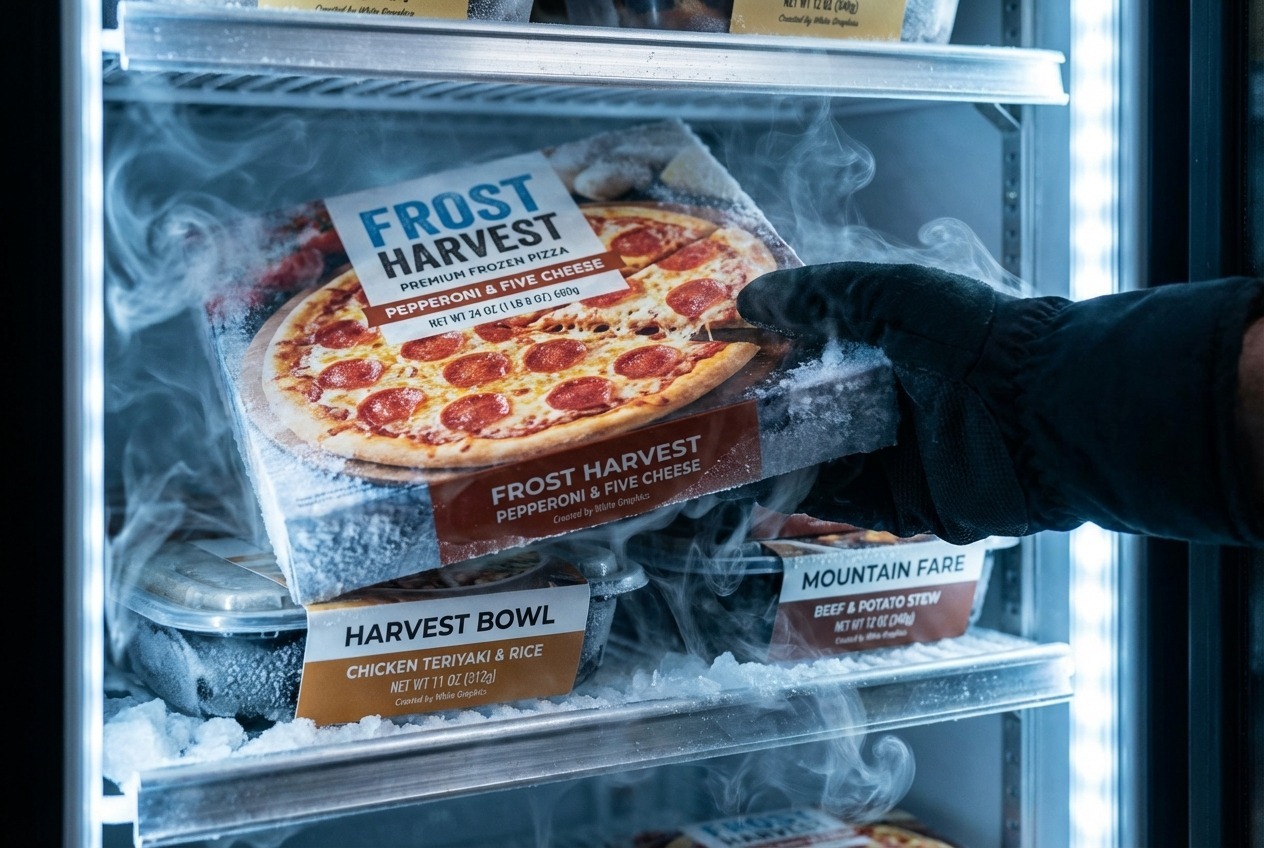
The packing table is the usual crime scene. A label pressed onto a package that is already cold, damp, or frosted never bonds in the first place; it waits a few days, then falls off. Cold-application adhesives solve that. Freezer-service ratings keep the bond through storage, and laminated faces stop condensation from blurring ink during thaw. We spec all three as one system.
Legible at minus-something, gorgeous at the case door
Frozen brands sell through a fogged glass door in three seconds. High-contrast design helps, and consistent color closes the deal. G7® Master Certified control holds your brand color identical across every SKU and reorder in the coldest aisle of the store.
The freezer-label spec, question by question
Freezer performance is a build sheet, not a marketing word. Before a freezer label runs, we work through the questions that decide whether it survives:
- Application temperature: room-temp packing before freezing is easy; labeling already-frozen or chilled packages demands cold-apply adhesives.
- Surface at application: dry board, damp film, or frosted plastic each bond differently; we match the adhesive to the worst case on your line.
- Service temperature and duration: months in deep freeze stresses adhesives differently than a week in a retail case.
- Thaw cycling: freezer-to-counter condensation is where inks blur and papers wrinkle; laminated film faces shrug it off.
- Package substrate: poly bags, waxed board, and rigid tubs each want their own adhesive chemistry.
- Required food copy: frozen foods carry standard FDA labeling (identity, net weight, ingredients, allergens, Nutrition Facts) plus keep-frozen and safe-handling lines where your product needs them.
Answer the two temperatures and the surface, and the right build follows. That conversation happens before anything prints.
Everything in the frozen aisle
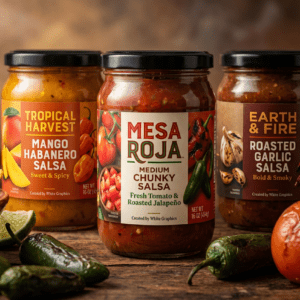
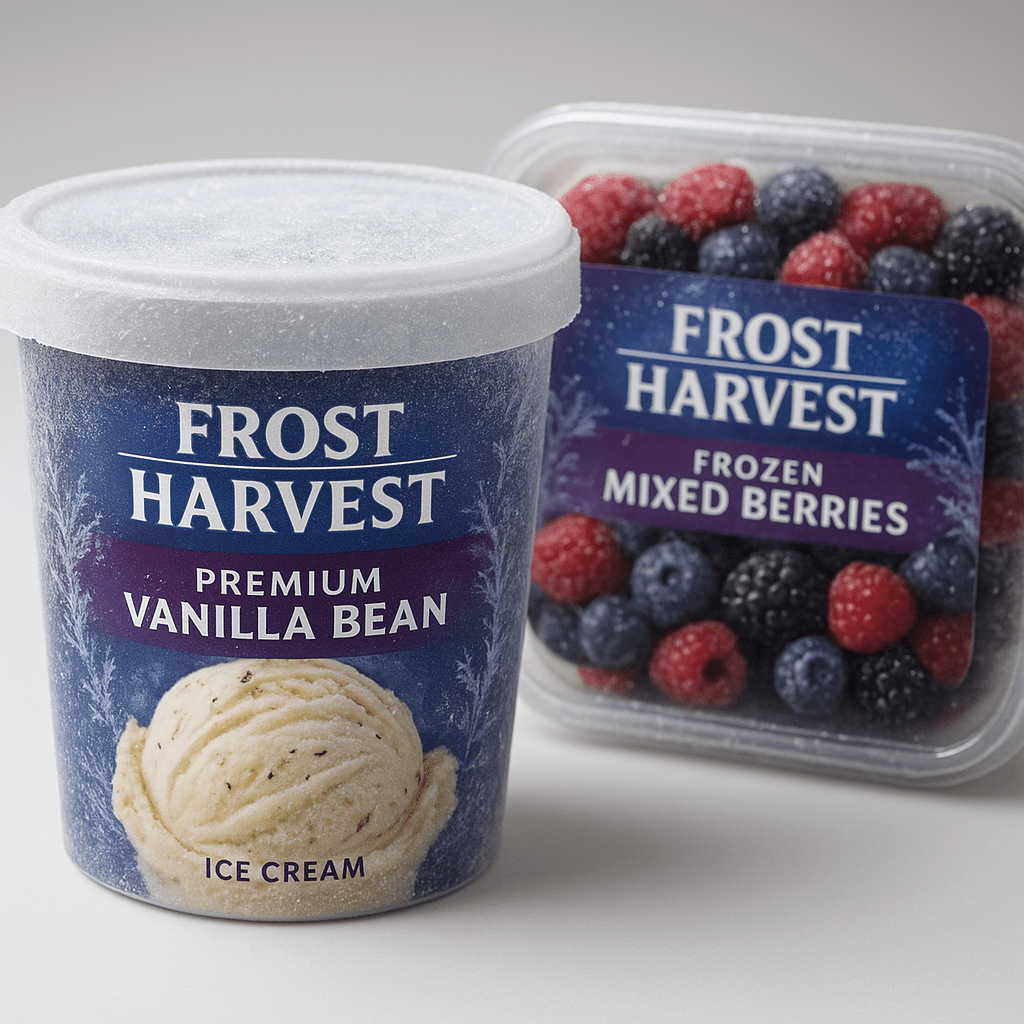
We print pressure-sensitive freezer labels for frozen entrees and sides, ice cream and novelties, frozen doughs and baked goods, meat and seafood vacuum packs, and meal-prep programs. Related categories: FDA-compliant food labels, snack food labels, and cooler-proof juice labels. Or browse the rest of the catalog.
Frozen-aisle artwork that reads through frost
Frost is a legibility filter. Art that looks bold on a monitor can vanish behind a frosted case door, so our prepress team pressure-tests contrast before the freezer does. Files need bleed, safe zones for safe-handling copy, dies drawn from the actual package, vector format (PDF, AI, or EPS), CMYK color, and 300 dpi.
Cold-chain production, spec'd twice
Freezer runs get spec’d twice on purpose (once for application temperature, once for service) and produced once: dies drawn to the package, a proof confirming contrast for the case door, a press run under G7® control on freezer-grade film, and lamination that stands up to freeze-thaw cycling. Rolls wind for the packing line, rated for the surface waiting at the end of it.
Freezer-safe label FAQs
Why do freezer labels fall off?
Usually because someone applied them to a cold, damp, or frosted surface with a room-temperature adhesive, so the bond never formed. Cold-application adhesives fix that failure point.
What’s the difference between apply and service temperature?
Apply temperature is the package’s condition when the label goes on; service is where it lives afterward. They’re different specs, and a freezer label needs both answered.
Will the print survive thawing condensation?
The print survives. Laminated film faces keep ink crisp through freeze-thaw cycling where paper labels wrinkle and blur.
Do the labels stick to poly bags and vacuum packs?
They do, with adhesives matched to low-energy films. Bag surfaces are their own chemistry, and we spec for it.
What copy do frozen foods carry?
Standard FDA food labeling, plus keep-frozen and safe-handling lines where the product calls for them, all set legibly at case-door contrast.
Can meal-prep programs get weekly-changing labels?
Yes. Variable printing handles rotating menus, dates, and nutrition lines run to run.
What file format works for freezer label artwork?
PDF, AI, or EPS built as vector, CMYK, 300 dpi, with bleed and package dies. Contrast gets checked against the frosted case door in prepress.
Quote a freezer-rated run
Send your two temperatures and package lineup; the right adhesive gets priced in from the first number.
Request a QuoteRelated products
-
Cover-Up Labels
Cover-up labels with true blockout opacity - regulatory corrections, barcode recodes, and import...
-
Spice Labels
Spice labels for jars, tins, and pouches - kitchen-proof laminates, spices-and-salt declarations done...
-
Nutrition Facts Labels
Nutrition Facts labels printed to the current FDA format - panels built from...