
Last updated: July 16, 2026
For most of packaging’s history, the minimum order quantity was the bouncer at the door. You wanted 500 printed boxes; the quote came back for 10,000, because someone had to pay for plates, cutting dies, and press make-ready before the first sellable unit existed. So small brands did the only things available: over-order and warehouse packaging they would outgrow, launch in a plain stock box with a label slapped on, or wait. The MOQ was never a pricing preference. It was a hostage situation, with tooling costs as the ransom.
Digital production ended that years ago. What’s strange is how many brands still act like the ransom is due: launches delayed until the budget can swallow ten thousand units, seasonal ideas shelved, redesigns postponed because the warehouse still holds last year’s boxes. Here is what short-run packaging actually is, who it’s for, the honest economics of when it wins and when it doesn’t, and why the old quality trade-off is dead.
Read the video transcript
Great packaging doesn’t start in our studio. It starts in yours. White Graphics takes the design you believe in, and builds it. Short-run boxes, cartons, and labels, on true production presses. No plates. No dies. No ten-thousand-unit minimum. And because color is measured, not eyeballed, unit five hundred matches unit fifty thousand. We’re not the designers. We’re the builders. And building is the part that has to be perfect. White Graphics, Naperville. Since 1972.
Table of Contents
- What short-run packaging actually is
- Who short runs are actually for
- The economics: where digital wins, and where it honestly doesn’t
- The quality objection is a decade out of date
- The ladder: prototype, short run, full run
- What you can get short-run
- FAQ
What short-run packaging actually is
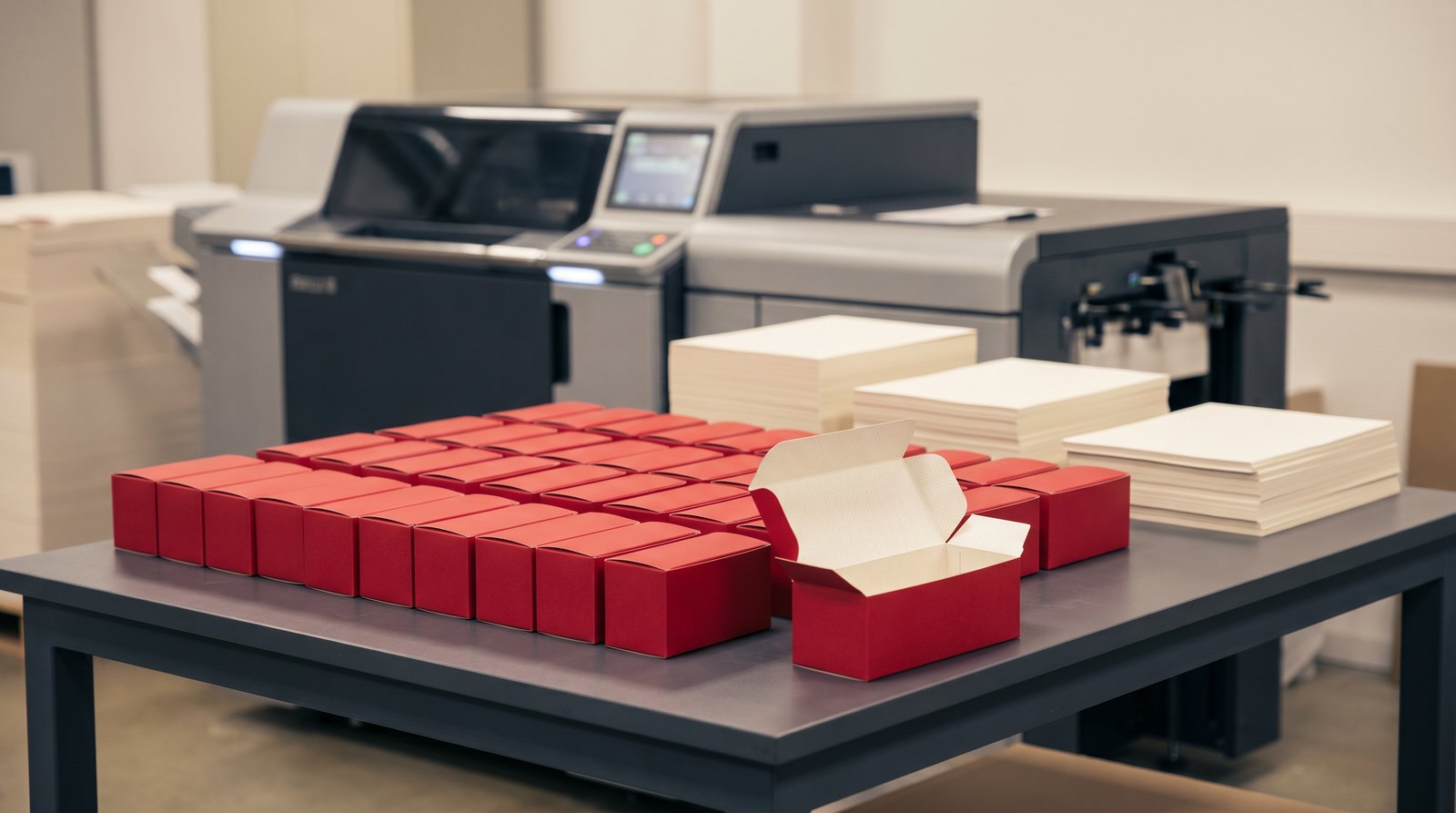
Short-run packaging is custom-printed packaging — boxes, folding cartons, labels, shrink sleeves, and flexible pouches — produced digitally in small quantities without the printing plates, cutting dies, or tooling costs of conventional production runs. Because there is almost no setup to amortize, quantities in the hundreds or low thousands carry a per-unit cost a business can actually plan around.
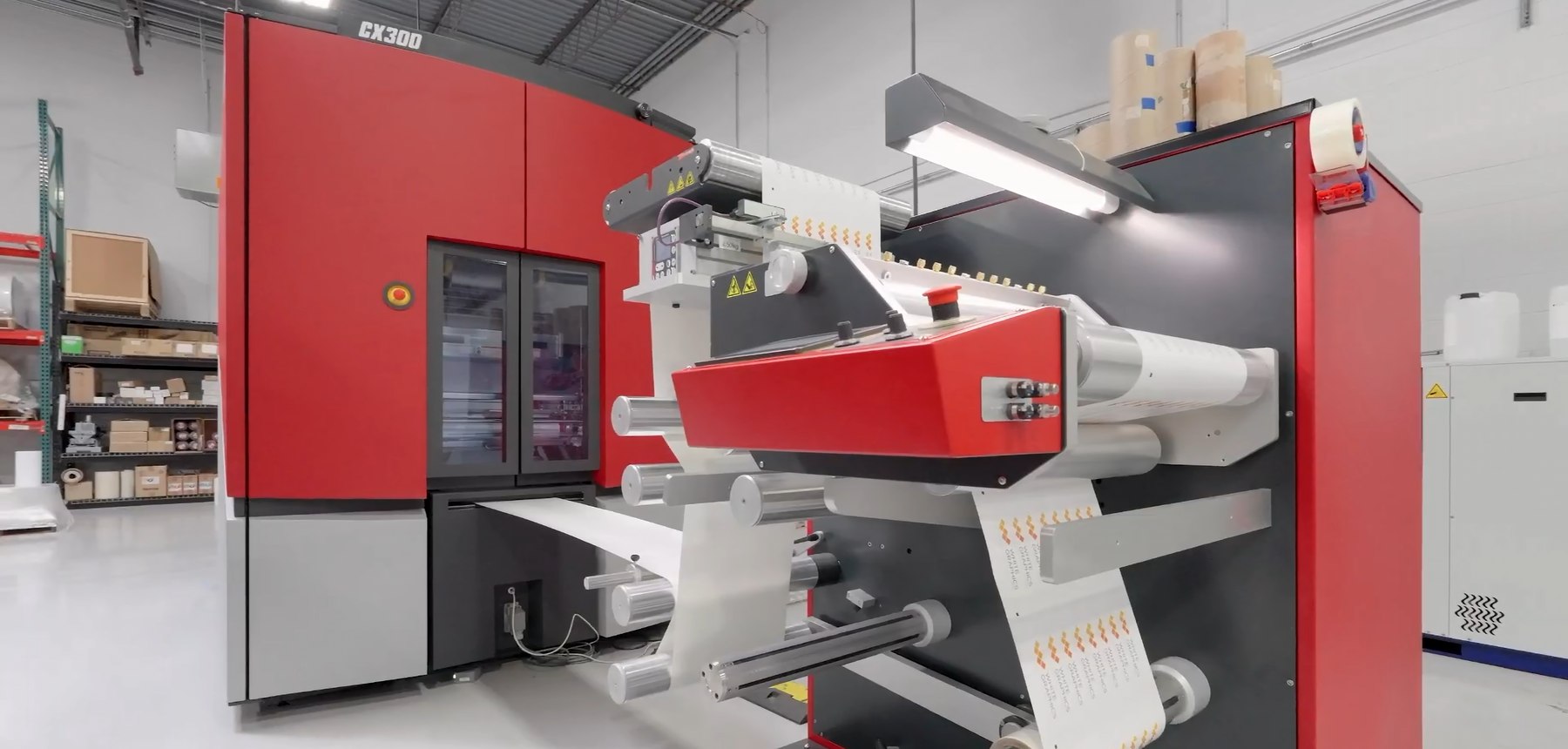
The mechanics are simple. A conventional press earns its keep on volume: plates get made, dies get cut, the press gets brought up to color, and all of that cost divides across however many units follow. A digital press prints straight from the file, and digital cutting tables and laser cutters handle the cutting and creasing that would otherwise demand a custom die. Change the file and you have changed the packaging; nothing gets re-plated, re-tooled, or thrown away. That is the entire revolution, and it is why a run of 300 cartons is now a normal Tuesday instead of an apologetic phone call.
Who short runs are actually for
Short runs are for any brand whose honest quantity is smaller than a conventional minimum, and that covers more of the market than the industry likes to admit. Product launches and test markets, where demand is still a hypothesis. Seasonal and limited editions, which expire by design. Line extensions that may or may not earn a permanent slot. Regional brands selling through dozens of stores rather than thousands.
It also covers two categories that barely existed when minimums ruled. Subscription boxes treat packaging as a monthly creative product, which is unworkable if every design change means a warehouse commitment; we see that math up close on the kitting side of our fulfillment operation. Crowdfunding campaigns promise backers a retail-grade unboxing at quantities most conventional plants won’t touch. And established brands quietly use small-batch packaging for retailer exclusives, market-specific promotions, and pilot programs that the national retail packaging program absorbs later if they perform.
The economics: where digital wins, and where it honestly doesn’t
Digital wins small quantities because setup is close to zero; conventional wins large quantities because setup gets amortized into irrelevance. Between those poles sits a crossover, and any printer who pretends there isn’t one is selling you their equipment instead of your outcome. From roughly 100 to 5,000 units, digital production usually quotes lower and always moves faster. Climb toward tens of thousands of identical units and conventional printing takes over on per-unit price, as it should.
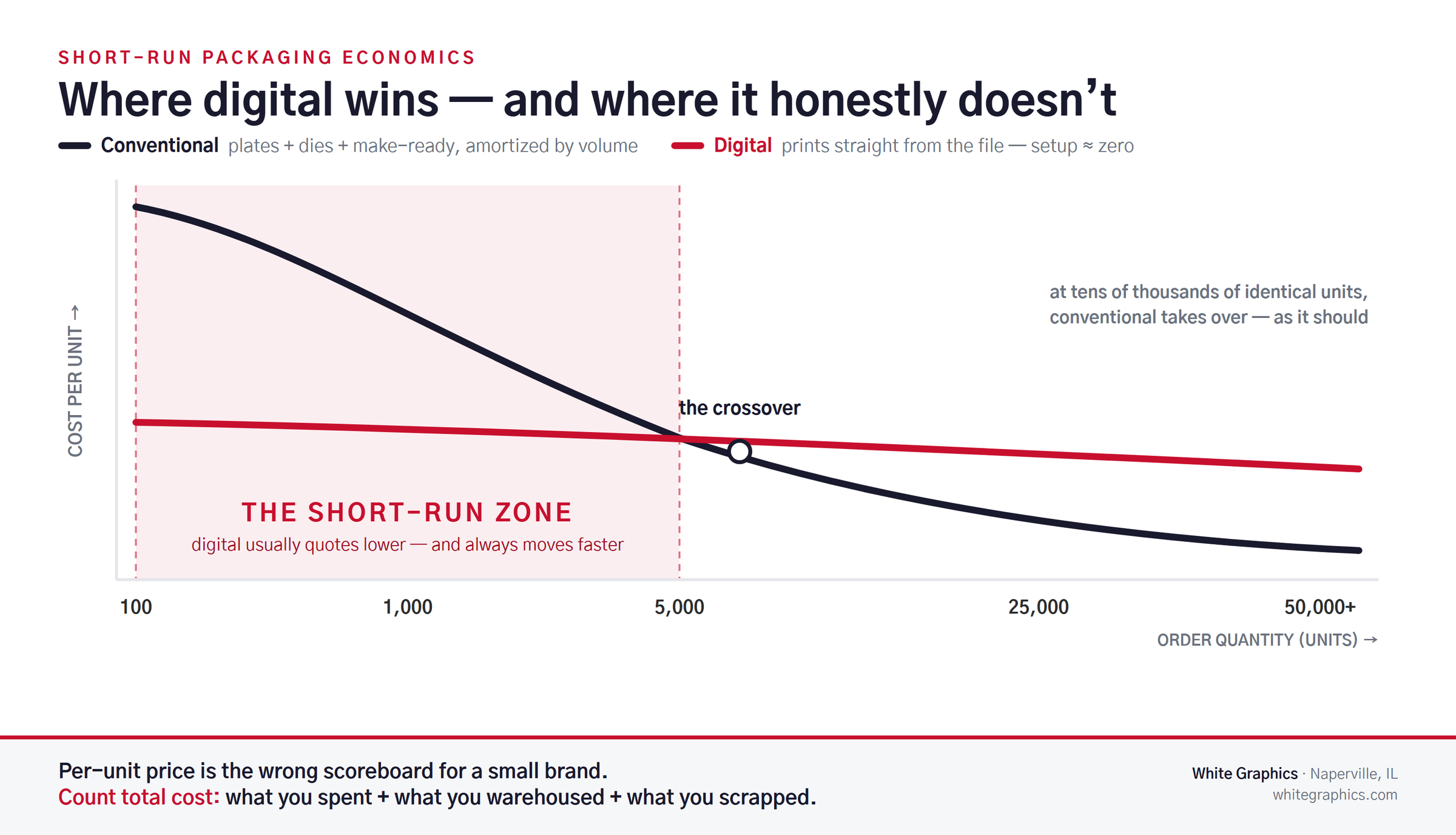
But per-unit price is the wrong scoreboard for a small brand, and it is the number minimum-order thinking trained everyone to stare at. The real scoreboard is total cost: what you spent, what you warehoused, and what you eventually scrapped. Packaging obsolesces on purpose (redesigns, rebrands, seasonal turns) and by force (ingredient changes, regulatory label updates). A pallet bought at a flattering unit price becomes the most expensive packaging you own the day a reformulation turns it into scrap. A short run costs more per box and less per business. That is the honest math. It is also why the right move at genuine scale is still a conventional run; the point is to earn that scale first instead of paying for it up front.
The quality objection is a decade out of date
The old knock on short runs was that they looked short-run: office-printer color, compromise substrates, finishes that scuffed before they reached a shelf. Production-grade digital presses killed that trade-off. Our short runs come off digital presses with food-safe toners, on the same pressure-sensitive label stocks and carton boards a full run would use. The output is retail-shelf quality because it is production output, at a smaller count.
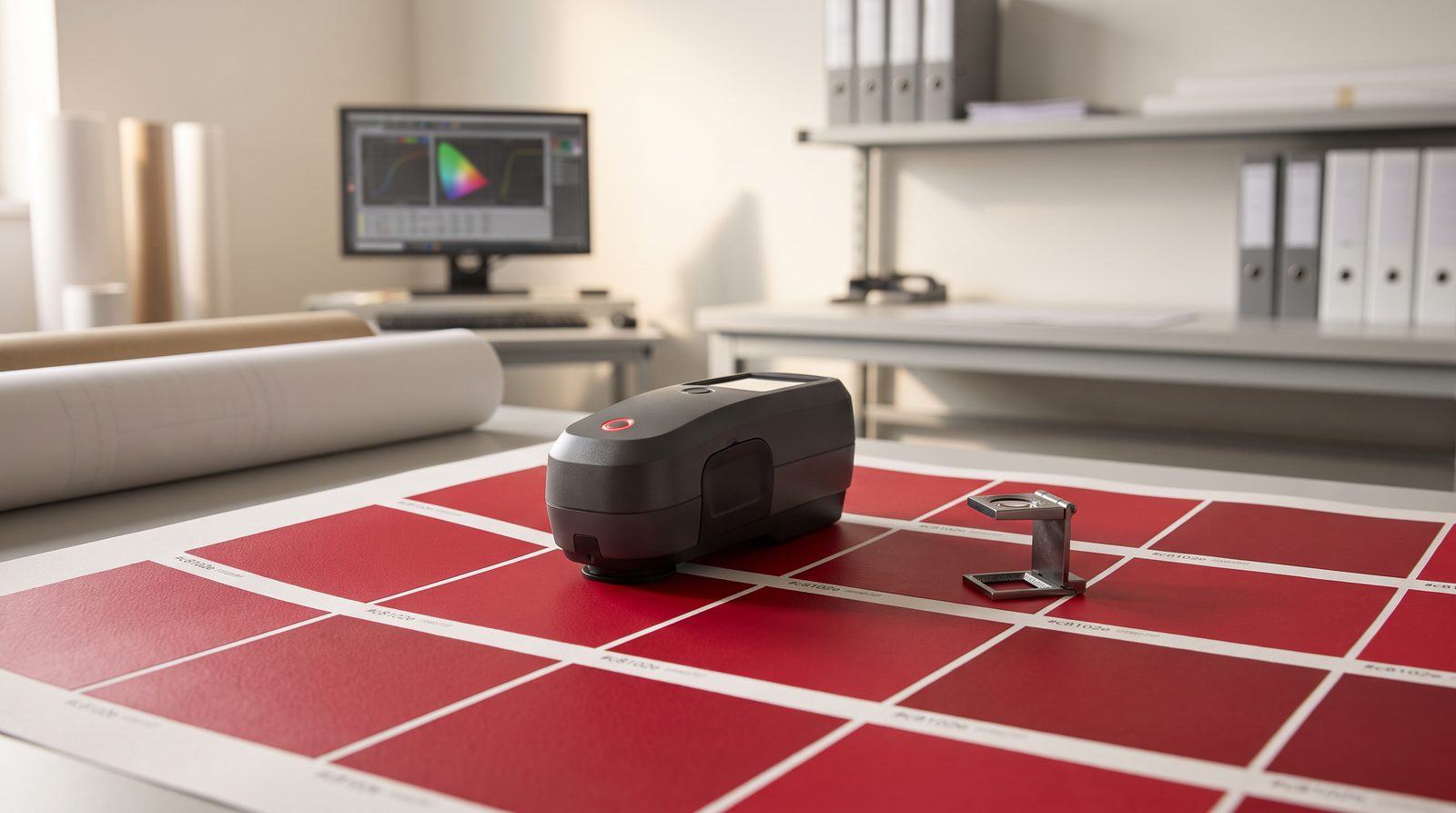
Color is the other half of the objection, and it is where a packaging printer separates from a print shop. White Graphics is a G7 Master Qualified printer through Idealliance, with GMG color management doing the measuring inside an ISO 9001:2015 quality system. In practice, that means the brand color on a 500-unit short run is held to the same measured standard as a 50,000-unit production run. If you are vetting vendors, our guide to choosing a short-run label printer lists the questions worth asking. The summary: a short run should never mean short-run standards.
The ladder: prototype, short run, full run
The most rational way to use short-run production is as the middle rung of a ladder where each step de-risks the next. Start with prototype packaging: a small set of physical units, typically 10 to 25 for internal review, built on production substrates typically within a week so the design can be judged as an object instead of a rendering. Put sales samples in front of retail buyers next, usually 25 to 100 finished units, before any inventory exists. Then the short run proves the market itself: real customers, real shelves, real unboxing photos, at a quantity sized to the actual test.
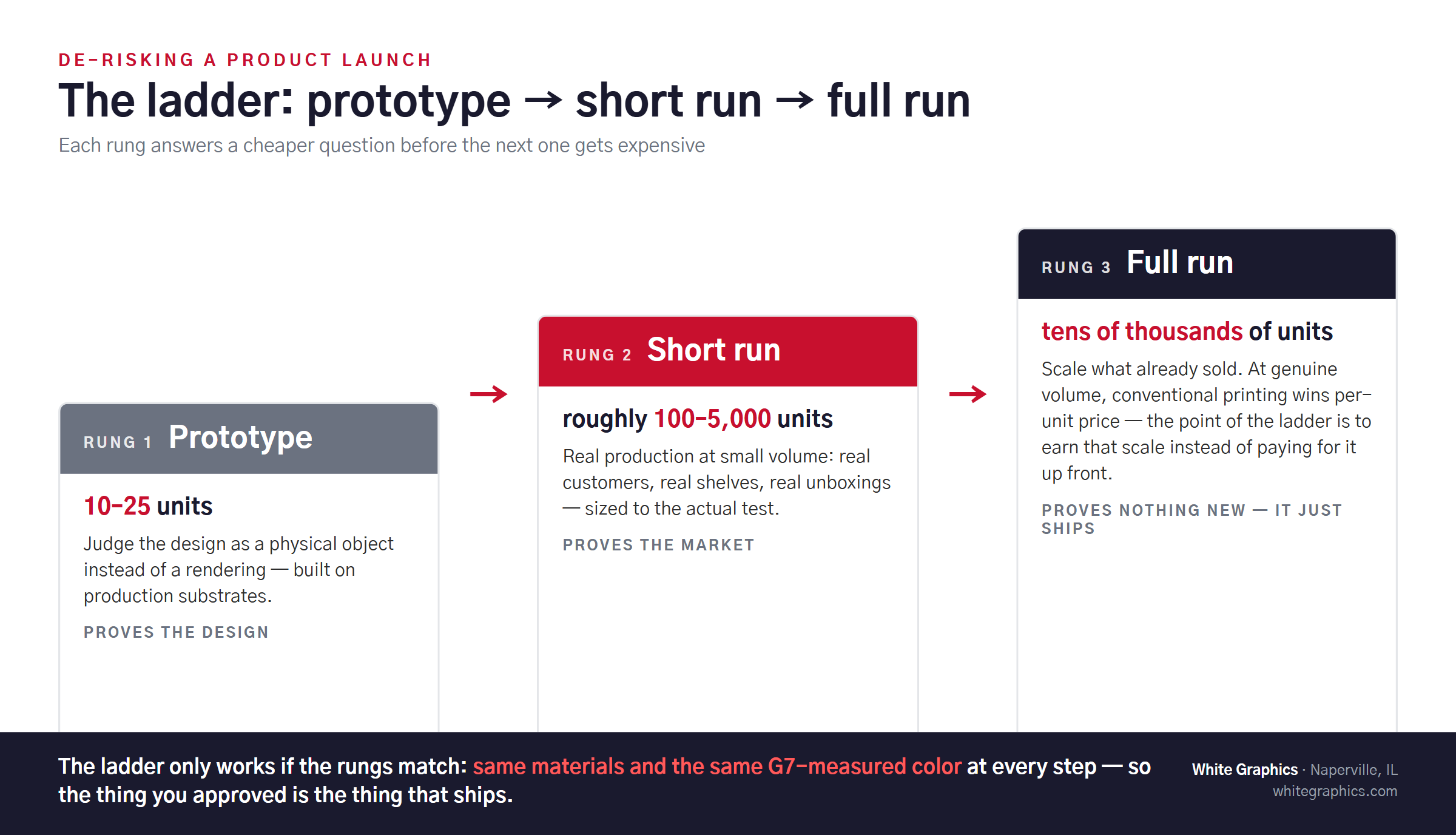
The ladder only works if the rungs match. When the prototype, the short run, and the eventual full production run come from the same shop, on the same materials, under the same G7-managed color standard, the thing you approved at step one is the thing that ships at step three. Every handoff between vendors reintroduces the variables you paid to eliminate: new substrates, new color interpretation, new tolerances. Climbing the ladder in one place is not a loyalty program. It is how the de-risking compounds.
What you can get short-run
Nearly every format a brand actually uses is available at short-run quantities. Pressure-sensitive labels in gloss, matte, and specialty stocks. Folding cartons in SBS, kraft, and recycled boards. Corrugated boxes and displays run on wide-format UV equipment rather than conventional tooling, putting short-run box printing within reach at quantities most corrugated plants would decline. Shrink sleeves and flexible pouches, printed on the same films used at scale. If the launch needs material around the packaging (sell sheets, inserts, cards), the same small-quantity logic extends to commercial printing.
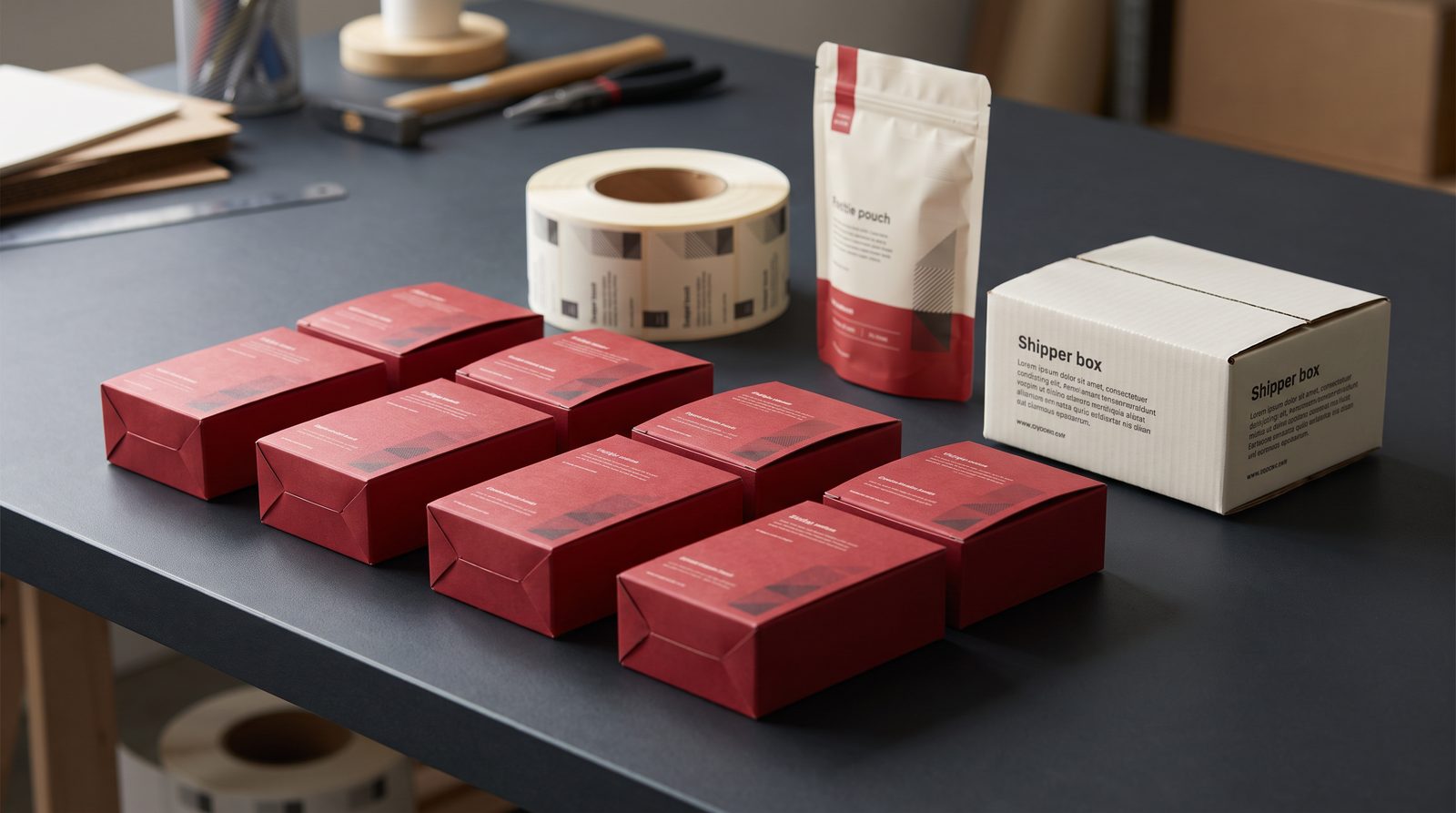
The practical constraint is rarely format; it is structure. A complex build deserves structural attention before any quantity gets printed, short or long, which is what the prototype rung is for. A short-run packaging printer worth hiring will tell you when a structure needs work before it needs volume.
FAQ
What is short-run packaging?
Short-run packaging is custom-printed packaging (boxes, folding cartons, labels, shrink sleeves, and pouches) produced digitally in small quantities, typically hundreds to a few thousand units, without the plates, dies, or tooling costs of conventional printing. Because setup is nearly eliminated, small batches carry a workable per-unit cost, so brands can order what they need instead of what a minimum demands.
How many units count as a short run?
There is no official threshold, but in practice a short run means quantities below conventional minimums: roughly 100 to 5,000 units depending on the format. Below that range you are usually looking at prototypes or sales samples; above several thousand identical units, conventional printing starts to win on per-unit price. The useful question is not the label but which production method quotes lower at your true quantity.
Is short-run packaging more expensive per unit?
Compared with a large conventional run, usually yes, because long runs spread tooling and setup costs across tens of thousands of units. Per-unit price is the wrong lens for a small batch, though. Count the total spent, the inventory you will not scrap after a redesign or regulation change, and the cash not parked in a warehouse. Measured as total cost, short runs frequently win.
What is the difference between short-run packaging and a packaging prototype?
A prototype is a small set of physical samples, often 10 to 25 units, built to evaluate and sell a design before production. Short-run packaging is real production at small volume: sellable, retail-ready units in the hundreds or thousands. A sound program uses both in sequence, prototype first and short run second, so each step de-risks the one after it.
Order the quantity you actually need
If you have been sizing launches around someone else’s minimums, stop. Contact White Graphics with your format, quantity, and timeline — quotes can often come back within a business day — or start a short-run label order directly through the label shop.
About the publisher
White Graphics is a G7 Master–qualified prototype packaging and custom label company in Naperville, Illinois (Chicago metro), serving food, beverage, supplement, cosmetic, and household-product brands across North America since 1972. Learn more about the company or see the full range of capabilities.