
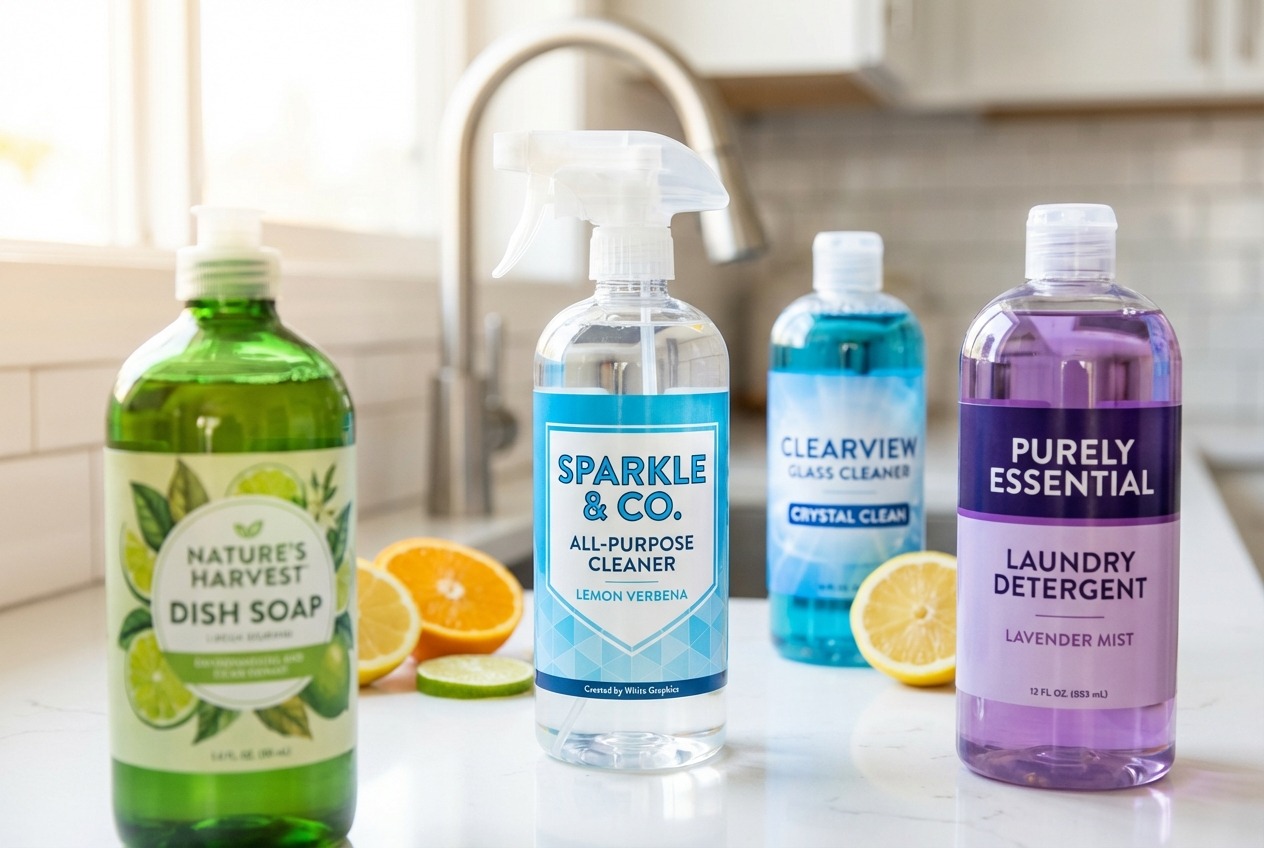
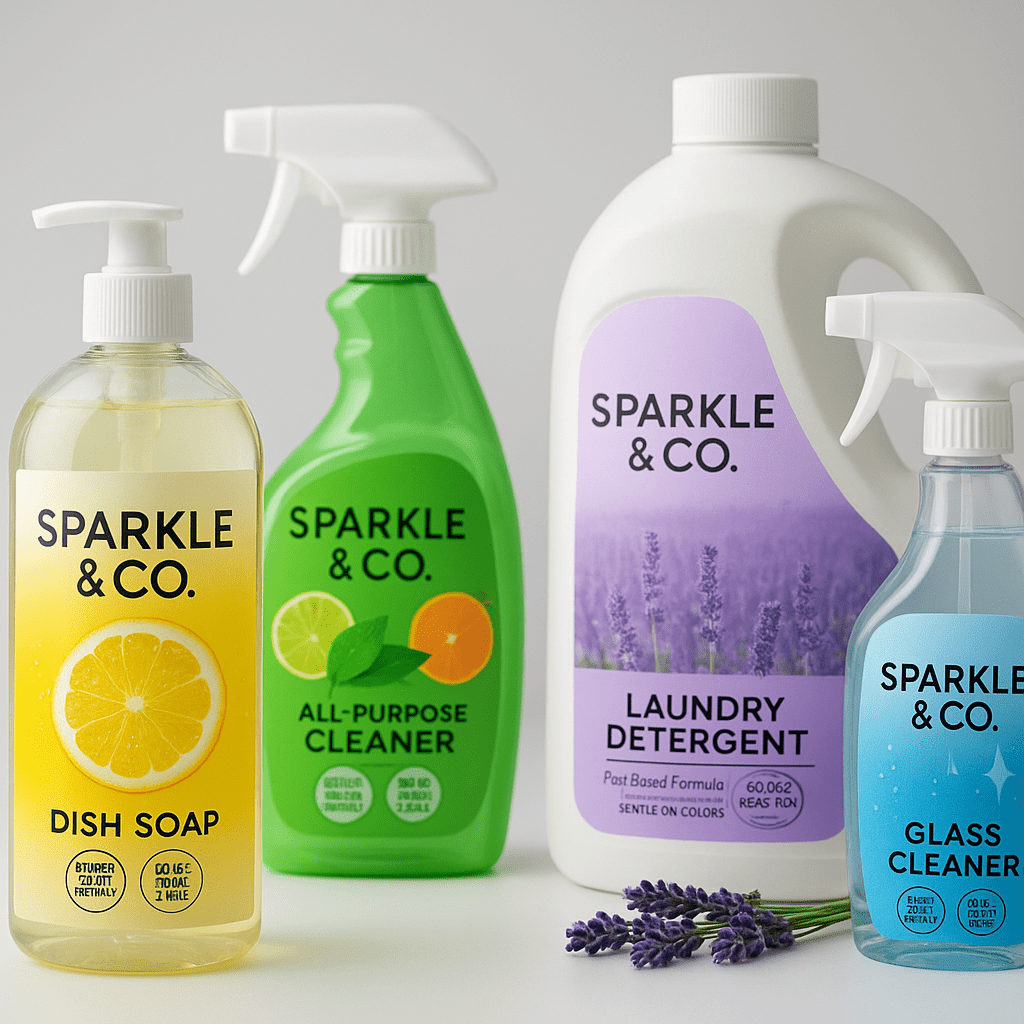
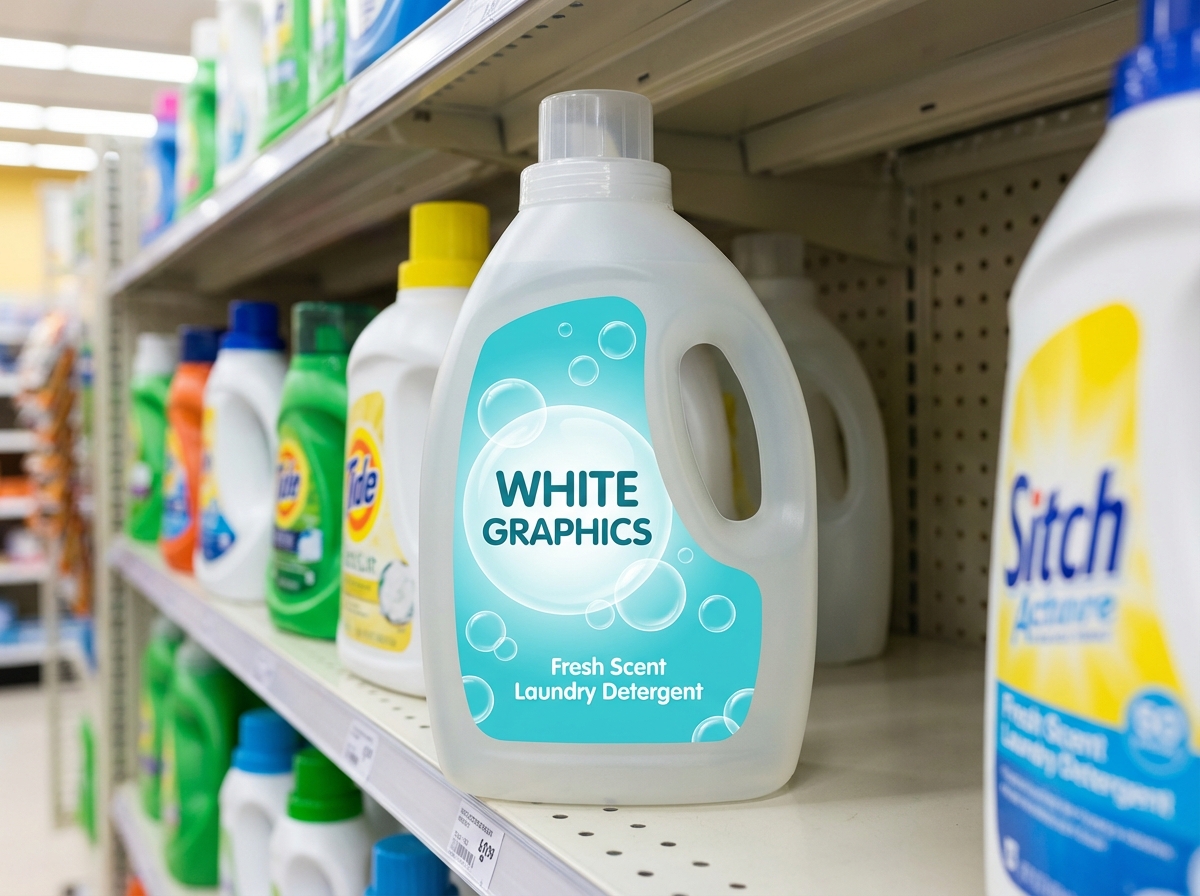
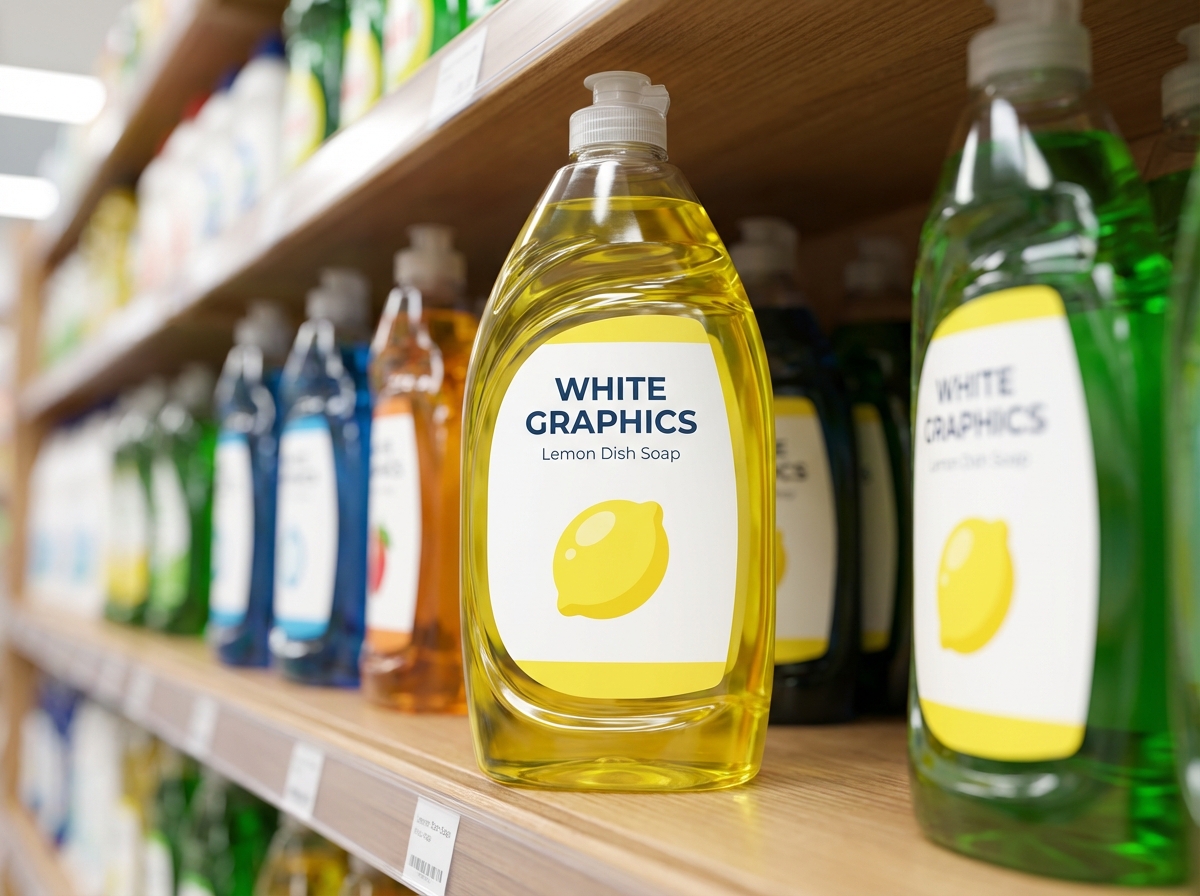
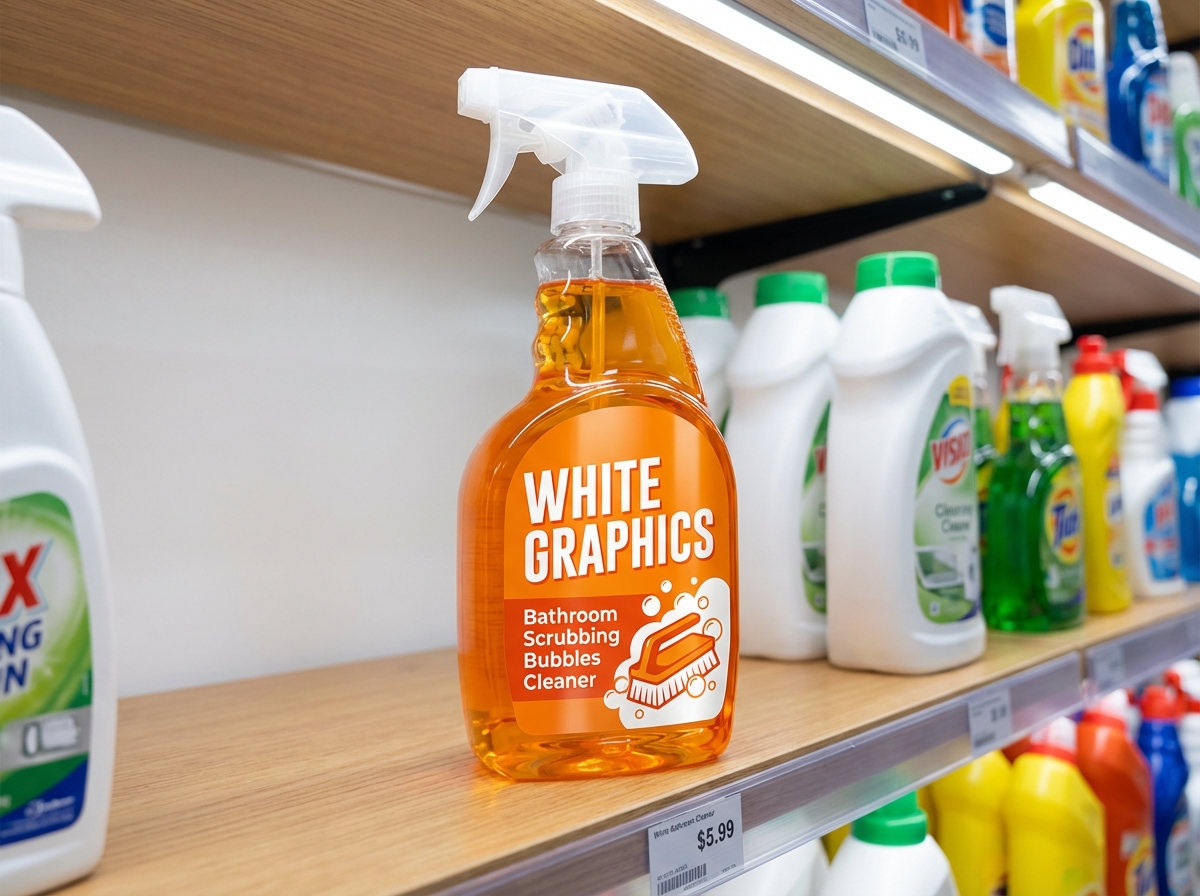
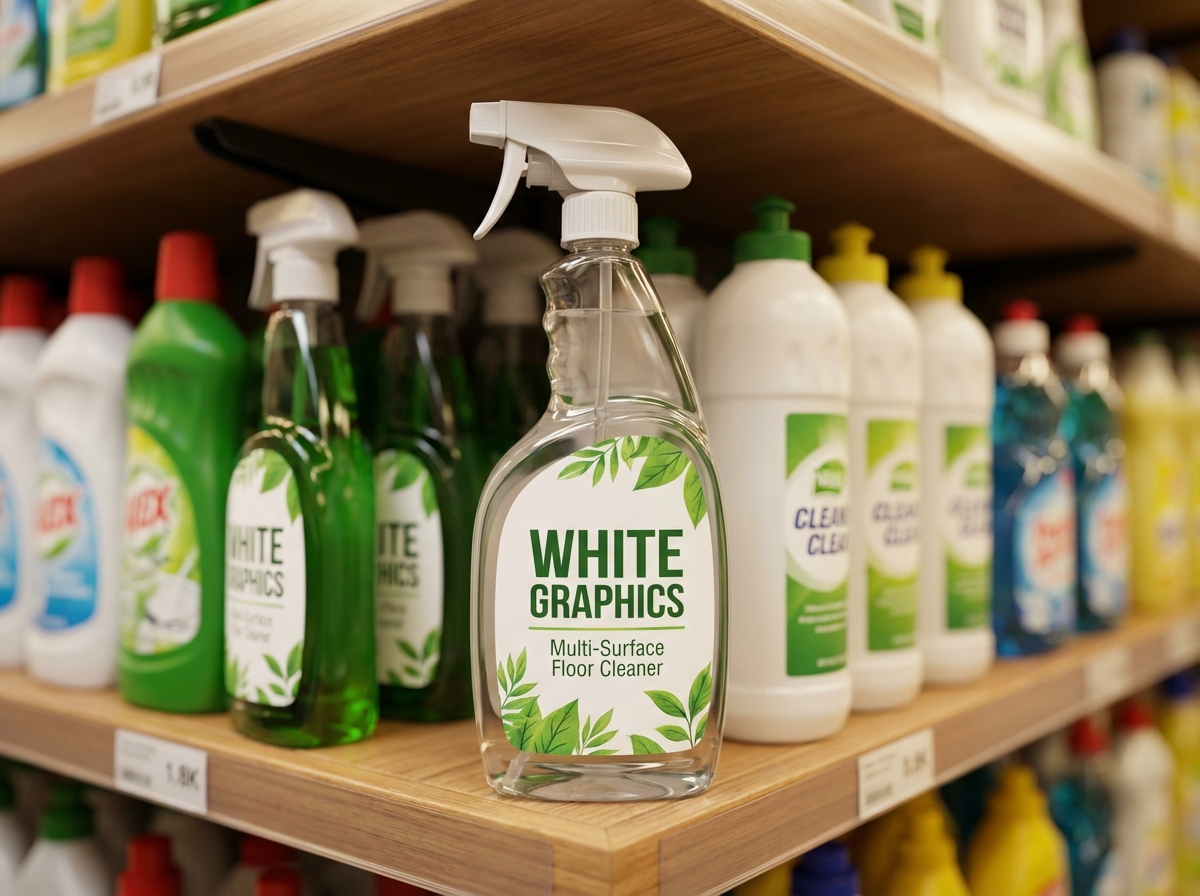
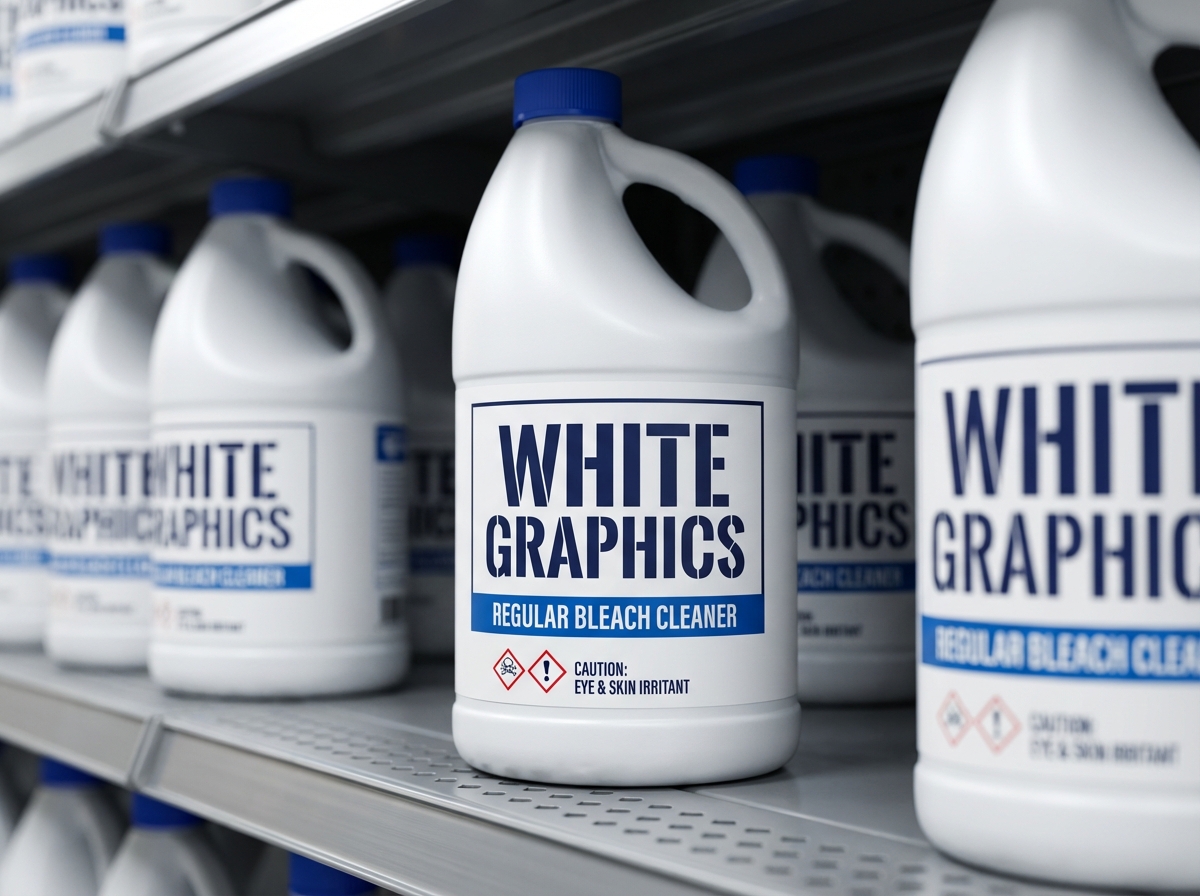
Cleaning product labels with precautionary panels set right – chemical-resistant films for sprays, jugs, and concentrates, and line-wide color.
Contact us for pricing, minimum quantities, custom specs, and turnaround times.

Color Accuracy Guaranteed
Walk the cleaning aisle and the shelf does the sorting: sprays at eye level, gallon jugs down low, a caution block on the back of every bottle. We print the custom cleaning product labels that compete in that lineup, for chemical brands, janitorial-supply lines, and home-care startups, across spray bottles, jugs, and concentrates, with the precautionary panel household chemicals are expected to carry. A cleaner’s label has two jobs, selling the bottle and surviving the product inside it. Our cleaning product label printing does both, out of a G7® Master Certified pressroom in Naperville, Illinois.
Cleaning label sizes for sprays, jugs, and squeeze bottles
Sprayers, jugs, and concentrates each get a die drawn to the actual container. We turn out front-and-back sets for 32 oz trigger sprayers, wraps for squeeze bottles, large panels for gallon and 2.5-gallon jugs, and small labels for dilution-control systems and secondary bottles.
Shapes
Rectangles, wraps, and custom die-cuts matched to sprayer shoulders, jug panels, and handle cutouts.
Materials
Durable white films with chemical-rated laminates; paper has no business on a bottle of degreaser.
Finishes
Gloss and matte laminates selected against your chemistry: alkaline cleaners, acids, bleach solutions, and solvents each attack differently.
Formats
Rolls wound for automated filling lines; singles for smaller batches.
Tell us the formulation family with your quote; the chemistry picks the laminate.
The product is the test environment
Cleaning products drip down their own bottles every day they’re used, and what cuts grease also cuts unprotected ink. Add wet gloves, spray-back, and janitor-cart abrasion, and a paper label rarely lasts a month. That is why our default build is film under a chemical-rated laminate, with adhesives that keep their grip on HDPE jugs and squeeze bottles even when residue reaches the surface before application at the filler.
A shelf system, not a shelf of strangers
Cleaning lines sell by color coding: the glass cleaner is blue everywhere, the degreaser orange. That system only works when the colors hold. Our G7® Master Certified presses keep every SKU’s color on target across products, sizes, and reorders, so the range reads at a glance from across a store aisle or a supply closet.
The caution panel household chemicals carry
Consumer cleaning chemicals follow the hazard-labeling conventions of the Federal Hazardous Substances Act framework. It is the caution block shoppers expect and retailers check. We set each element to those conventions:
- Signal word: DANGER, WARNING, or CAUTION, scaled to the hazard your safety data identifies, set conspicuously.
- Statement of hazard: the plain-language line (causes eye irritation, harmful if swallowed, and the rest).
- Precautionary measures: the avoid-contact and ventilation guidance matched to the hazard.
- First-aid statements: the if-swallowed and if-in-eyes instructions, legible at arm’s length.
- “Keep out of reach of children”: the line the category never omits, placed and sized properly.
Your formulator’s safety data determines the hazard classification and wording; we make sure what they specify prints at the right size, in the right order, on a material the product can’t erase.
Every bottle in the supply closet
We print pressure-sensitive cleaning labels for all-purpose sprays, degreasers, glass and bathroom cleaners, laundry products, dish soaps, disinfectants, and concentrate systems, for retail brands and janitorial-supply programs alike. Related categories: household product labels, hand sanitizer labels, and industrial labels. Or browse the full set of label categories.
Cleaning label artwork that survives review
Cleaning-product art is mostly fine print with a brand on top: caution panels, dilution tables, first-aid lines. We check minimum type sizes so all of it stays usable, keep the caution panel inside the safe zone, and cut dies from the actual sprayer or jug. Files should land as vector (PDF, AI, or EPS) with bleed, in CMYK, at 300 dpi. If yours isn’t there yet, prepress builds the panel layout with you.
From safety data to press-ready panels
Cleaning-product runs move from your safety data to prepress, where the caution panel gets set to convention and dilution tables get a legibility check. A GMG proof locks the line’s color coding before the G7®-governed run on chemical-rated film and laminate, with dies drawn to your sprayers and jugs and rolls wound for the filler. The material question is settled on press, long before the first bottle takes a drip.
Cleaning product label FAQs
What caution copy does a household cleaner need?
The conventional set: a signal word scaled to the hazard, the hazard statement, precautionary measures, first aid, and keep-out-of-reach-of-children, all driven by your product’s safety data. We set the panel to match.
Will the label survive the product itself?
It will. Film under a chemical-rated laminate is our default build, selected against your formulation family so drips and spray-back don’t erase the panel.
Can you label gallon jugs and trigger sprayers in one job?
One order covers it. Every container size in the line runs together, each in its own quantity, with the color system held identical.
What about dilution-control and concentrate systems?
We print the small-format bottle and dispenser labels those systems use, with dilution tables set legibly at small sizes.
Do you support automated filling lines?
Yes. We match roll labels to your applicator’s unwind and core requirements and confirm both before the run.
What file format do cleaning labels need?
Vector files (AI, EPS, or PDF) in CMYK at 300 dpi, bleed on, dies per container, caution panel as live type. Prepress can lay out the panel if all you have is the copy.
Spec and price your cleaning labels
Send the container lineup and formulation families, and chemical-duty materials get priced into the quote from the start.
Request a QuoteRelated products
-
Household Labels
Household product labels across jugs, sprays, tubs, and boxes - room-proof materials, caution...
-
Cover-Up Labels
Cover-up labels with true blockout opacity - regulatory corrections, barcode recodes, and import...
-
Cookie & Baked Goods Labels
Cookie and baked goods labels for cottage and retail bakers - home-kitchen statements,...
-
Pet Product Labels
Pet product labels built to AAFCO conventions - guaranteed analysis, naming-rule aware, grease-proof...