
Last updated: July 7, 2026
The decision that puts your product on a shelf is not made at the shelf. It happens earlier, in rooms your packaging has to walk into ahead of you: a retail buyer’s conference room, a crowded trade-show aisle, an influencer’s kitchen counter with a camera rolling. In every one of those rooms, someone holds a physical object and forms a judgment about your company in seconds. A rendering asks that person to imagine the product. A finished-quality sample lets them decide.
Packaging sales samples are finished-quality packaging prototypes produced to sell with: real production materials, real printing, full finishing and assembly, applied to actual or stand-in product. Unlike a concept mockup, a sales sample gives retail buyers, distributors, press, and influencers a unit that looks, feels, and photographs exactly like what will ship. This is a guide to using them well: what separates a sample that wins the meeting from a comp that merely survives it, how many units each situation requires, and why the sample you hand a buyer is a promise your production run has to keep.
Table of Contents
- What packaging sales samples actually are
- Why buyers read a sample as an execution signal
- Trade shows: where the quantity math changes
- Influencer and PR kits: the unboxing is the ad
- How many sales samples you actually need
- The sample is a promise your production run has to keep
- FAQ
What packaging sales samples actually are
A sales sample is a packaging prototype produced to finished quality so it can do commercial work. An internal prototype exists to answer your own team’s questions; a sales sample exists to persuade someone outside the building: a category buyer, a distributor, a journalist, a creator with an audience. It is the sell-with version of your packaging, applied to real product when you have it or a stand-in when you don’t, so the person holding it experiences the brand at full strength.
Finished quality is the whole point, and it is what separates true packaging prototypes from a quick visual comp. (That distinction has its own logic, which we cover in our guide to mockup vs. prototype.) A proper sales sample is printed on production substrates, cut and finished with production processes, and assembled the way the shipping unit will be assembled: a pressure-sensitive label wrapped straight on the bottle, a folding carton that closes with the right tension, a pouch with a real seal. We build samples exactly this way, on production-grade presses and real production materials, on turnarounds that typically run within a week.
Why buyers read a sample as an execution signal
Buyers do not evaluate samples the way designers do. A buyer is deciding whether to commit shelf space, a purchase order, and a reset date to a company they may barely know, and the sample in their hands is the most honest evidence available about whether that company can deliver. A hand-glued comp with inkjet output says someday. A sample on production materials — printed and finished the way the real run will be — says ready.
That reading happens whether or not anyone says it out loud. A label that lifts at the edge, a carton that springs open, color that shifts between two units on the table: to a buyer these are not craft details, they are supply-chain risk. The reverse is just as true. When every unit in the meeting matches and the pack functions exactly as it should, the reliability question is answered before it gets asked, and the conversation stays on velocity, margin, and placement. If you are pitching a full retail program, extend the logic to the merchandising: a sample of your point-of-purchase display next to the product tells the buyer the whole program is real, not just the pack.
Trade shows: where the quantity math changes
A trade show turns the sample problem from quality alone into quality at quantity. In a buyer meeting, a handful of flawless units carries the room; on a show floor, plan on 100-500. Units get handled all day, carried off to committees, passed to distributors who want something to show their own accounts, and simply worn out by traffic. A sample that exists in one precious copy is a liability at a show, because the moment it leaves with the right person, your booth goes dark.
The harder requirement is that 300 units have to behave like one unit. When a regional buyer picks up your carton on Tuesday and a national buyer picks up a different carton on Thursday, the two experiences must match, or the inconsistency itself becomes the takeaway. That is a production-control problem, not a craft problem, and it is why show quantities run better as a short digital press run than as a heroic week of hand assembly. The booth deserves the same discipline: we print corrugated displays and large-format pieces on wide-format UV equipment, so the environment around the product holds the same standard as the pack in your visitor’s hand.
Influencer and PR kits: the unboxing is the ad
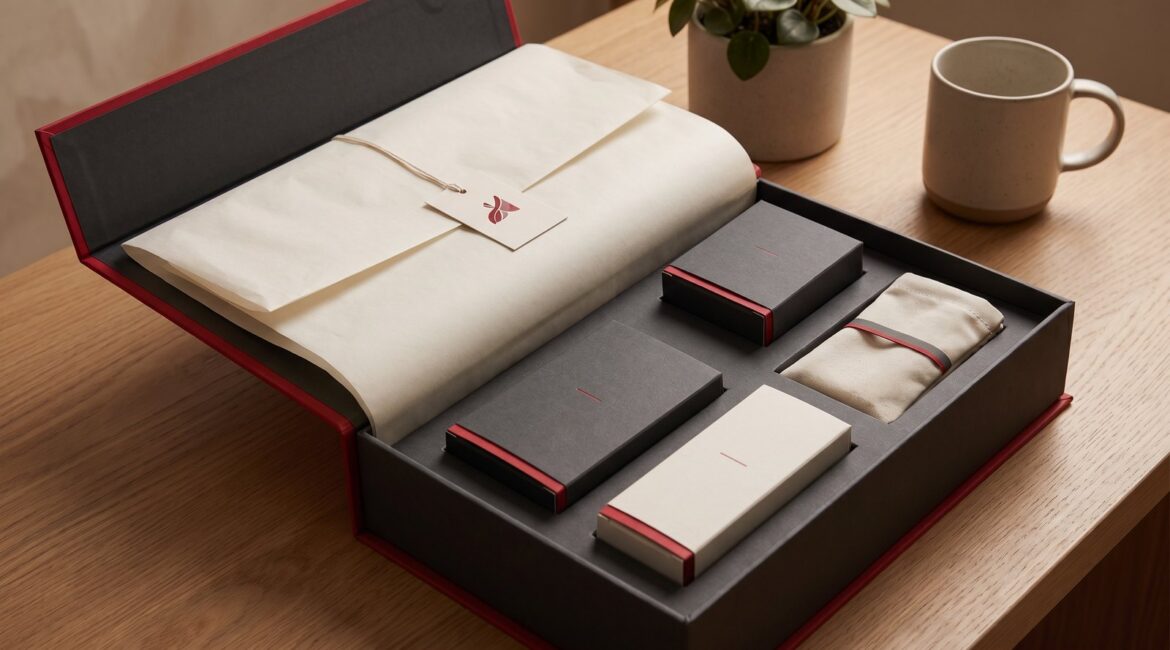
An influencer kit is a sales sample built for a camera instead of a conference room. Call them influencer boxes, PR kits, or seeding kits; the job is identical, because the audience will never touch your product. They experience it entirely through a creator’s hands and reactions, which means the unboxing is the ad. Influencer kit packaging is really three deliverables in one: the product in its retail-quality packaging, the presentation around it (outer shipper, interior reveal, inserts, a card worth reading aloud), and the assembly that makes two hundred kits arrive identical. On camera there are no minor components; the tissue and the tape are in the shot too.
The practical trap is logistics. Designing one beautiful kit is one discipline; packing, sealing, and shipping a few hundred of them correctly and on schedule is another, and it is where projects split across vendors start to wobble. We handle both sides: the printed packaging and the kitting and fulfillment behind it, from promotional kits and gift sets to subscription boxes, assembled in an FDA-registered pack-and-repack facility with climate-controlled warehousing, which matters when the product inside is food, beverage, or supplements. One more truth about the influencer route: a kit cannot buy the post. What it buys is the production value of the open, and the genuine enthusiasm a considered object produces on camera.
How many sales samples you actually need
How many packaging samples you need follows from the audience, and underbuying is the expensive mistake. The working ranges:
- Internal design reviews: 10-25 units, enough for every stakeholder to hold one and mark it up.
- Retail buyer presentations: 25-100 finished units, covering the meeting, the committee that reviews the product after you leave, and the follow-up requests.
- Trade shows: 100-500 units, sized to traffic, giveaways, and distributor asks.
- Investor presentations: 10-25 units, one per partner plus spares that will circulate after the pitch.
The pattern inside those numbers is that samples do their best work after you leave the room. The carton a buyer keeps on their desk goes on pitching for weeks, and the unit a distributor takes on the road opens accounts you never meet. Order enough that handing one over is never a hard decision. Because sales samples run digitally, the step from 25 units to 100 is a modest one, not a second project.
The sample is a promise your production run has to keep
The moment a buyer says yes, your sample stops being a sales tool and becomes the standard the production run will be graded against. The riskiest move in this discipline is winning a listing with a sample the run cannot match: built on different materials, printed by a different process, or produced with no color-management link to the eventual manufacturer. The buyer will not remember the explanation. They will remember that the product that arrived missed the promise that sold it.
The fix is structural, not heroic: produce the sample inside the same color-managed system that will produce the run. Our samples print on production substrates under G7 methodology, the calibration standard maintained by Idealliance that keeps color predictable across presses and across time, backed by GMG color management and ISO 9001:2015 quality control. Commercially, that means the unit you hand a buyer in March and the case pack that reaches their distribution center in June read as the same product. A sample produced this way is not a best-case scenario. It is a preview.
FAQ
What are packaging sales samples?
Packaging sales samples are finished-quality prototypes produced to sell with rather than to test with. They are printed on production materials, finished and assembled like the shipping unit, and applied to real or stand-in product, so retail buyers, distributors, press, and influencers evaluate the brand exactly as a customer will eventually receive it.
How many samples do I need for a retail buyer meeting?
Plan on 25-100 finished units for retail buyer presentations. That covers the meeting itself, the category committee that reviews the product after you leave, and follow-up requests from other departments. Internal design reviews and investor presentations typically need 10-25 units, while trade shows run 100-500 because samples get handled, given away, and taken.
What goes into an influencer or PR kit?
An influencer or PR kit combines the product in retail-quality packaging, an outer shipper, an interior presentation of inserts and a personal card, and the assembly work that makes every kit arrive identical. Because the unboxing happens on camera, every element is part of the ad, down to the tissue and the tape.
Are sales samples made from final production materials?
They should be, and ours are. White Graphics prints sales samples on the same substrates and with the same processes as full production runs, under the same G7 color management. That matters because the sample becomes the standard a buyer grades the delivered run against; a sample on different materials makes a promise production cannot keep.
Ready to put a finished sample in a buyer’s hands?
If a buyer meeting, a show date, or a launch kit is on the calendar, samples should be moving now: turnaround typically runs within a week, local clients can pick up in person, overnight shipping is available nationally, and quotes can often come back within a business day. Contact White Graphics to scope the meeting or the kit, or start with packaging development if the structure itself is still taking shape.
About the publisher
White Graphics is a G7 Master–qualified prototype packaging and custom label company in Naperville, Illinois (Chicago metro), serving food, beverage, supplement, cosmetic, and household-product brands across North America since 1972. Learn more about the company or see the full range of capabilities.