
Last updated: October 26, 2026
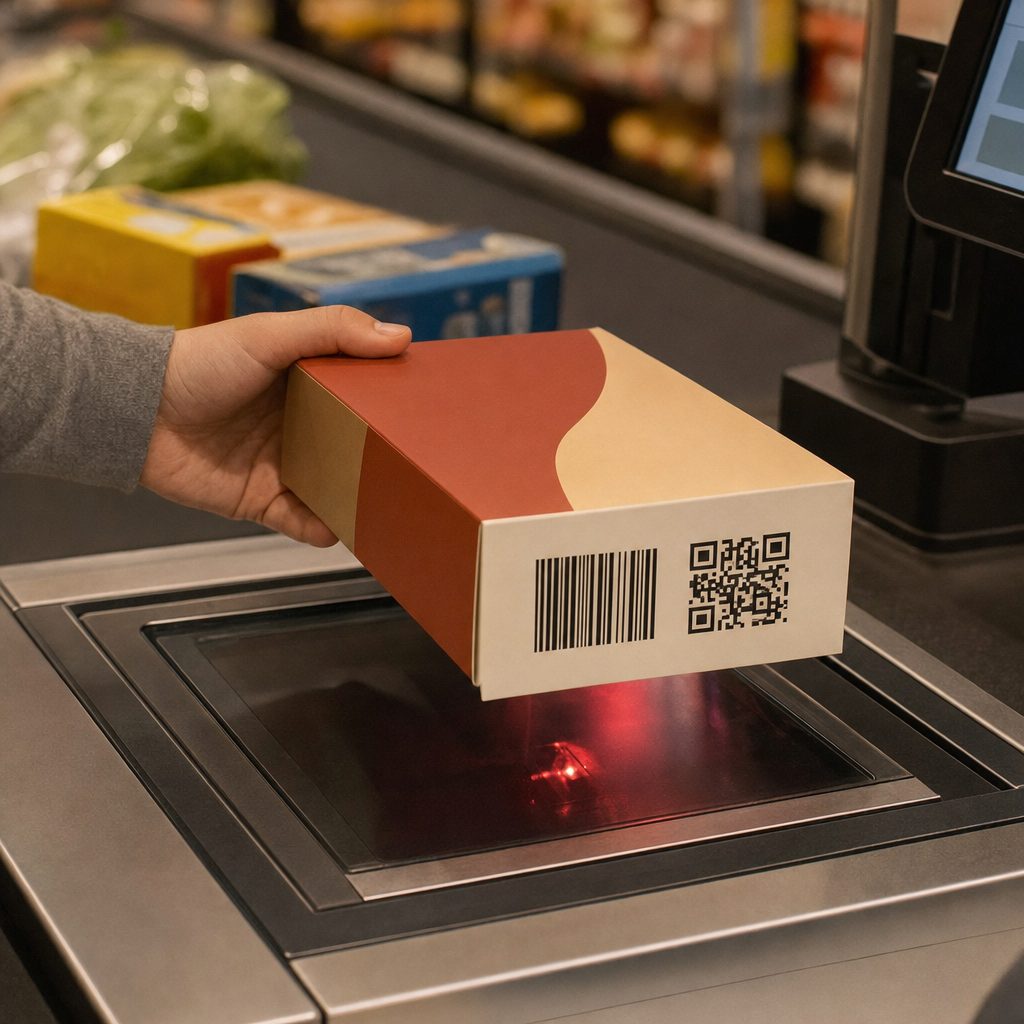
The UPC barcode has been scanned at American checkouts for more than fifty years, and it is not going away next year. What is changing is what sits next to it. GS1 Sunrise 2027 is the retail industry’s push to get point-of-sale systems reading 2D barcodes, the QR codes and DataMatrix symbols that can carry far more than a product number. For a brand, that raises practical label questions: whether a 2D code is required, which kind, where it goes on the package, and how to add one without breaking the UPC barcode that retailers still depend on. This guide answers them, starting with the basics of getting a barcode in the first place.
The short version: keep the UPC, add a 2D code built on GS1 standards rather than a generic marketing QR code, and treat both as press decisions, not just artwork.
Table of Contents
- What is GS1 Sunrise 2027?
- Is a 2D barcode required?
- Which 2D barcode should a brand use?
- How GS1 Digital Link works
- How to get a UPC barcode
- UPC vs. EAN: what is the difference?
- Printing barcodes that scan
- Planning the transition on your labels
- FAQ
What is GS1 Sunrise 2027?
GS1 Sunrise 2027 is an industry goal, led in the United States by GS1 US, for retail point-of-sale systems to be able to scan 2D barcodes by the end of 2027. GS1 is the not-for-profit standards organization behind the UPC, and the GS1 US Sunrise 2027 page describes it as a transition from 1D UPC barcodes to 2D barcodes that can carry more data.
The name echoes an earlier deadline. In Sunrise 2005, North American retailers were asked to make their systems accept the 13-digit EAN barcodes used in the rest of the world. That transition was planned years ahead, and Sunrise 2027 follows the same model: the systems are prepared first, so brands can add 2D codes knowing checkouts will read them.
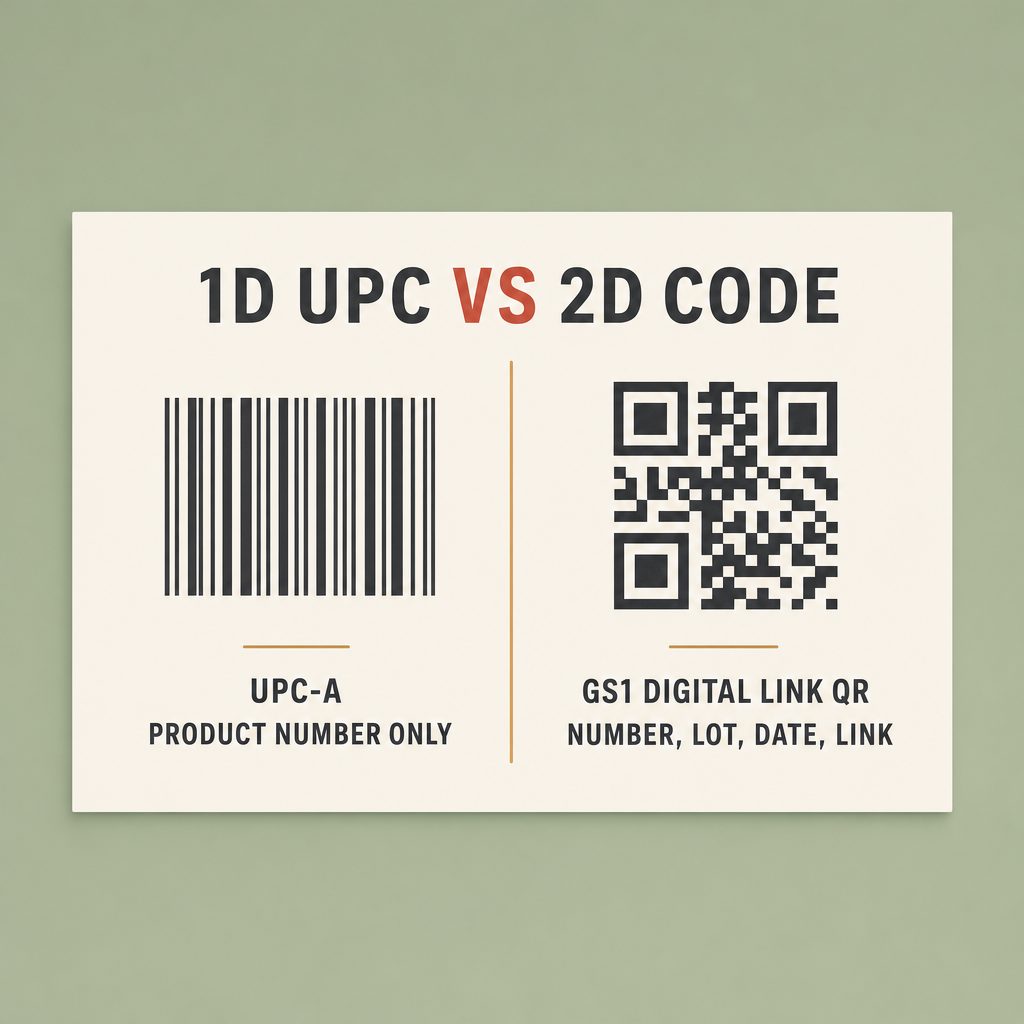
Why it matters: a 1D UPC carries one thing, the product number, called a GTIN. A 2D code can carry the GTIN plus a lot number, an expiration date or a serial number, and it can double as a web link for shoppers. With that information at the register, a retailer can stop the sale of a recalled lot or an expired product automatically, and a brand can replace the separate marketing QR code with one code that does both jobs.
Is a 2D barcode required?
No law requires one. Sunrise 2027 is a voluntary industry goal, not a regulation, and the date is about retail readiness rather than a deadline for brands to change their packaging. GS1 US itself says it is not necessary to implement every 2D capability by 2027, and it recommends a gradual “crawl, walk, run” approach: add a 2D code to existing packaging, then add data such as variants, lot numbers and dates, then use the code for consumer engagement.
The pressure, where it exists, comes from retailers and their supplier requirements, and those vary by retailer and category. A brand selling into a specific chain should check that chain’s vendor guidelines rather than assume.
The UPC stays on the package through the transition. During this period, brands are expected to print both: the familiar 1D UPC for every checkout that still relies on it, and a 2D code alongside it.
Which 2D barcode should a brand use?
For retail point of sale, GS1 US points brands to three options:
- QR code with GS1 Digital Link. A QR code whose content is a web address built in a standard GS1 format, with the GTIN inside it. Any phone camera opens it as a link, and a GS1-ready scanner reads the product data. This is the most common choice for consumer goods, because it serves the shopper and the checkout at once.
- GS1 DataMatrix. A compact square symbol long used in healthcare and regulated supply chains. It carries GS1 data efficiently but is not designed to open a web page on a shopper’s phone.
- DataMatrix with GS1 Digital Link. The compact symbol carrying the web-address format.
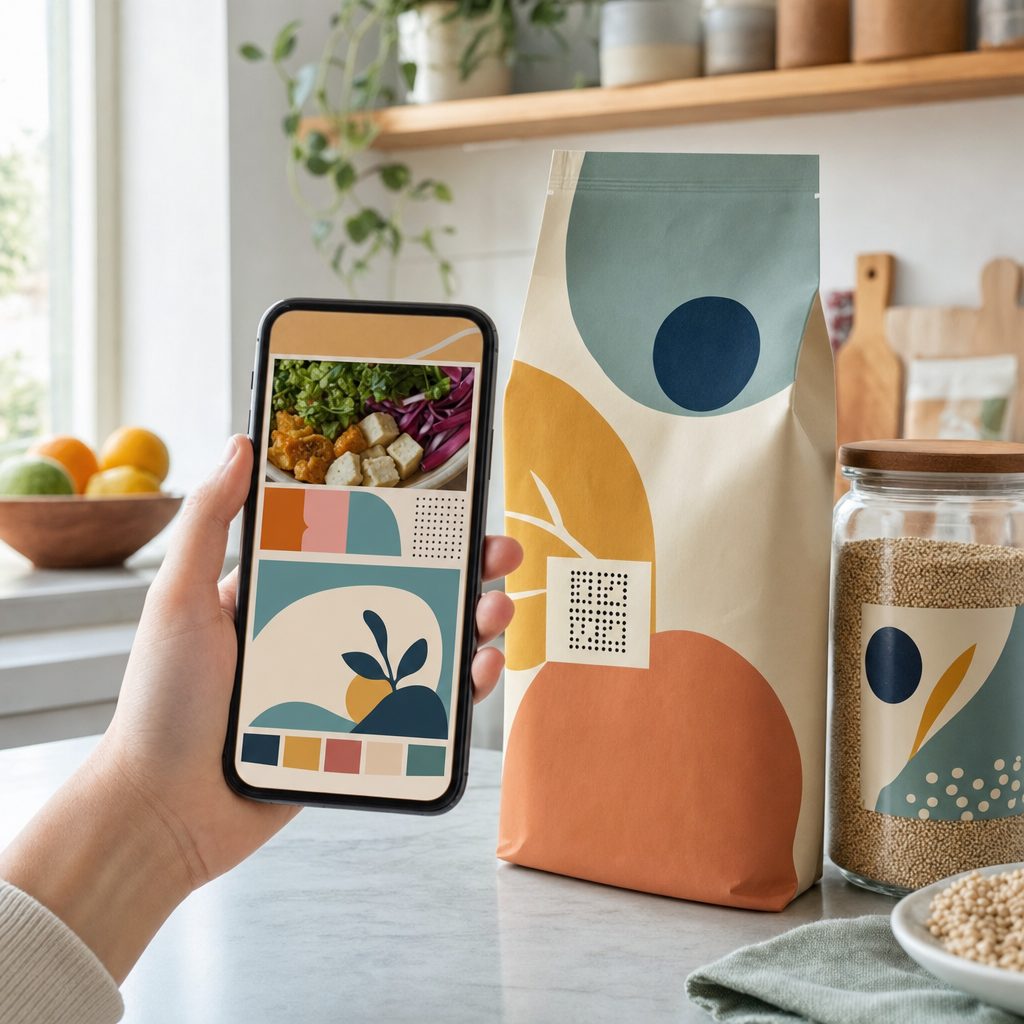
What does not qualify is the ordinary marketing QR code that links to a homepage or a URL shortener. It is a 2D barcode, but a checkout cannot get a GTIN out of it. Updating existing QR codes to the GS1 Digital Link format is the first step GS1 US recommends, and it is usually the easiest win, because the code is already on the package. Our guide to connected packaging and printed codes covers what to put behind that link.
How GS1 Digital Link works
GS1 Digital Link is a standard way of writing product identifiers as a web address. The GTIN, and optionally a lot number, expiration date or serial number, appear in the address, each after a short numeric code called an application identifier. A phone that scans the code visits the brand’s page; a retail scanner reads the same address and extracts the GTIN and the data.
That structure creates a printing decision. A code carrying only the GTIN is the same on every unit of a product, so it prints like any other static artwork element. A code carrying a lot number or a date changes with every batch, and a code carrying a serial number changes with every unit. For QR codes, those need variable data printing, where each code is generated from a data file during the label run, so every label carries its own code in a single pass with no plates and no versioning penalty. Brands already printing lot and date codes on their labels are closer to “walk” than they might think.
How to get a UPC barcode
A UPC starts with a number, not an image. In the United States, GS1 US licenses barcodes to brand owners in two ways:
- A single GTIN, suited to a brand with one or a few products.
- A GS1 company prefix, a block of numbers from which the brand assigns its own GTINs. This is the route for a growing product line, because every flavor, size and pack count needs its own GTIN.
The GS1 US get-started guide walks through both. Barcodes bought from resellers outside GS1 are a common shortcut that causes problems later, because the number may not trace to the brand in the databases retailers use to check it.
That license and the product data behind it belong to the brand. Turning the number into a symbol that scans is the printer’s job. White Graphics builds UPC-A and EAN symbols from the GTIN the brand provides, sets them at a legal size, and scan-checks printed output before it ships. When to issue a new GTIN, for example for a new flavor or a limited holiday design, has its own rules, covered in our guide to seasonal and limited-edition packaging.
UPC vs. EAN: what is the difference?
UPC-A is a 12-digit barcode used mainly in the United States and Canada. EAN-13 is a 13-digit barcode used in most of the rest of the world. Both encode a GTIN, and since Sunrise 2005 North American retail systems read both. A US brand with a GS1 US number normally prints UPC-A; a brand importing product already marked with an EAN-13 can usually sell it in the US on that code. The smaller UPC-E and EAN-8 versions exist for very small packages where a full symbol will not fit.
Printing barcodes that scan
A barcode looks like any other graphic in a design file, but at the register it either scans or it does not. The rules that decide which come down to printing:
- Size. UPC symbols are printed between 80 and 200 percent of nominal size, and symbols shrunk below that range stop scanning reliably. 2D codes also have minimum sizes, and a QR code shrunk to fit a leftover corner is the most common 2D failure.
- Quiet zones. The blank margins around a symbol are part of it. Artwork, die lines or a label edge crowding them breaks the scan.
- Contrast and color. Scanners read in red light, so red-family bars disappear. Dark bars or modules on a light background work; brand-colored barcodes need checking.
- Surface. Glossy finishes and moisture both interfere with how a scanner sees the symbol, which matters most on chilled and frozen products. The finish over the code is chosen for where it will be scanned.
- Truncation. Shortening UPC bars to save space reduces how easily the code scans at the register.
Color consistency matters here too. Bar density that drifts between runs can turn a code that scanned last month into a marginal one, which is one reason G7 Master qualified process control, described in our article on color management, applies to barcodes as much as to brand colors.
Planning the transition on your labels
For most brands, adding a 2D code is a label revision rather than a packaging redesign. A practical sequence:
- Find room near the UPC. Plan a space for the 2D code on the same panel, close to the existing barcode, so scanners and staff know where to look. On small labels this is the hardest part, so it belongs at the start of the next artwork revision.
- Convert existing QR codes. If the package already carries a marketing QR code, rebuild it as a GS1 Digital Link QR code with the GTIN, and point it at a page the brand controls.
- Decide what data to carry. GTIN only means a static code. Lot and expiration data means a code per batch, printed as variable data. Serial numbers mean a code per unit.
- Prototype and scan. Print the revised label on the real container, apply it, and scan both codes with a phone and with a retail-style scanner before the full run.
- Phase it in. Short runs let the change ride the next reorder instead of forcing a write-off of label stock. For packaging already filled, a cover-up label can carry a new code or replace a wrong one.
FAQ
What is GS1 Sunrise 2027?
It is an industry goal, led in the US by GS1 US, for retail point-of-sale systems to be able to scan 2D barcodes such as QR codes and GS1 DataMatrix by the end of 2027. It prepares checkouts to read codes that carry more than a product number, such as lot and expiration data.
Will UPC barcodes be replaced in 2027?
No. The UPC stays on packages through the transition, and brands are expected to print both the 1D UPC and a 2D code side by side. Sunrise 2027 is about retail systems being able to read 2D codes, not about removing the UPC. GS1 has not set a date to retire it.
Is a regular QR code enough for Sunrise 2027?
Not on its own. A marketing QR code that links to a homepage carries no GTIN a checkout can read. For retail point of sale, use a QR code with GS1 Digital Link, which encodes the GTIN in a web address that phones can open and scanners can read.
How do I get a UPC barcode for my product?
License it from GS1 US, either as a single GTIN for one or a few products or as a GS1 company prefix for a growing line. The number and its product data belong to you. A printer then builds the barcode symbol from that GTIN at the correct size and checks that it scans.
What is the difference between UPC and EAN?
UPC-A has 12 digits and is used mainly in the US and Canada; EAN-13 has 13 digits and is used in most other countries. Both encode a GTIN, and North American retail systems read both. US brands licensed through GS1 US normally print UPC-A.
Get barcodes that scan at every checkout
Send your GTINs, the label size and where the codes will be scanned, and request a quote from White Graphics; every run is scan-checked before it ships. Formats and materials are on the UPC and barcode labels page, and every other category is in the custom label catalog.
About the publisher
White Graphics is a G7 Master qualified custom label and packaging company managed out of Naperville, Illinois, serving food, beverage, supplement, cosmetic, and household-product brands across North America since 1972. Learn more about the company or see the full range of capabilities.