

Last updated: September 20, 2026

Ask most brands where their packaging strategy lives and they will point at the label: the color, the type, the finish. All of that matters. But a wave of breakout products has won on a different lever entirely, one that sits underneath the graphics. They changed the structure. They rethought the shape of the package, the way it opens, and the small ritual of using it, and in doing so they turned a commodity product into something people talk about. When a well-known condiment brand switched the format its category had used for decades and built a whole identity around a new way of dispensing, the format itself became the marketing. The graphics were almost beside the point.
Table of Contents
- Structure creates a ritual
- The unboxing is the ad
- The formats worth rethinking
- Prototype the structure before you tool up
- Speccing structural packaging
- The takeaway
- FAQ
Structure is the most underused tool in packaging because it feels expensive and permanent, the kind of decision you only get to make once. It does not have to be either, if you test it properly first. Here is how structural thinking works, and how to try it before you commit.
Structure creates a ritual
The formats that break out share a quality: they change how the product is used, not just how it looks sitting still. A different way to open, to pour, to portion, or to reseal becomes a small repeated moment the customer associates with the brand and nobody else. That ritual is stickier than any graphic, because the customer performs it themselves, every time, and it quietly trains a preference. A package that is a little more satisfying to use is a package that gets bought again.
The unboxing is the ad
Structure is not only about the primary container. The carton around it, the way it opens, the order in which things are revealed, all of it is a piece of theater the brand controls completely. A folding carton with a considered opening sequence turns a delivery into a moment worth photographing, and that moment travels for free. The brands that treat the unboxing as an ad, rather than as protection for the thing inside, get a second marketing surface the shopper actively chooses to engage with.
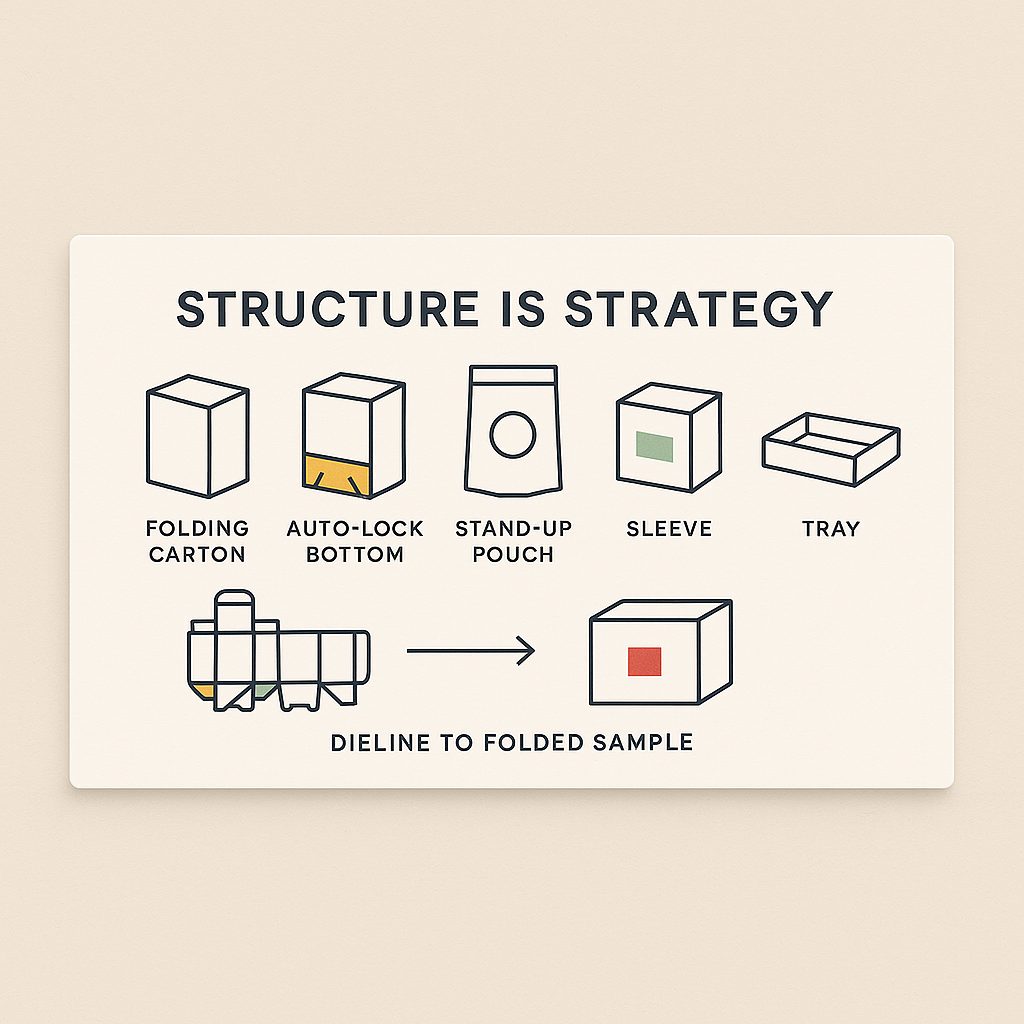
None of this requires exotic construction. A well-engineered folding carton, an auto-lock bottom that snaps together cleanly, a sleeve that slides off with a little ceremony: these are structural choices that read as premium without adding an exotic cost.
The formats worth rethinking
The structural levers most brands actually control sit in the secondary and flexible packaging, and this is exactly where we work. Folding cartons carry the most opportunity: the opening, the reveal, the way the panels lock. An auto-lock bottom runs on any caliper of board, so a carton can be engineered to hold weight and still ship flat before it is assembled. Most of what is possible here is already catalogued in the standard carton styles the trade works from. Stand-up pouches change the entire silhouette of a product on shelf and open a format that many rigid categories have not tried. Sleeves and trays add a layer of reveal and a second printable surface. Each of these is a decision about experience first and graphics second.
The practical point is that a brand does not have to reinvent its bottle to think structurally. The carton, the pouch, and the way the whole thing opens are levers available right now, and they are the ones we help brands prototype and produce.
Prototype the structure before you tool up
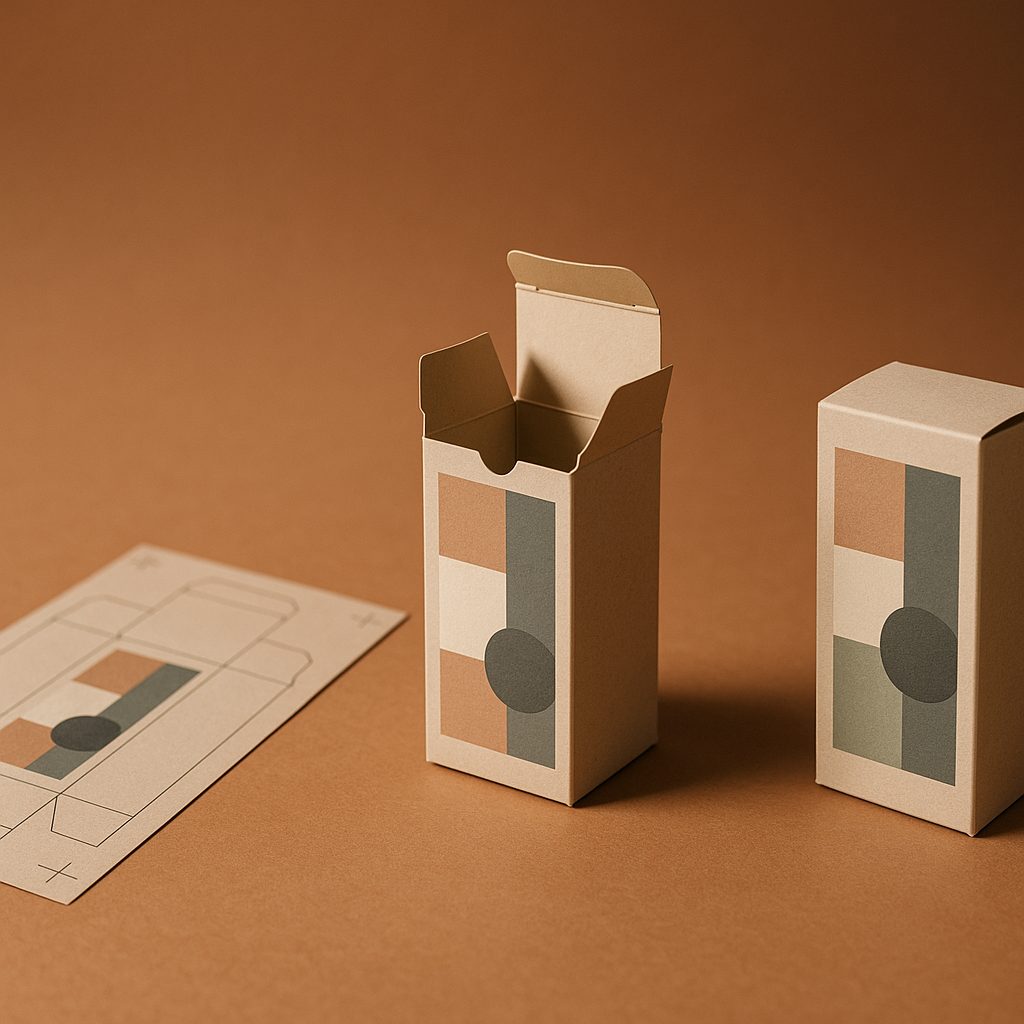
Structure is the one area of packaging where a screen is genuinely misleading. A carton can look perfectly resolved in a rendering and feel flimsy, fussy, or fiddly the moment it exists in the hand. The fold that looked elegant might fight the person opening it. The only way to know is to hold it. This is why structural work should always start with a physical prototype: a real die-line, cut and creased and folded into the actual format, in the actual board. We can typically turn a folded prototype within a week, so a structural idea can be tested, opened, handed around a room, and revised before anyone commits to tooling a full run.
Speccing structural packaging
Start from the moment, not the shape. Decide what you want the customer to feel when they open and use the package, then engineer the structure to deliver it.
Prototype in the real board. Weight, drag, and the feel of a fold do not exist on screen. Cut and fold the actual material before you decide.
Design for the flat and the fold. A great structure also has to ship flat, run on press, and assemble cleanly. Those are engineering constraints worth solving early, which is what the prototyping stage is for.
Mind the tooling. Structure can be ambitious without being costly, but someone pays for a die. Testing the format first is how you make sure the tooling you commit to is the right one.
The takeaway
Graphics win the glance, but structure wins the habit. The brands turning format into a growth strategy are rethinking how a package opens, holds, and reveals, and building a small ritual the customer performs every time. The lever is more available than it looks: for most brands the real opportunity is the carton, the pouch, and the unboxing, not a reinvented vessel. Start from the moment you want to create, prototype it in the real board, and hold it in your hand before you tool up. That is how a structural idea becomes a product people remember.
FAQ
What is structural packaging design?
The engineering of the package itself: its shape, how it opens, how it holds the product and how it is assembled. It is distinct from graphics, which decorate a structure that already exists.
Does packaging structure affect repeat purchase?
It affects habit, which is what drives repeat purchase. Formats that change how a product is used, opened or poured become part of the routine around the product, and that is harder for a competitor to copy than a colour.
Is a custom packaging structure expensive?
It can be ambitious without being costly, but someone pays for a die. The cost question is better answered by prototyping the format first, so the tooling decision is made once, on evidence.
Should I prototype packaging structure before tooling?
Yes. A carton can look completely resolved in a rendering and feel flimsy or awkward in the hand. Weight, drag and the feel of a fold do not exist on screen, so cut and fold the actual material before committing.
Fold it before you tool for it
Structure is the one part of packaging a screen genuinely misleads you about. Request a quote from White Graphics to prototype the real structure in the real board, or compare formats on the retail packaging page.
About the publisher
White Graphics is a G7 Master qualified custom label and packaging company managed out of Naperville, Illinois, serving food, beverage, supplement, cosmetic, and household-product brands across North America since 1972. Learn more about the company or see the full range of capabilities.
