
Last updated: July 7, 2026
Shortlist three prototype packaging companies and read their websites back to back. They blur into one shop: the same speed promises, the same production-quality claims, the same gallery of immaculate cartons. That is not because the shops are alike. Websites are easy and prototyping is hard, and the things that separate vendors — presses, color programs, cutting equipment, who touches your files — never reach the marketing copy.
The differences do surface fast under direct questioning. The seven questions below expose them in a single phone call, and none of them require technical knowledge to ask. Below: what a strong answer sounds like for each, what drives prototype pricing, and how much the zip code matters. Ask all seven of every vendor, including us.
Table of Contents
- What a prototype packaging company actually does
- The seven questions to ask before you commit
- What actually drives prototype cost
- Local vs. national: does geography still matter?
- FAQ
What a prototype packaging company actually does
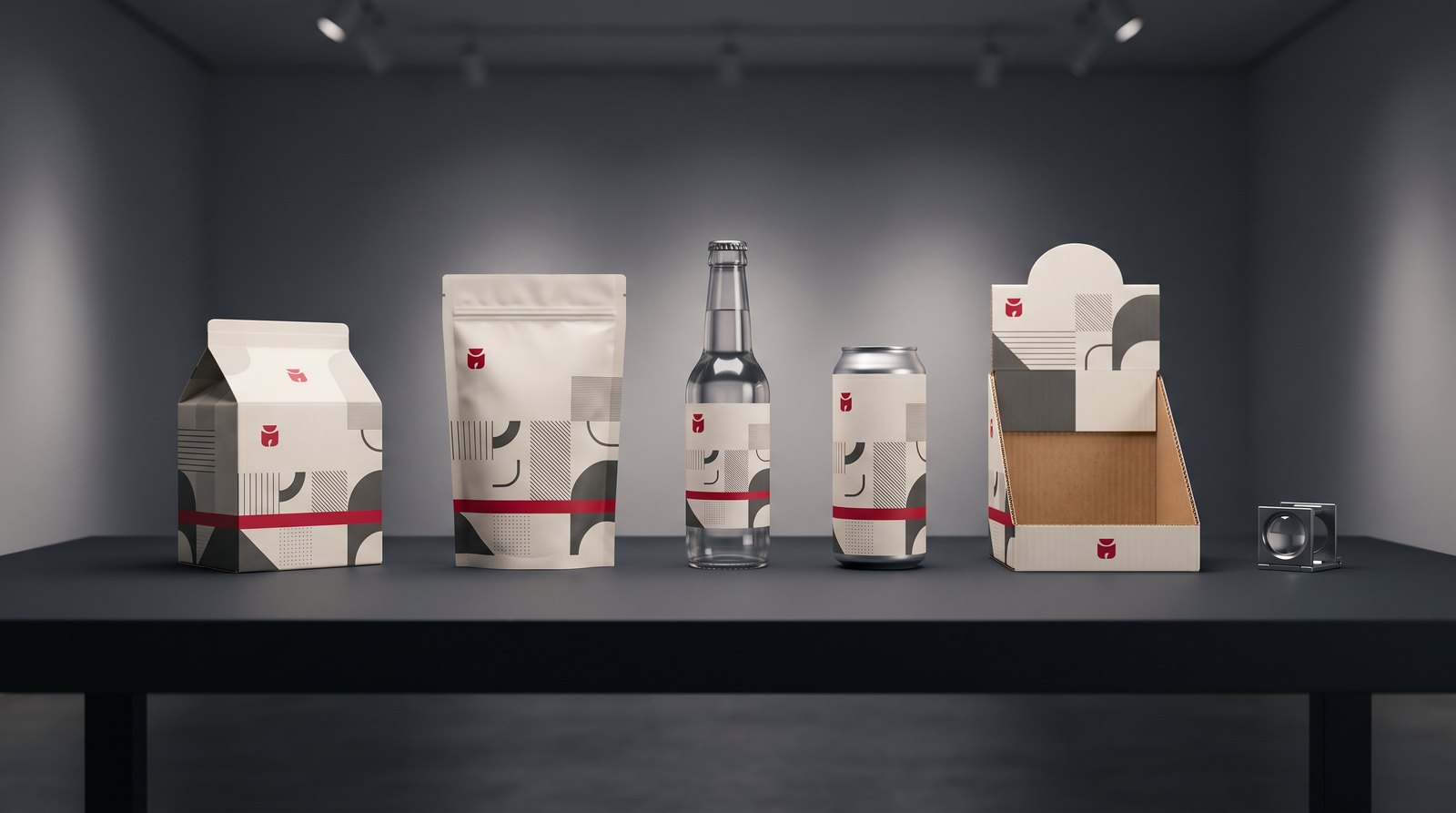
A prototype packaging company produces high-fidelity physical mock-ups, prototypes, and sales samples of packaging so brands can test structure, fit, and shelf appeal before committing to mass production. That spans pressure-sensitive labels, folding cartons, corrugated boxes and displays, flexible pouches, and shrink sleeves, produced as single units or short sample runs rather than full press runs.
The work typically includes structural design, the physical prototypes themselves, photorealistic CGI renderings, and finished sales samples for buyer meetings and trade shows. Done well, it’s the cheapest risk reduction in packaging: a flaw caught in a sample costs a revision, while the same flaw caught after a production run costs the run. For the full walkthrough, start with what prototype packaging is and how it works. This article is about choosing who does it.
The seven questions to ask before you commit
A real prototype shop answers all seven in specifics, because the answers simply describe how it already operates. A broker starts improvising around question four. You’ll hear the difference.
1. Will my prototype use production materials and processes, or stand-ins?
This is the single biggest fidelity question, so ask it first. A prototype printed on whatever stock was handy and mounted to look the part shows roughly what your packaging might become. A prototype built on the actual SBS carton board, specialty label stock, or shrink film of your eventual run shows what it will be, how it folds, and how it feels in hand. Everything a stand-in teaches you is provisional.
The answer you want is unambiguous: production materials, production processes, no exceptions. White Graphics builds prototypes on production substrates and production-grade digital presses with food-safe toners, so the sample you approve behaves like the package you ship. Whichever shop you pick, make them name the substrate before they quote.
2. How do you control color — measured standards or eyeballs?
Ask what gets measured, because color judged by eye does not survive a reorder, a second substrate, or a new format. The proof to ask for is independent and checkable: G7 Master qualification through Idealliance, a managed color workflow such as GMG, and a documented quality system like ISO 9001:2015. Those are the certifications White Graphics holds; any shop worth your files should show its own equivalents rather than describing its color as “very accurate.”
Measured color matters most at the prototype stage, because the sample you approve becomes the color target for everything that follows. If it was matched by eye, you approved a coincidence. Ten minutes with a primer on what G7 actually certifies makes you a sharper buyer on every vendor call.
3. What’s the real turnaround, and what happens on each day?
“Fast” is not an answer; a day-by-day sequence is. A strong answer sounds like this: a cycle that typically runs within a week — design consultation and file prep, then production and assembly on production-grade substrates, then quality control and delivery. That specificity is only possible when one shop controls every step. When a vendor can’t say what happens on which day, some of those days usually happen in someone else’s building.
4. Is cutting, finishing, and assembly done by your own team or brokered out?
Printing the sheet is the easy half of a prototype. Cutting, creasing, folding, and assembling it into a dimensional, functional package is where quality and timelines go sideways once work leaves the building. A shop with its own laser cutters and digital cutting tables can make a structural revision the same afternoon; brokered finishing adds shipping legs, queue time, and a second company to blame when an edge tears. Ask for the equipment list. Shops that own their gear tend to publish it, the way we do in our prototyping tech, tools, and process rundown.
5. Can you carry the prototype into production without re-matching everything?
This question decides how much of your prototype investment survives the handoff. When the prototype shop and the production printer are different companies, someone has to reverse-engineer the approved sample: re-match the color, re-source the substrate, re-verify the structure. When one shop does both, the prototype is the production preview: same presses, same materials, same color standard, no translation step. It also opens a useful middle gear: an approved prototype can move into short-run packaging for a market test before full volume.
6. Can you prototype every format I need?
If a launch involves a labeled bottle, a folding carton, and a corrugated counter display, prototyping them at three vendors guarantees the one flaw you cannot fix later: three interpretations of your brand color arriving on shelf together. A shop that prototypes labels, folding cartons, corrugated, flexible pouches, shrink sleeves, and POP displays against a single color standard is how a product line reads as one family. A single color standard is not convenience; it is consistency across every surface a customer sees.
7. What exactly do I get?
Get the deliverables in writing before comparing quotes, because “a prototype” can mean anything from a single unassembled sheet to a finished sample program. Ask how many units are included and how revisions are handled; whether labels arrive applied to your actual container; whether structural review is part of the service; and whether photorealistic CGI renderings are available for decks and listings while samples are built. Then match quantity to the job: 10-25 units for an internal design review or investor meeting, 25-100 for retail buyer presentations, 100-500 for trade shows.
What actually drives prototype cost
Five variables set most of the price of prototype packaging services: structural complexity, materials, finishing and assembly, quantity, and speed. A straightforward folding carton on standard board sits at one end; a multi-component corrugated display with specialty films, intricate cutting, and full assembly sits at the other. Quantity moves the total less than most buyers expect, because file preparation and setup are the heaviest steps; the tenth unit costs far less than the first.
So skip abstract pricing conversations. Send a dieline or finished artwork and ask for a quote on a real project. Vague inputs produce vague numbers.
Local vs. national: does geography still matter?
Mostly, no. Overnight shipping means a brand in Denver or Atlanta gives up one calendar day working with a shop two time zones away, which is rarely decisive on a process that typically runs within a week. Weigh fidelity, color control, and production capability far above the map.
Geography earns its way back in twice: in-person structural review, and deadlines with zero slack. Chicago-metro brands get both here. Finished prototypes can be picked up in person at our 20,000-square-foot Naperville facility, and a structural conversation happens across a table instead of a time zone.
FAQ
What does a prototype packaging company do?
A prototype packaging company produces high-fidelity physical samples of packaging, including labels, folding cartons, corrugated displays, flexible pouches, and shrink sleeves, so brands can evaluate structure, fit, and shelf appeal before mass production. The strongest shops build prototypes on the same materials, presses, and color standards as their production runs, making the sample a reliable preview rather than an approximation.
Does my prototype packaging company need to be local?
Usually not. Overnight shipping adds a single day to a timeline that typically runs within a week, so capability should outweigh proximity. Local still helps for in-person structural reviews and zero-slack deadlines. Chicago-metro brands, for example, can pick up finished prototypes the same day at White Graphics’ Naperville facility.
How fast can a prototype packaging company turn samples around?
A well-equipped shop can typically turn prototypes around within a week: design consultation and file prep, then production and assembly on production-grade substrates, then quality control and delivery. Timelines stretch when cutting, finishing, or assembly is brokered out, which is why the question matters.
What affects the cost of packaging prototypes?
Five variables drive most of the price: structural complexity, materials, finishing and assembly, quantity, and speed. A simple folding carton on standard board costs meaningfully less than a multi-component corrugated display with specialty films and full assembly. Quantity moves the total less than buyers expect, because file preparation and setup are the heaviest steps.
Put a real prototype on the table
The fastest way to evaluate any prototype packaging company, ours included, is to hand it a real project and listen to the seven answers. Contact White Graphics with a dieline, artwork, or a rough idea, or start with our packaging development team. Quotes can often come back within a business day.
About the publisher
White Graphics is a G7 Master–qualified prototype packaging and custom label company in Naperville, Illinois (Chicago metro), serving food, beverage, supplement, cosmetic, and household-product brands across North America since 1972. Learn more about the company or see the full range of capabilities.