
Last updated: October 26, 2026
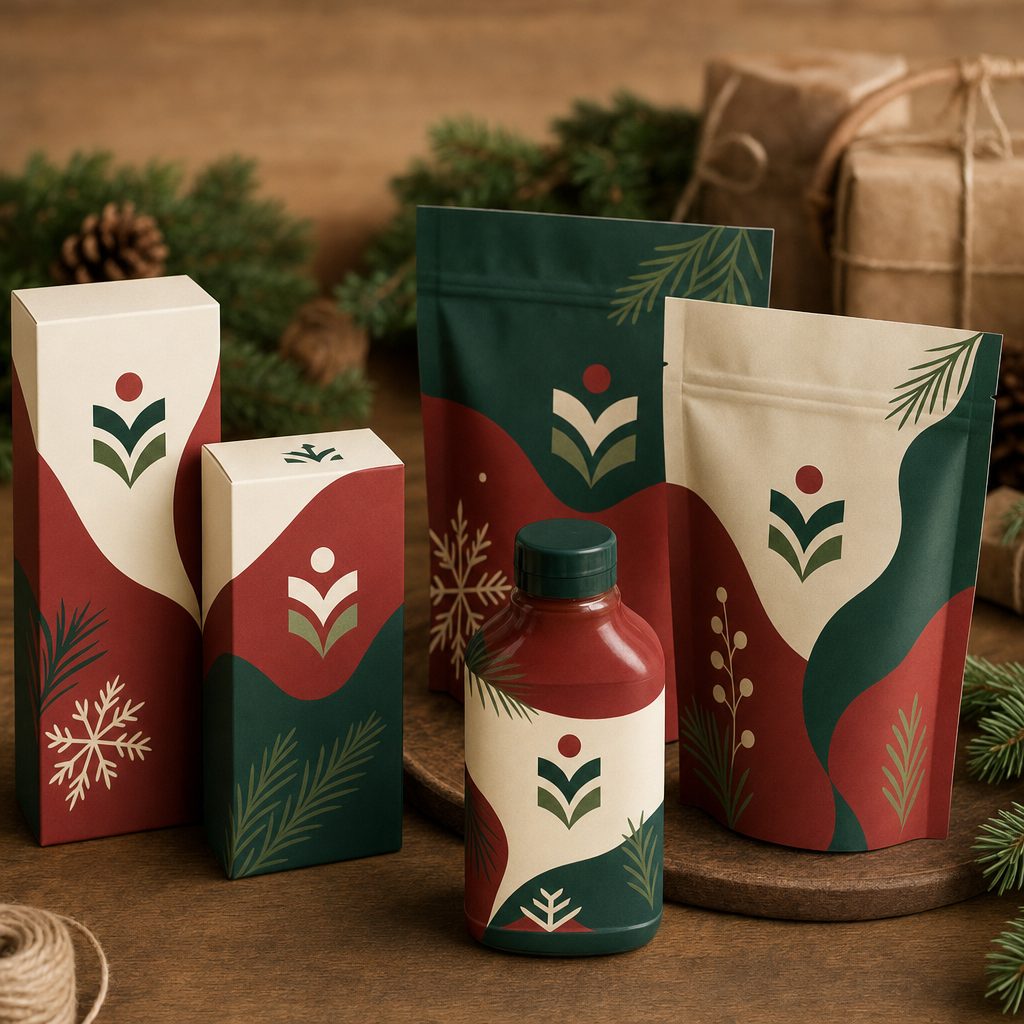
Seasonal and limited-edition packaging lives on a deadline that does not move. The holiday window opens on a date, the collaboration launches on a date, and the product on the shelf either looks the part or it does not. What usually breaks the plan is not design, it is volume: a limited edition is limited by definition, and conventional packaging minimums were built for products that sell all year. Short-run packaging closes that gap. This is how to plan a seasonal or limited run so it lands on time, stays on brand, and does not leave a warehouse full of last season’s boxes.
Table of Contents
- What makes seasonal packaging different?
- Why short runs suit seasonal and limited editions
- Which packaging formats work for a seasonal run?
- How do you plan a holiday packaging timeline?
- Keeping a limited edition on brand
- Does a seasonal design need a new barcode?
- Numbered editions, versions and leftover stock
- Gift sets, kits and counter displays
- What to send with a quote request
- FAQ
What makes seasonal packaging different?
Seasonal packaging is temporary packaging for a permanent product, or permanent-quality packaging for a temporary product. Either way it has three traits a core SKU does not: a fixed launch date, a quantity sized to one selling window, and an expiry. Once the season ends, unsold seasonal packaging is not inventory. It is waste.
That combination changes the order of decisions. For a core SKU, volume comes first and the unit price follows. For a seasonal or limited SKU, the date comes first, then the quantity the window can realistically sell, and only then the format. Brands that run the core-SKU playbook on a holiday edition tend to over-order to hit a minimum, then spend January deciding what to do with the surplus.
Custom holiday packaging is the most common case, but the same logic covers back-to-school packs, summer flavors, anniversary editions, artist and retailer collaborations, and event-specific runs. Anything with a calendar attached plays by these rules.
Why short runs suit seasonal and limited editions
Short runs suit seasonal work because the cost structure of conventional printing punishes exactly what a limited edition needs: low quantity and several designs. Digital presses skip much of the setup that makes small orders expensive, so the quantity can match the selling window instead of a supplier’s minimum.
The result is a run sized to one selling window rather than a supplier minimum. On custom folding cartons, the cutting die is the main piece of tooling, and it is reused when you reorder. On shrink sleeves and stand-up pouches, the container or pouch size stays the same and only the print changes. That is the difference between ordering what the season can sell and ordering what the press needs.
Several designs matter as much as small quantities. A holiday program is rarely one design: there is the gift version, the stocking-stuffer size, the retailer exclusive. On a managed carton run, versions, seasonal editions and regional variants can share one production window, and on a digital pouch run a family of designs can often ride one run rather than one setup each. The fourth design costs board or film and a file, not a new job.
Minimal tooling is not zero tooling, and short runs do not make every unit cheap. Per-unit cost is still higher on a short run than on a national run. The point is that the total spend matches the opportunity, and nobody is paying to store packaging for a season that has already ended.
Which packaging formats work for a seasonal run?
Most seasonal programs use one of five formats, chosen by what the product already ships in. The cheapest seasonal change is usually the one that leaves the core structure alone and changes only the printed surface: a new carton graphic, a sleeve over the existing container, or a label.
| Format | Typical seasonal use | Why it works on a short run |
|---|---|---|
| Folding cartons | Gift boxes, holiday editions of a boxed product, retailer exclusives | The existing dieline and die can be reused |
| Shrink sleeves | Full 360-degree holiday graphics on an existing bottle, jar or can | The container does not change |
| Stand-up pouches | Seasonal flavors, limited roasts, gift-size snacks | Several flavors can share one run |
| Pressure-sensitive labels | Seasonal front labels, numbered editions, collaboration marks | Variable data lets each label carry its own number or version |
| Corrugated displays and shippers | Holiday counter displays and shipper displays for the seasonal set | Sized to the season’s store count rather than a national rollout |
Sleeves deserve a special mention for seasonal work. A shrink sleeve turns a container you already use into a completely different-looking product for the season, with no change to the container itself. For a beverage or a food product in a can or jar, that is often a fast route to a holiday edition that looks fully designed rather than stickered.
How do you plan a holiday packaging timeline?
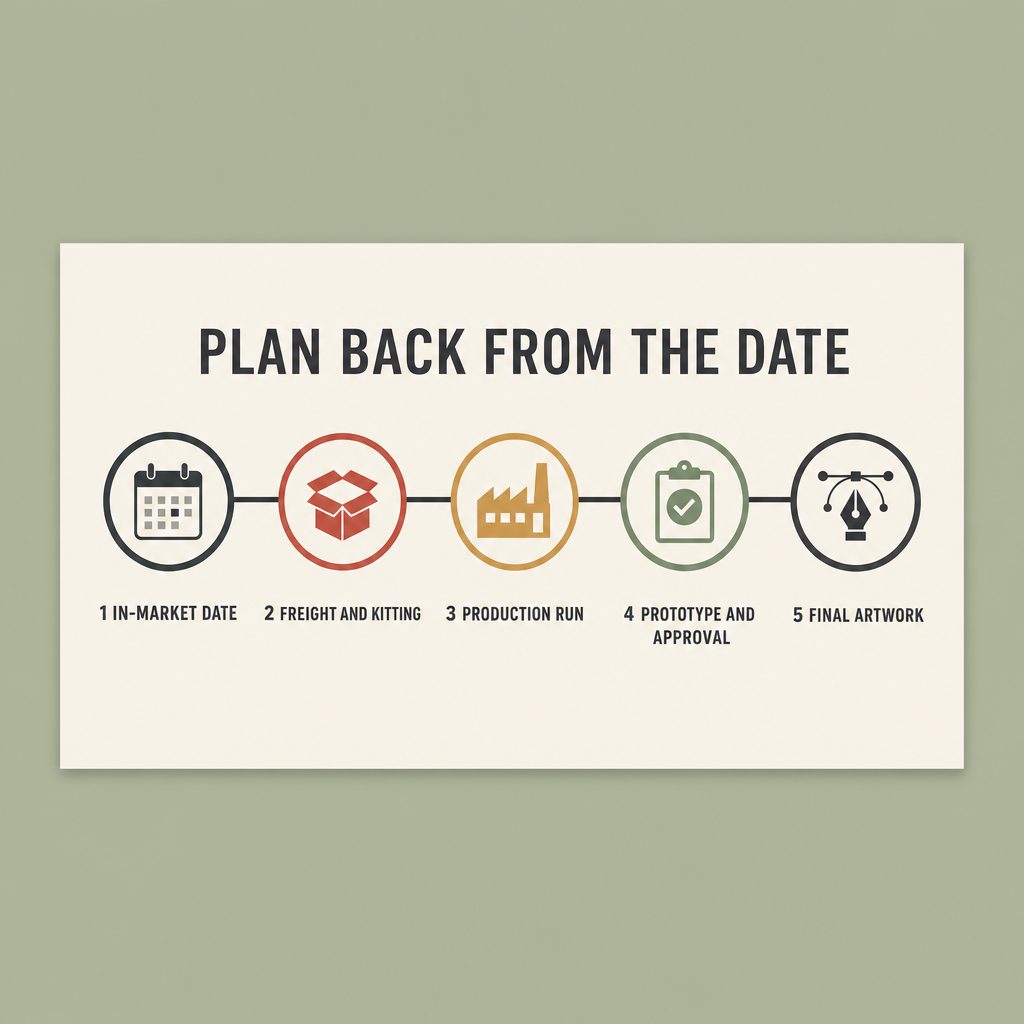
Plan a holiday packaging timeline backward from the date the product must be on the shelf or in the customer’s hands. The decisions that take longest are internal: design approval, buyer sign-off and quantity. The physical prototype is usually the quickest step, and it is the one most often skipped.
- Fix the in-market date. The shelf date or ship date is the anchor. Everything else is counted back from it.
- Lock the structure early. If the seasonal edition reuses the core carton, container or pouch size, most of the engineering is already done. A new structure adds a design and testing step.
- Prototype before the buyer meeting. A physical packaging prototype on production materials, typically within a week of final files, shows the buyer the real object rather than a rendering.
- Size the run to the window. Use the buyer’s commitment, the store count and last season’s sell-through, not the quantity that makes the unit price look best.
- Approve a proof, then run. Production timing depends on the format, the quantity and the finishing, so it gets scoped at quote time. Build in time for filling, kitting and freight on top of it.
The one rule worth tattooing on the project plan: get the prototype in front of decision makers before the design is final. A seasonal design that changes after the buyer meeting costs a second round of approvals, and approvals are what eat the calendar.
Keeping a limited edition on brand
A limited edition can change almost everything about its look and still has to read as the same brand on the shelf. The element that most often drifts is color: a brand red printed on a seasonal carton, a sleeve film and a label stock can come out as three different reds unless the color is managed across all of them.
That is what G7 color management is for. White Graphics is G7 Master Qualified and manages color with GMG, so brand color is measured and held across a family of SKUs rather than matched by eye one job at a time. It matters more on a seasonal run than on a core SKU, because the seasonal piece usually sits right next to the core product and any mismatch is visible at a glance. The longer explanation is in Brand Color Consistency: Is Your Red Really Your Red?
The other on-brand decision is restraint. Seasonal art works best when one element changes decisively, such as a holiday palette, a pattern or a collaborator’s mark, and the logo, type and layout stay where shoppers expect them. A limited edition that is unrecognizable from across the aisle is a new brand, not a new edition.
Does a seasonal design need a new barcode?
Usually not at the consumer unit, but usually yes at the case. Under the GS1 GTIN Management Standard, a product that is only re-dressed for a season, such as holiday images printed on the package for a limited time, keeps its consumer-level GTIN, while the cases and pallets carrying it need their own GTINs so the supply chain can tell the seasonal stock apart.
Rule 2.7 of the GS1 GTIN Management Standard, covering time-critical or promotional products, lists holiday images on a package and a unique back-to-school package as examples. A genuinely new product is a different case: a new flavor is a new trade item, which falls under rule 2.1 of the same standard, new product introduction. Rule 2.1 also covers a seasonal version that buyers will order as its own item, such as a retailer-exclusive gift box, which needs its own GTIN. Retailers can also set their own requirements, so confirm with the buyer before the art is final.
For food products, a seasonal recipe brings one more check. A new flavor can bring a new ingredient, and a new ingredient can bring a new allergen declaration. The FDA’s food allergy guidance is the reference. The seasonal label has to be right on its own terms, not copied from the core SKU.
Numbered editions, versions and leftover stock
Digital printing makes two things practical that change how a limited edition can be sold: printing every unit differently, and fixing packaging that is already printed.
Numbered editions. Variable data labels can carry sequential numbers, unique codes and per-location versions generated from a data file in one pass. “No. 0148 of 500” printed on the label is the simplest way to make a limited edition feel limited, and it gives the brand a record of exactly how many went out.
Versions by store or region. The same mechanism lets one run carry a different message for different retailers or regions without a separate order for each.
Leftover stock. When a season ends with packaged product still on hand, cover-up labels offer a way out that does not involve repackaging. A high-opacity patch bonds over the existing label and carries the new copy, barcode or lot code, so seasonal product can be re-dressed rather than written off. Measure the area to cover first; the patch has to hide what is underneath completely.
Gift sets, kits and counter displays
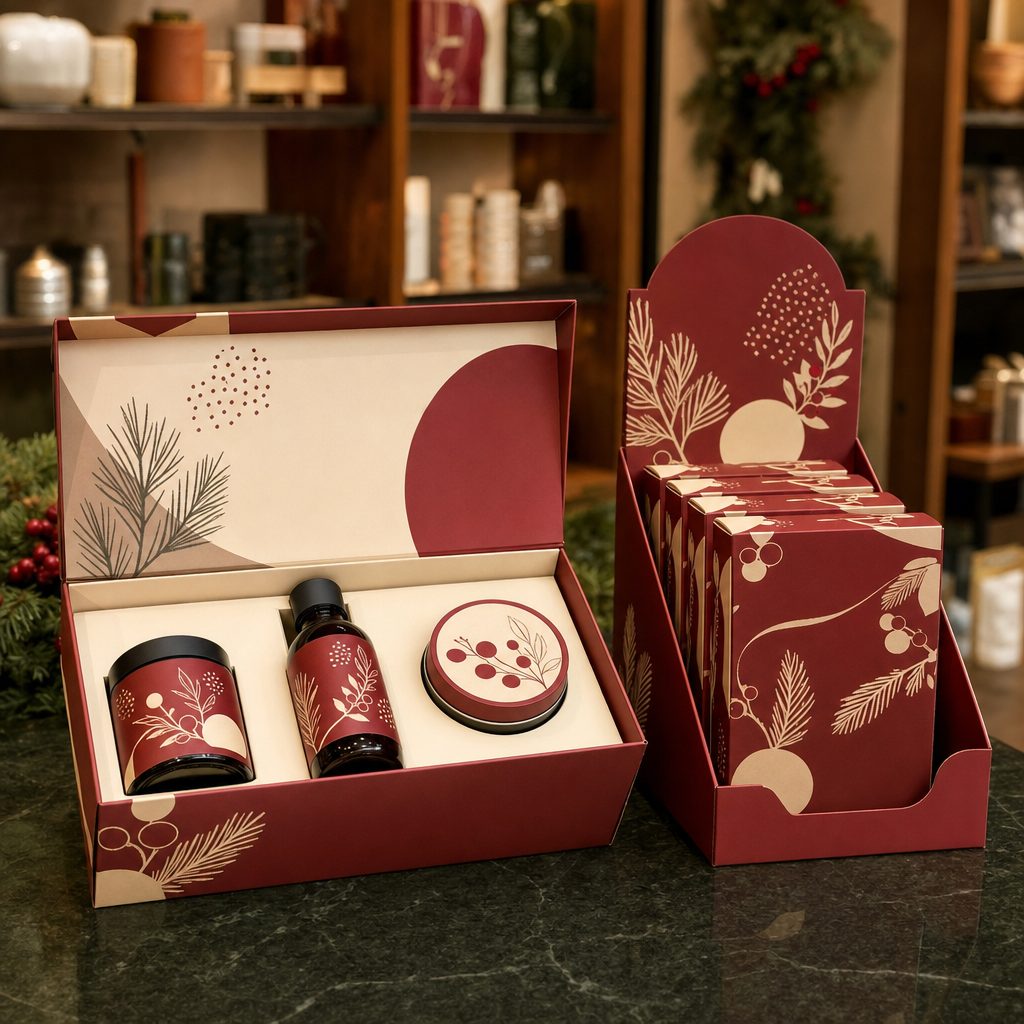
Many seasonal programs are not a single package but an assembly: a gift set, an influencer kit, a holiday sampler, a retail counter display. Each one adds a step after printing, and that step belongs in the plan from the start.
White Graphics runs fulfillment services including kitting, assembly, storage and shipping from an FDA-registered facility, which includes building and shipping influencer kits and PR mailers. The same thinking behind sales samples and influencer kits applies to a holiday mailer: the box someone opens on camera is part of the product.
For retail, a seasonal set usually needs a home on the floor. POP solutions such as corrugated counter and shipper displays give a limited edition its own space for the length of the season, sized to the number of stores carrying it.
What to send with a quote request
A useful seasonal quote needs five things, and finished artwork is not one of them: the in-market date, the format and its dimensions or dieline, the quantity per design, the number of designs or versions, and whether the job needs kitting or a display.
Two more details sharpen it. Say whether this edition reuses an existing structure, because a reused dieline removes a step. And say whether the run should match a future production spec or only needs to look right for a season, because that decides materials. Everything else can be worked out from there.
FAQ
How far ahead should I order holiday packaging?
Count back from the in-market date and start with a prototype, typically ready within a week of final files. Production timing depends on the format, quantity and finishing, so ask for it at quote time and add time for filling, kitting and freight. Internal approvals are usually the longest step.
How much seasonal packaging should I order?
Size the run to what one selling window can realistically sell, not to a supplier minimum. Quantities are scoped per job, because format, size, materials and finishing all move the number, and a reorder is usually cheaper than a warehouse full of last season’s packaging.
Does a seasonal package need a new UPC?
Usually not at the consumer unit. Under the GS1 GTIN Management Standard, a product with holiday graphics for a limited time keeps its consumer GTIN, but its cases and pallets need new GTINs. A new flavor, or a seasonal version ordered as its own item such as a gift box, gets its own GTIN. Check retailer requirements too.
Can a limited edition reuse my existing packaging structure?
Yes, and it is usually the fastest and least expensive route. Reusing a carton dieline, container or pouch size means only the printed surface changes, and a carton’s cutting die is reused on reorder. A shrink sleeve can transform an existing container without changing the container.
What can I do with leftover seasonal packaging?
If the product is already packed, cover-up labels can patch over the seasonal label with new copy, a barcode or a lot code, so the stock can be sold after the season. Better still, size the next run to the selling window so there is less left over.
Plan the season around the date, not the minimum
The quickest route to a usable number is the in-market date, the format, the quantity per design and the number of designs. Request a quote from White Graphics with those four and the plan can be built around the window. The economics behind it are in short-run packaging, and the flexible formats are covered in the guide to flexible packaging.
About the publisher
White Graphics is a G7 Master qualified custom label and packaging company managed out of Naperville, Illinois, serving food, beverage, supplement, cosmetic, and household-product brands across North America since 1972. Learn more about the company or see the full range of capabilities.