
Last updated: July 7, 2026
Nobody asked junk mail to come back. It did anyway. While every marketer on earth piled into the same email inboxes and the same social feeds — bidding up the same attention until a click cost more than a coffee — the humble mailbox quietly emptied out. And an empty channel is an opportunity. A physical piece of mail now lands in a space with almost no competition, gets touched by human hands, and sits on a kitchen counter for days instead of vanishing in a swipe. The thing your brand left for dead in 2012 is, in 2026, one of the least crowded rooms in marketing. If you’re only fighting for the inbox, you’re fighting everyone. If you’re in the mailbox, you’re often fighting no one.
This is a look at why direct mail is working again, why scarcity made it valuable, and what separates a piece that gets kept from a piece that gets tossed before it reaches the kitchen.
Table of Contents
- Junk mail’s revenge
- The inbox is a war zone. The mailbox is a ghost town.
- Why physical mail is harder to ignore
- Mail isn’t analog anymore
- It only works if it’s well made
- The unsexy engine: data and fulfillment
- How to mail something that doesn’t get tossed
- FAQ
Junk mail’s revenge
Direct mail is working again because everyone else abandoned it, and abandonment created scarcity. For a decade, marketing budgets stampeded toward digital because it was cheaper and trackable, which meant the digital channels got crowded and expensive while the physical mailbox got quiet. The result is a channel that’s now under-contested at exactly the moment digital attention has become the most expensive and least trusted commodity in advertising.
This isn’t nostalgia, and it isn’t a rejection of digital. It’s arbitrage. When a channel empties out, the cost of being noticed in it drops, and the brands willing to show up there get a disproportionate share of attention for their spend. Direct mail’s comeback is just marketers rediscovering that the room nobody’s in is the easiest room to be heard in.
The inbox is a war zone. The mailbox is a ghost town.
The average person’s email inbox is a battlefield of hundreds of unread promotions, defended by spam filters, promotions tabs, and a thumb trained to archive on reflex. The same person’s physical mailbox holds a handful of items a day, and they sort every one by hand. Those are wildly different odds of being seen, and the gap is the entire opportunity.
Scarcity is the whole mechanism. A promotional email is one of hundreds competing for a half-second of attention; a well-made mailer is one of a few things a person physically picks up and decides about, one at a time, standing over a recycling bin making keep-or-toss calls. You’d rather be the single interesting object in a small stack than the four-hundredth subject line in an inbox. The math of attention favors the uncrowded channel, and right now that’s the one with a street address.
Why physical mail is harder to ignore
A physical mail piece is harder to ignore because it occupies space and demands a decision. An email can be archived without ever being opened; a postcard has to be physically handled, turned over, and consciously thrown away — and that act of handling is a moment of attention that digital simply can’t manufacture. The U.S. Postal Service makes exactly this case to advertisers, that mail gets touched, kept, and acted on at rates that surprise people who wrote it off; see the USPS guidance on advertising mail.
There’s also a trust dimension that’s easy to underrate. A screen full of identical-looking ads has trained people toward suspicion — is this real, is this a scam, is this AI. A well-produced physical object reads as a brand that spent something to reach you, and spending something is a costly signal that’s hard to fake at scale. In a world where digital trust is cratering, the tangible piece carries a credibility the banner ad lost years ago.
Mail isn’t analog anymore
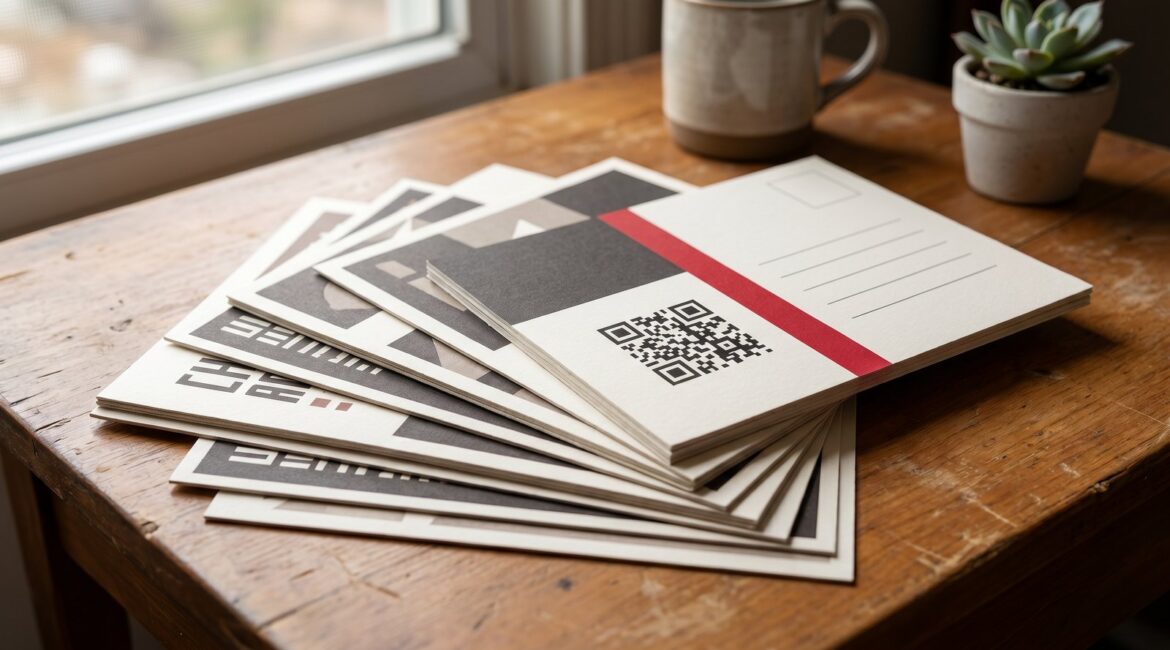
The old objection to direct mail — “you can’t track it” — is obsolete. A QR code turns a printed piece into a measurable, clickable bridge to a landing page, an offer, or a purchase, with the scan attributed to the exact campaign that drove it. Personalized URLs, unique promo codes, and scannable codes have quietly made mail one of the more trackable channels, not the least, because the response happens in a digital environment you fully instrument.
That changes what direct mail is for. It’s no longer a standalone analog gamble; it’s the physical front door to a digital funnel. The mailer gets the rare, high-quality attention; the code carries that attention into a trackable online experience where you measure everything. The brands doing this well treat the printed piece and the digital destination as one connected system — the tangible object earns the moment, and the scan does the accounting.
It only works if it’s well made
The entire advantage of direct mail collapses if the piece feels cheap, because a flimsy, badly printed mailer confirms every reason the recipient already had to throw it away. The channel’s edge is tangibility, and tangibility is judged in the hand — paper weight, print sharpness, color, finish. A piece that feels substantial gets a second look and a spot on the counter; a piece that feels like a throwaway gets treated like one, instantly.
This is where production quality stops being a detail and becomes the strategy. Sharp, consistent commercial printing on the right stock is the difference between a keeper and a recycle. And because mail is a paper product at volume, it’s worth getting the sustainability story right too — choosing recyclable stock and being honest about it, in line with how the environmental claims on any printed piece should be handled. Recyclability data from the EPA shows paper and paperboard are among the most-recovered materials, which makes a well-chosen mail stock an easier story to defend than most.
The unsexy engine: data and fulfillment
The part of direct mail that decides success has nothing to do with the creative — it’s the list and the logistics. A beautiful mailer sent to a bad list is wasted postage, and a great list executed sloppily — duplicate addresses, missed personalization, a mail date that slips past the promotion — is money set on fire. The glamorous part is the design; the part that actually determines ROI is the data hygiene and the operational execution behind it.
Variable data printing is what makes personalization real at scale, letting every piece carry a different name, offer, or code without slowing the run. Pair that with disciplined fulfillment — clean addressing, accurate sorting, on-time mail dates, and coordinated kitting when a campaign includes more than a single piece — and the whole program runs like a system instead of a hopeful gamble. When the printing and the fulfillment are managed together, the personalization, the mail date, and the postage logic stay in sync instead of getting lost in the handoffs between vendors.
How to mail something that doesn’t get tossed
A direct mail piece that earns its postage gets a few things right before creative even starts:
- Start with the list, not the design. The right audience on a clean list outperforms a gorgeous piece sent to the wrong people, every time.
- Make it feel like something. Stock weight, print quality, and finish are the message before the copy is. Cheap-feeling mail gets tossed on contact.
- Build the digital bridge. A QR code or personalized URL turns the piece into a trackable, measurable response — and proves the channel worked.
- Personalize with real data. Variable data lets every piece speak to its recipient. Generic mail competes on price; relevant mail competes on attention.
- Nail the timing. A mail date that lands a week after the promotion ended is a total loss. Fulfillment discipline is the campaign.
- Choose stock you can stand behind. Recyclable paper and an honest claim age better than a flimsy piece with a leaf printed on it.
For teams weighing direct mail alongside their other printed touchpoints, our guides for brand and compliance teams are a useful orientation before you start quoting a program.
FAQ
Is direct mail actually effective in 2026, or is this nostalgia?
It’s effective, and the reason is arbitrage, not nostalgia. As budgets stampeded into digital, the mailbox emptied out while inboxes and feeds got crowded and expensive. Direct mail now reaches an under-contested channel where a physical piece is handled by hand and competes against a few items instead of hundreds. Scarcity made it valuable again.
Can you track direct mail results?
Yes — far better than the old reputation suggests. QR codes, personalized URLs, and unique promo codes turn a printed piece into a measurable bridge to a digital experience, attributing the response to the exact campaign that drove it. Mail is now one of the more trackable channels because the response happens in an environment you fully instrument.
What makes a direct mail piece get kept instead of tossed?
Tangibility and relevance. The piece has to feel substantial in the hand — stock weight, print quality, and finish do the talking before the copy does — and it has to speak to the right person via a clean list and real personalization. Cheap-feeling mail to a bad list gets tossed instantly; a well-made, relevant piece earns a spot on the counter.
Why does fulfillment matter so much for direct mail?
Because execution decides ROI more than creative does. A great list ruined by duplicate addresses, missed personalization, or a slipped mail date is money wasted. Clean addressing, accurate sorting, on-time mail dates, and coordinated kitting — ideally from the same partner that printed the piece — are what keep a campaign from falling apart in the handoffs.
Want to be the only interesting thing in the mailbox?
If you’re ready to use the channel everyone else abandoned — built well, tracked properly, and mailed on time — it’s worth a conversation. Contact White Graphics to talk through a direct mail program, or start a request through the shop.
About the publisher
White Graphics is a custom label, packaging, commercial print, and fulfillment company in Naperville, Illinois, serving food, beverage, supplement, cosmetic, and household-product brands across North America since 1972. Learn more about the company or see the full range of capabilities.
