
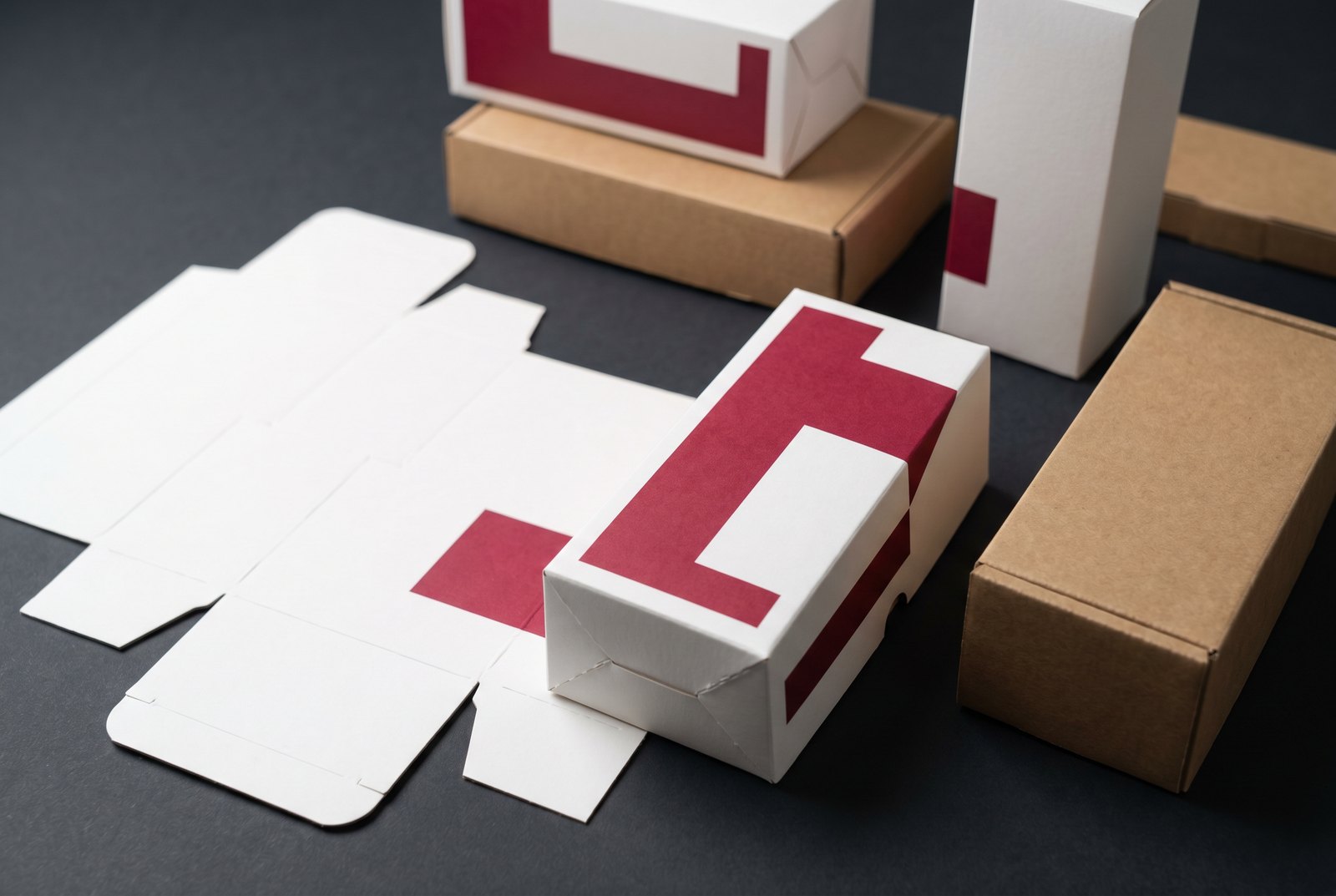
Custom folding cartons that earn the shelf.
From structural dieline to press to die-cutter, one partner builds the whole carton: White Graphics, based in Naperville, Illinois, prototypes, prints, and finishes custom folding cartons for short runs through full production.
What a carton does that a label or corrugated box can't.
Watch someone shop an unfamiliar aisle. They move at walking speed, scan a shelf edge to edge, and reach for exactly one box, and nothing inside that box made the sale. The front panel made a claim, the color held together from two feet away, and the fold lines were crisp enough to suggest someone careful built it. For a boxed product, the carton carries the entire argument for picking it up.
That job is what a folding carton exists to do. A label inherits the shape of whatever jar or bottle it wraps, and curved surfaces fight fine type. Corrugated protects freight but prints coarse and reads warehouse. A carton gives you six flat printable faces, square shoulders that stack and face cleanly, and room for inserts, die-cut windows, and legal copy. It is the workhorse of the custom retail packaging programs we print.
Choosing between them is a stage question, not a taste question. A brand still proving a formula can ship a stock jar wearing a well-built custom label and skip the tooling. A custom retail box makes sense once the product needs to hold a shelf, carry an insert, survive gifting, or say more than its container allows. Corrugated still handles the case pack. The carton is the part your customer keeps looking at.
Watch a folding carton come together.
Read the video transcript
On the shelf, the carton is the product. White Graphics builds custom folding cartons from structural dieline to press to die-cutter: SBS board, full color, and creases that fold right, every time. Short runs through full production, one partner the whole way. White Graphics, Naperville. Since nineteen seventy-two.
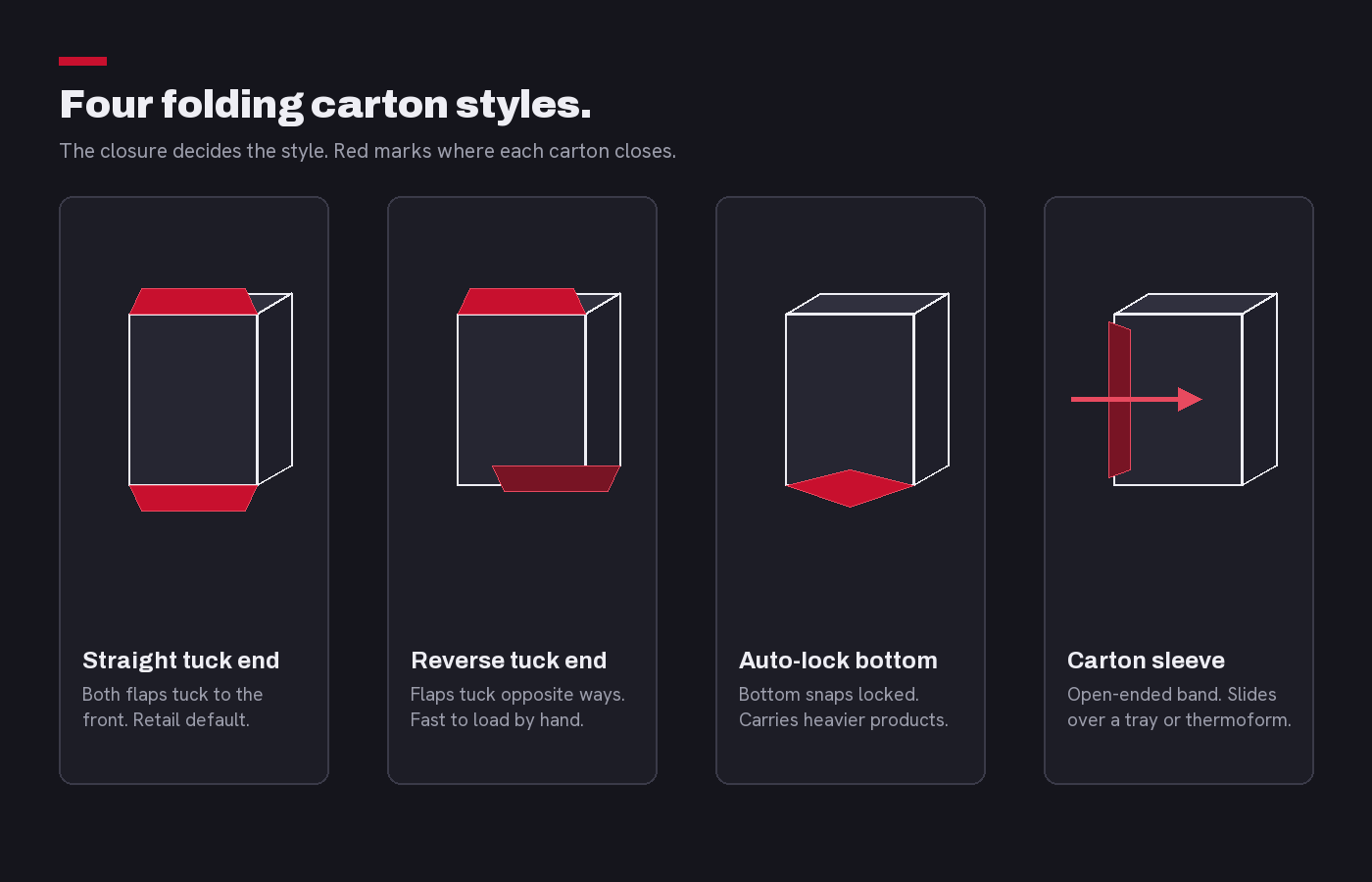
Folding carton styles: the four that cover most retail work.
Closure style decides three things: how much board each blank uses, how much labor assembly takes, and which face stays clean for display. Most retail folding carton packaging lands on one of four structures, and our structural team recommends one based on product weight, fill method, and how the carton has to present.
Straight tuck end
Both tuck flaps hinge from the same body panel and close in the same direction, so the seams sit together on one face and the display side stays clean. The retail default for tea, soap, and cosmetics. It uses slightly more board than a reverse tuck and repays it on display.
Reverse tuck end
The top tuck hinges from the back panel and the bottom from the front, closing in opposite directions. That lets blanks nest tighter on the press sheet, making it the thriftiest tuck style. One closure seam shows on the display face, a fair trade for lightweight products where economy leads.
Auto-lock bottom
The base panels come pre-glued, so the floor snaps into place the moment the carton squares open. There is no folding sequence at the fill line, and the locked bottom carries jars, bottles, and candle weight that would shear a tuck open. Converting costs run higher; heavy products justify them.
Carton sleeve
An open-ended band with a single glued seam that slides over a tray, tin, or the product itself. Least board, fastest assembly, full wraparound print. Sleeves turn a plain container into a finished retail unit and band multipacks together without a second structure to design.
SBS board, full color, and a finish that survives handling.
Nearly every carton we convert starts as solid bleached sulfate, SBS, a virgin-fiber board with a bright, clay-coated print surface and predictable stiffness from lift to lift. Calipers run from 14 pt for small, light cartons up to 24 pt where weight or wide panels demand it. SBS cuts and creases cleanly, and it is the standard where the carton wraps food or supplements, work we run in an FDA-registered facility.
Every run is measured against G7 gray-balance targets, so the fiftieth reorder matches the first and brand color holds across a whole family of SKUs. Managed carton printing also changes the math on runs: versions, seasonal editions, and regional variants can share one production window.
Finishing decides how the carton looks after a week of pickups and put-backs. UV coating adds gloss and rub resistance economically. Matte or gloss film laminate bonds a protective layer to the sheet, deepens the feel, and guards fold lines from cracking where ink coverage runs heavy. Die-cutting and creasing happen to spec, with crease depth set to the board, so panels fold on the crease line even when the board's fiber direction disagrees.
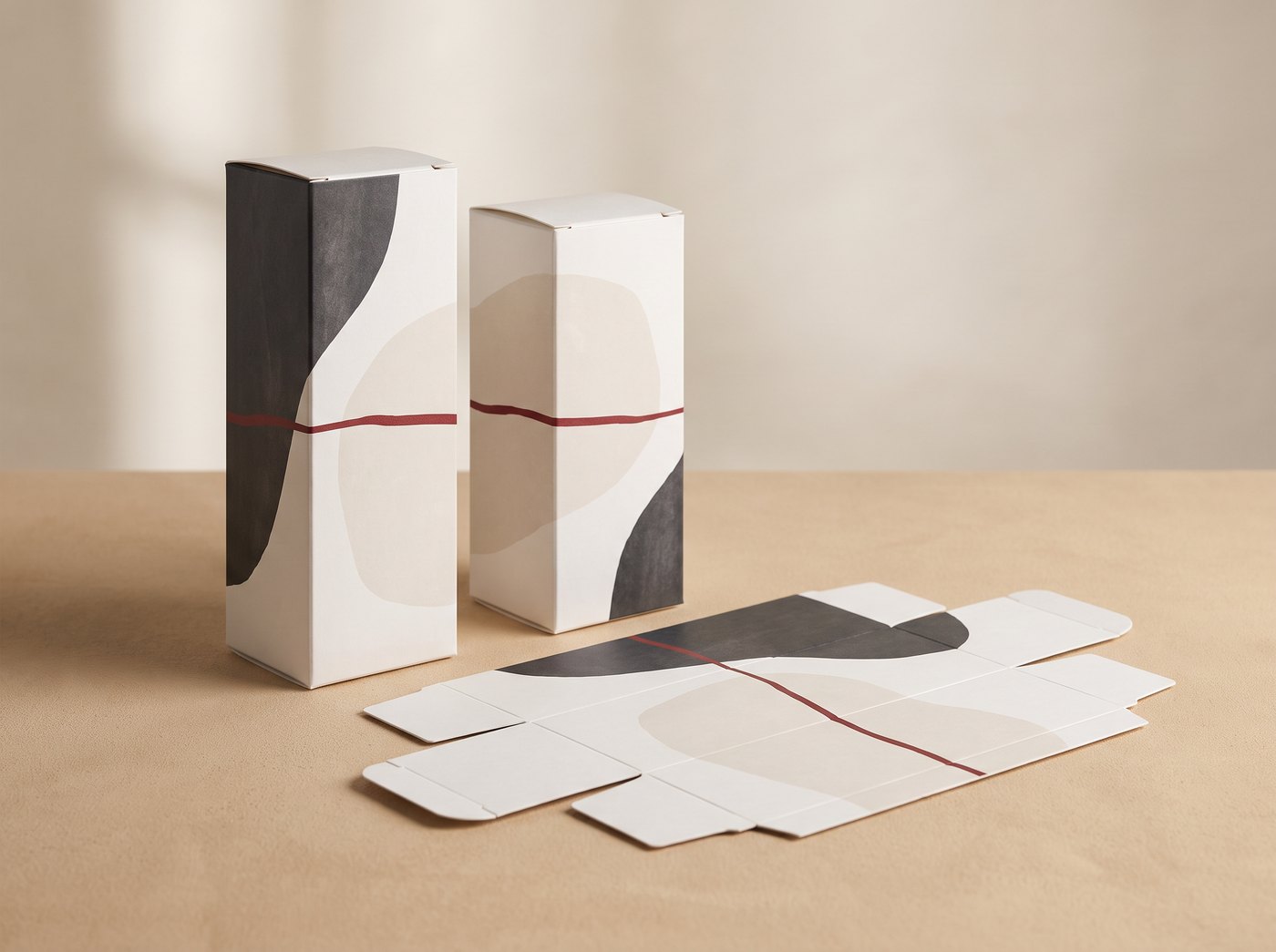
Dielines, grain direction, and artwork that folds right.
A dieline is a flat map of every panel your carton will have: front, back, sides, glue flap, dust flaps, tucks. Design against that map. A plain rectangle shows you none of those panels. The front panel gets the hero treatment, but art that wraps a crease must land in register on the neighboring panel, and a tuck flap designed flat can read upside down once the carton closes. We check every layout folded.
The mechanical rules are few and unforgiving. Bleed art an eighth of an inch past every cut edge, dust flaps and tucks included, because raw board shows white. Keep type the same distance inside cuts and creases. Leave the glue flap bare: adhesive needs bare board to grip, and a printed flap is how side seams pop open in a customer's hand. Outline your fonts, and send the working file alongside the print PDF.
Grain direction is the spec nobody's template mentions. Board folds cleanest when creases run across the grain, a crease running parallel to it wants to crack, and wide panels bow on misgrained board. Plenty of folding carton manufacturers broker structure out. Our structural team draws dielines, sets grain at die layout, and cuts prototypes you can hold, so prototyping the carton before you commit to a run is a standard working step here.
The Folding Carton Dieline & Artwork Setup Guide
Panel maps, bleed, grain direction, glue keep-clears and the prepress checklist, collected on two printable pages. Build them in from the start and your proof round is about design, not repair.
Where custom folding cartons earn their keep.
Any product can wear a box. The carton pays its way where shelf competition is dense, the product is light or small, and the container underneath is too plain or too curved to sell itself. These are the categories where our custom product boxes do their heaviest lifting.
- Tea: the product weighs nothing and the aisle is wall to wall with rivals, so the carton carries the entire first impression.
- Supplements: a carton adds the flat, legible panel space a curved bottle label cannot spare for the copy your buyer reads.
- Cosmetics: the unboxing is part of the product, and a matte-laminated carton sets that expectation before the lid ever lifts.
- Specialty food: sauces, chocolate, and coffee trade up from commodity shelving the moment the jar or bag gets a printed carton around it.
- Beverage multipacks: auto-lock bottoms and sleeves band cans and bottles into a gift-ready unit that carries real weight.
- Small electronics: chargers, earbuds, and accessories need a precise interior fit and a carton that photographs well in a marketplace listing.
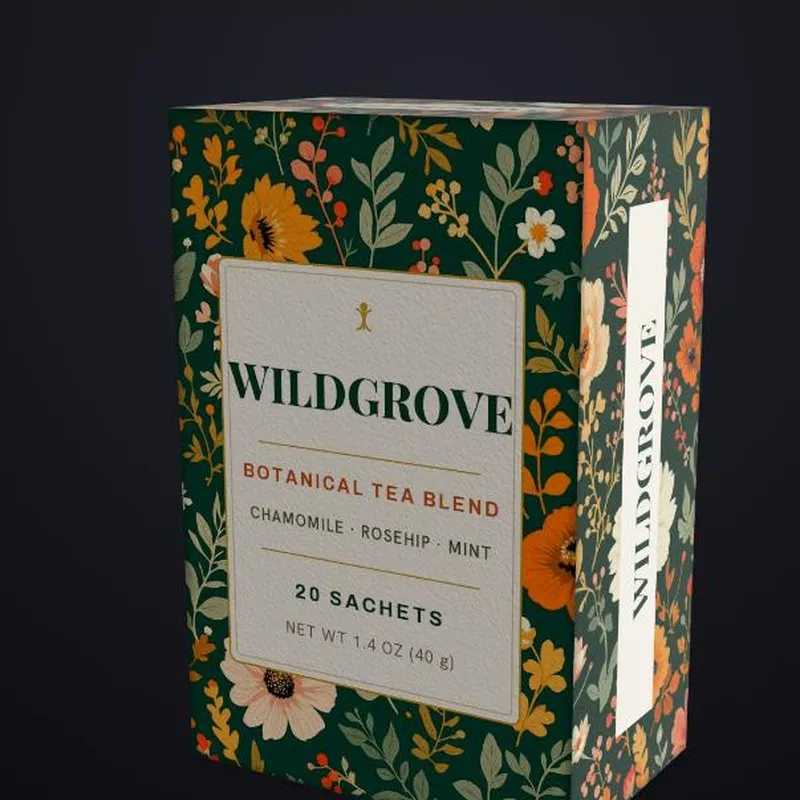
Spin the carton before you order one
Our retail packaging page has a drag-to-rotate 3D sample table, including a folding carton built from a production dieline. Inspect the creases from every angle.
Custom Folding Cartons: questions, answered.
What drives the cost of custom folding cartons?
Sheet usage leads: carton dimensions and style decide how many blanks nest on a sheet, and an auto-lock bottom uses more board and converting than a sleeve. Caliper, ink coverage, and finish come next, since film laminate costs more than UV coating. Run length spreads setup across every unit. We quote from the dieline, so accurate dimensions get you an accurate number.
What is a realistic minimum run for folding cartons?
Runs in the low hundreds are practical here. Digital printing carries no plates, so short runs skip much of the setup cost that makes small carton orders painful elsewhere; the cutting die is the only hard tooling, and it gets reused when you reorder. Short runs suit launches, test markets, and seasonal editions, and the same approved file scales to full production unchanged.
How fast can you produce a carton order?
Speed here comes from what the job skips. Digital printing skips platemaking, and dielines, prototyping, and die-cutting skip the shipping and scheduling of outside vendors. What we won't do is promise a blanket number, because a laminated auto-lock runs longer than a plain sleeve. Send the specs and we will quote a date against the actual work.
How do I choose the right board caliper for my carton?
Match caliper to load and panel size. In SBS, 14 pt suits small, light cartons like single tea boxes, 16 to 18 pt covers most retail work, and 20 to 24 pt is worth it under glass jars and wide panels that would bow on thinner board. Numbers only narrow it down; holding a prototype in the right caliper settles it.
Matte laminate, gloss laminate, or UV coating: which should I pick?
Pick the finish for how the carton lives. Matte film laminate reads premium, kills glare under store lighting, and protects creases from cracking, though dark solids can show burnish where cartons rub in transit. Gloss laminate gives maximum color punch and wipes clean. UV coating delivers gloss and rub resistance at a friendlier cost. We proof finish choices on the prototype.
Can you make a dieline from a physical sample?
Yes. Send the carton, assembled or flattened, and our structural team measures it, rebuilds the geometry as a clean CAD dieline, and corrects what the original got wrong, a starved glue flap or a crease fighting the grain being the usual finds. You approve a cut prototype before anything prints, so the structure is proven before it carries your artwork.
Should I use a carton or just a label on a stock jar?
A labeled stock jar is the fastest, cheapest way to look legitimate, and the right first move for plenty of young brands. The carton becomes worth it when you need flat billboard space a curved label can't offer, protection for what is inside, room for an insert, or a giftable presence. Many brands graduate to both: labeled jar, printed carton around it.
Part of the retail packaging family.
Every format here runs through the same prepress, color and finishing pipeline. Explore the rest:
Put real numbers on your project.
Send a dieline, a sketch, or the product that needs a box, and a production person will come back with carton options and real pricing. No configurator, a conversation.